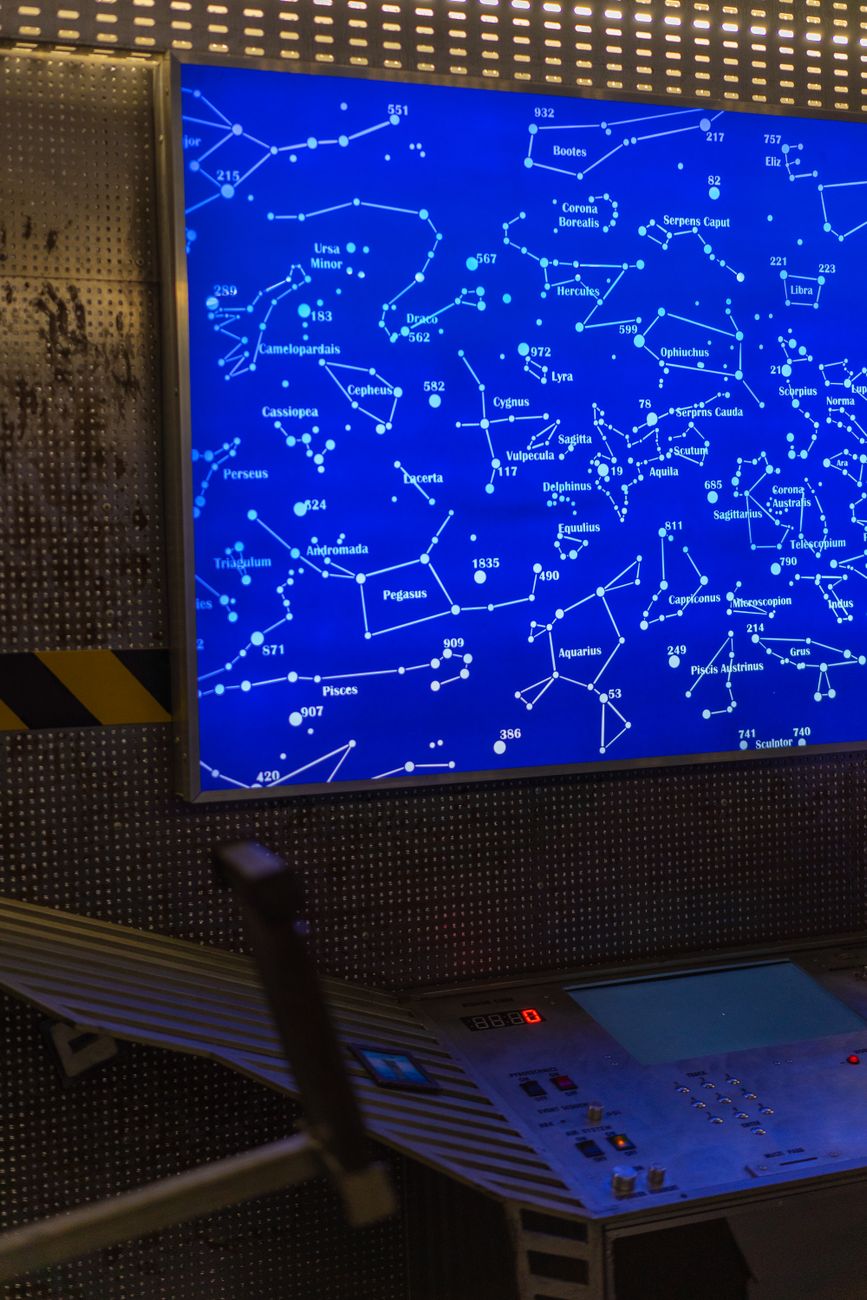
Milky Way's 300-Light-Year 'Bone' Unveils Galaxy Secrets

The Core Insight
Astronomers Identify 'Nessie': A 300-Light-Year Thin Filament in the Milky Way

(Credit: Micotino via Pexels)
A long, narrow filament of gas and dust has been identified within the Milky Way, stretching over 300 light-years while remaining only a few light-years wide. Nicknamed “Nessie”, the structure may represent a key element in tracing the galaxy’s internal framework.
Astronomers have long struggled to map the Milky Way from within, where perspective limits large-scale observation. Structures like this one provide rare reference points that can help outline the galaxy’s spiral architecture. For more on early galaxy structures challenging models, see JWST's Ancient Giant Galaxy findings.
The finding was presented by Alyssa Goodman of the Harvard-Smithsonian Center for Astrophysics during a meeting of the American Astronomical Society, drawing on earlier infrared observations and updated analysis of known data.
A Filament Both Vast And Extremely Thin

(Credit: Jakub Zerdzicki via Pexels)
The identified structure extends for more than 300 light-years but measures just 1 to 2 light-years across. As stated by Alyssa Goodman, this extreme proportion makes it resemble a long, slender bone rather than a thicker formation.
“This is the first time we’ve seen such a delicate piece of the galactic skeleton,” she said. “This bone is much more like a fibula , the long skinny bone in your leg , than it is like the tibia, or big thick leg bone.”
The filament contains material equivalent to around 100,000 suns. As stated by the research presented in arXiv, this mass is concentrated along a remarkably narrow line within the galactic plane, giving the structure its distinctive appearance. Similar telescope advancements are highlighted in Roman Telescope's power.
A Structure Far Longer Than First Observed
The feature known as Nessie was initially detected in 2010 through data collected by NASA’s Spitzer Space Telescope. At that time, only its central section had been identified. Based on the latest study, the structure may be up to eight times longer than previously thought. Ongoing space missions like ESA's Space Rider support such observations.
This revised measurement alters the interpretation of the feature. As reported during the American Astronomical Society meeting, what seemed to be a localized filament is now understood as part of a much more extended and coherent structure.
Mapping The Milky Way in Three Dimensions
(Credit: Nothing Ahead via Pexels)
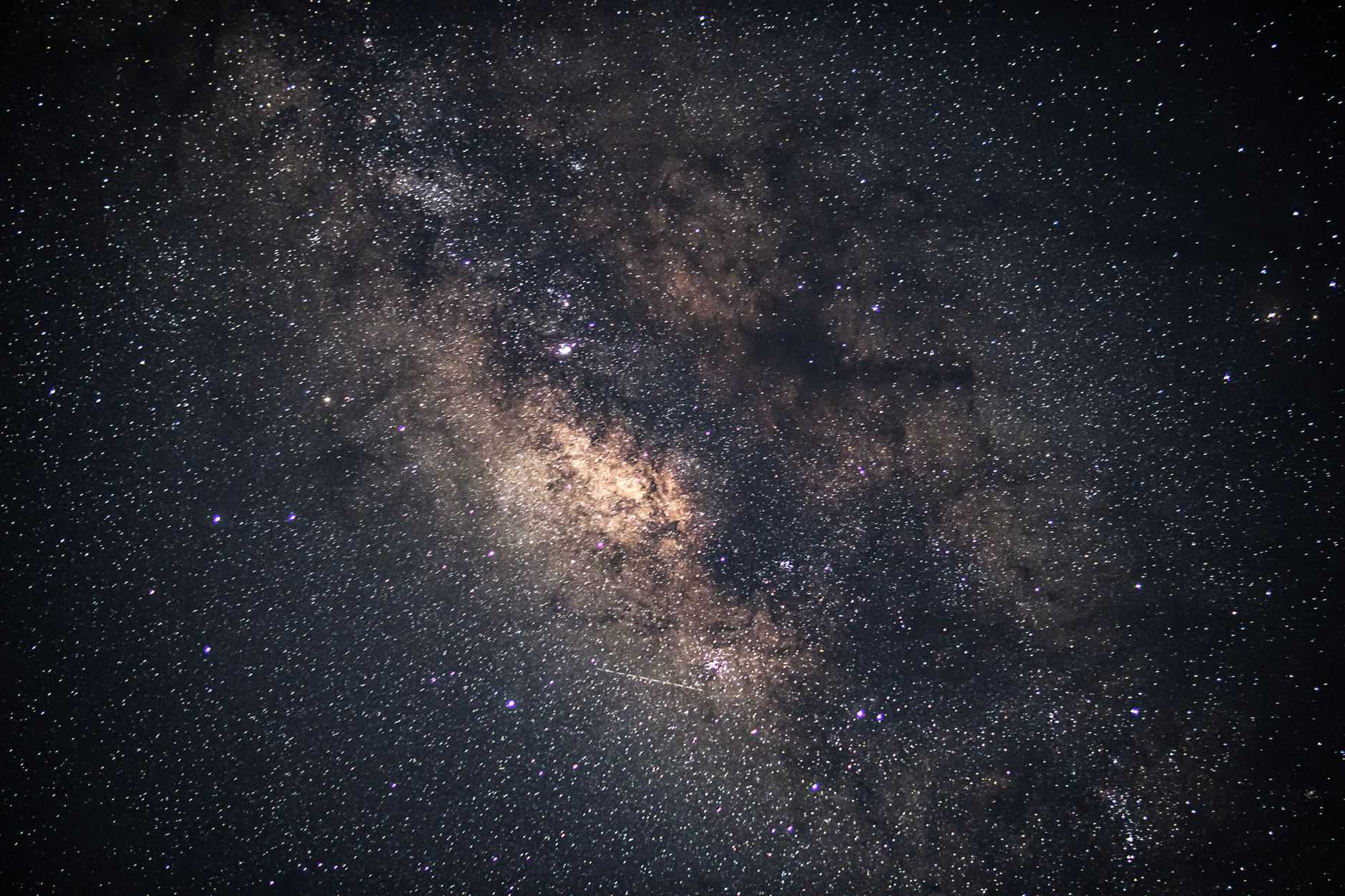
Determining the structure of the Milky Way is particularly complex due to our position inside it. Alyssa Goodman pointed out that filaments like Nessie could lie along spiral arms or connect larger galactic features, acting as structural markers. Satellite tech aids such mapping, as in Russian satellites' orbit insights.
“The very long and thin infrared dark cloud “Nessie” is even longer than previously thought, and its galactic position suggests that it lies directly in the Milky Way’s mid-plane, tracing a highly elongated, bone-like feature within the prominent Scutum-Centaurus spiral arm,” wrote the authors.
Simulations of spiral galaxies have predicted such networks of filaments, and similar formations have been observed in other galaxies. As they noted, locating further “bone”-like features could allow astronomers to build a more precise 3D map of the Milky Way and better grasp its structure.
Hand picked for you by Author
First-Ever Twin Black Holes Orbiting in Mrk 501
Astronomers led by Silke Britzen have discovered the first confirmed pair of supermassive black holes orbiting each other in galaxy Markarian 501, rev...

JAXA's 2030s Hunt for Life's Origins in Ancient Comet
JAXA's Next Generation Small-Body Return (NGSR) mission targets low-activity comet 289P/Blanpain in the 2030s to collect untouched samples revealing e...

2026 Solar Eclipse: 157 Years Until It Repeats?
A total solar eclipse on August 12, 2026, will cross the Arctic, Greenland, Iceland, and northern Spain, with max totality of 2m18s in the North Atlan...

LHC's Stunning Glimpse Into Big Bang's Chaos
ALICE team at LHC observed quark-gluon plasma signatures in proton-proton and proton-lead collisions for the first time, revealing anisotropic flow pa...

Black Hole Starves: 95% Dimmer in Just 20 Years
Astronomers observed galaxy J0218−0036's supermassive black hole fade 95% in brightness over 20 years due to a sudden 98% gas supply cut in just seven...
You Might Also Like



Elijah Tobs
A seasoned content architect and digital strategist specializing in deep-dive technical journalism and high-fidelity insights. With over a decade of experience across global finance, technology, and pedagogy, Elijah Tobs focuses on distilling complex narratives into verified, actionable intelligence.
Learn More About Elijah Tobs