Stop Buying Bouquets: The Secret to a Year-Round Cutting Garden
Elijah TobsBy Elijah Tobs
Garden
May 30, 2026 • 9:15 PM
7m7 min read
Verified
Source: Unsplash
The Core Insight
Ceramic artist and gardener Frances Palmer redefines the 'cutting garden' by encouraging gardeners to look beyond traditional blooms. By incorporating herbs, ornamental shrubs, native plants, and even vegetable foliage, you can create stunning, architectural arrangements. The guide covers essential tips for harvesting, conditioning, and selecting plants that offer beauty in every stage of their life cycle, from bud to seedpod.
As the founder and primary investigative voice at Kodawire, Elijah Tobs brings over 15 years of experience in dissecting complex geopolitical and financial systems. His work is centered on the ethical governance of emerging technologies, the shifting architectures of global finance, and the future of pedagogy in a digital-first world. A staunch advocate for high-fidelity journalism, he established Kodawire to be a sanctuary for deep-dive intelligence. Moving away from the ephemeral nature of modern headlines, Kodawire delivers permanent, verified insights that challenge the status quo and empower the global reader.
Expand your definition: Stop viewing your garden as a "row of annuals." Every shrub, vine, and herb is a potential candidate for your vase.
Ditch the plastic: Use stiff-stemmed plants like smokebush or asparagus fronds as a natural, structural foundation instead of floral foam or wire.
Embrace the full cycle: Don't just wait for the bloom. Buds, seedpods, and fading foliage offer unique textures and architectural interest.
Condition with water: If a flower wilts, submerge the entire stem and bloom in cold water to revive it.
Most of us were taught that a cutting garden is a utilitarian row of zinnias or dahlias, tucked away from the "real" landscape. But after years of digging in the dirt, I’ve learned that this approach is far too limiting. True floral artistry begins when you stop treating your garden as a factory and start seeing it as a living palette. Whether it’s a stray asparagus frond or a branch of smokebush, everything in your yard has a moment where it belongs in a vase. If you are looking to expand your plant palette, consider exploring sculptural plants that add unique architectural interest to any space.
True floral artistry begins when you stop treating your garden as a factory. (Credit: Caroline Badran via Unsplash)
Why You Can Trust This
I have spent decades working with soil, observing plant behavior, and experimenting with the intersection of horticulture and design. My approach is rooted in direct observation, watching how plants respond to pruning, how they hold up in water, and how they interact with the local ecosystem. I have vetted these techniques against the realities of seasonal gardening, ensuring that the advice provided is practical for the home gardener rather than just theoretical. For more on professional gardening standards, see expert resource vetting.
The Structural Approach: Building Better Arrangements
We often rely on artificial crutches like floral foam or chicken wire to force flowers into submission. I’ve found that the most beautiful arrangements are those that support themselves. By using stiff-stemmed plants, like the bronze-hued branches of a smokebush or the feathery, sturdy stalks of young asparagus, you create a natural armature. This allows you to tuck softer, more delicate blooms into the structure, giving the arrangement dimension without the need for synthetic devices.
Working With the Seasons
Timing is the heartbeat of the cutting garden. In early spring, focus on the "small treasures", muscari, species tulips, and rock iris. As the season progresses, shift your focus to the structural perennials like Verbascum and Hollyhocks. By late autumn, lean into the native asters and goldenrod. Remember, your hardiness zone dictates your specific window, but the philosophy remains: harvest what the season offers, and always leave enough for the plant to thrive next year. For those interested in the science of plant health, understanding proper pruning techniques is essential for long-term garden success.
Harvest what the season offers, and always leave enough for the plant to thrive. (Credit: Peter Amende via Unsplash)
The Unpopular Opinion
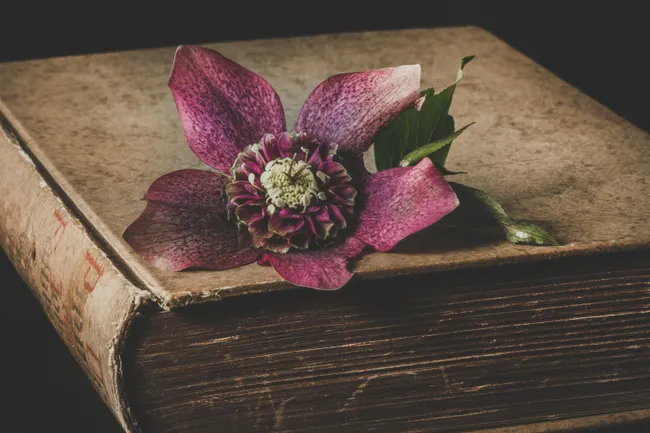
Most experts will tell you to "condition" your stems with complex chemical additives or aggressive physical trauma like hammering the ends. I disagree. Most flowers simply need clean water and a bit of patience. If a hellebore wilts, don't reach for a chemical preservative; just submerge the entire flower in a bucket of cold water. It’s a simple, natural reset that works more often than not.
The Natural Approach
Sustainability in the cutting garden means working with what you have.
Avoid floral foam: It is non-biodegradable and toxic. Use woody stems or foliage as your base instead.
Native integration: Incorporate native plants like asters and goldenrod to support local pollinators while adding seasonal depth to your bouquets. Learn more about native landscaping philosophies to improve your garden's ecosystem.
Succession planting: Stagger your gladiola bulbs every two weeks to ensure a continuous harvest without needing to over-plant.
Use a coleus leaf as your guide for every other flower you add to the vase. (Credit: Dion via Unsplash)
The Lazy Gardener's Shortcut
If you want a foolproof color palette, look to your coleus. Don't overthink the design, just pick a coleus leaf with a color you love, and use that single leaf as your guide for every other flower you add to the vase. It’s the easiest way to ensure your arrangement looks intentional and cohesive.
My Recommended Setup
I keep my toolkit simple: a sharp pair of bypass pruners for clean cuts, a collection of varied ceramic vases (which provide their own weight and stability), and a bucket of cold water for immediate rehydration. That’s it. No fancy chemicals, no plastic grids.
I’m curious about your own garden habits. Do you have a favorite "unconventional" plant, perhaps a herb, a vine, or a seedpod, that you love to bring indoors? I’ll be checking the comments for the next 24 hours to hear your experiences.