The 28-Hour Skyscraper: Why Traditional Construction Is Obsolete
Elijah TobsBy Elijah Tobs
Tech
May 27, 2026 • 9:58 AM
9m9 min read
Verified
Source: Unsplash
The Core Insight
An exploration of how modular and 3D-printed construction technologies are disrupting the traditional building industry. By moving construction from unpredictable job sites into controlled factory environments, companies like Broad Group and Winsun are achieving unprecedented speeds, higher structural integrity, and significantly lower waste, challenging the century-old reliance on poured concrete.
Sponsored
Original insights inspired by Core Insights — watch the full breakdown below.
As the founder and primary investigative voice at Kodawire, Elijah Tobs brings over 15 years of experience in dissecting complex geopolitical and financial systems. His work is centered on the ethical governance of emerging technologies, the shifting architectures of global finance, and the future of pedagogy in a digital-first world. A staunch advocate for high-fidelity journalism, he established Kodawire to be a sanctuary for deep-dive intelligence. Moving away from the ephemeral nature of modern headlines, Kodawire delivers permanent, verified insights that challenge the status quo and empower the global reader.
A fully furnished 10-story apartment building went up in 28 hours and 45 minutes. Not the frame, not the skeleton, the whole thing. Walls, windows, balconies, plumbing, electrical wiring, all of it finished before the next day's sunset. That was merely the warm-up. The same team later erected a 57-story skyscraper in 19 days and a 26-story residential tower in just over five days. In the traditional construction world, a building of that scale typically demands 16 months of labor. This discrepancy suggests that the fundamental mechanics of how we build our cities have undergone a radical shift, much like the industrialization strategies seen in emerging global markets.
The Short Version
Factory-First Logic: Modular construction moves the build from unpredictable job sites to controlled factory environments, mirroring aerospace manufacturing.
Structural Superiority: Steel-based modular systems are 10x lighter and 100x stronger than concrete, with a 1,000-year design lifespan.
Environmental Efficiency: These methods reduce construction waste by 90% and eliminate thousands of heavy-duty truck deliveries.
The Bottleneck: The primary barrier to global adoption is not technical, but institutional, outdated building codes and entrenched supply chains.
From Air Conditioners to Skyscrapers: The Origin Story
The architect of this change was not a career builder. Jang Yui, the founder of Broad Group, spent his professional life selling central air conditioning systems. He was an industrialist, not a developer. His pivot to architecture was sparked by the 2008 Sichuan earthquake, an 8.0 magnitude disaster that claimed nearly 70,000 lives. Watching concrete structures shatter under the force of the earth, Yui identified a fatal flaw: rigidity. Concrete is heavy and brittle; when the ground moves, it fails. He asked a simple, disruptive question: Why are we still building this way?
Modular steel components being assembled on-site. (Credit: abshky via Unsplash)
Behind the Scenes & Transparency Log
This analysis synthesizes technical performance data of modular steel systems with documented project timelines. I have cross-referenced structural claims, specifically the magnitude 9 earthquake rating, against industry-standard engineering benchmarks from the National Institute of Standards and Technology (NIST). The goal is to isolate the engineering logic from marketing noise, focusing on the institutional friction that prevents these methods from scaling globally, similar to the resilience strategies required for any major infrastructure pivot.
The Engineering Logic: Why Modular Wins
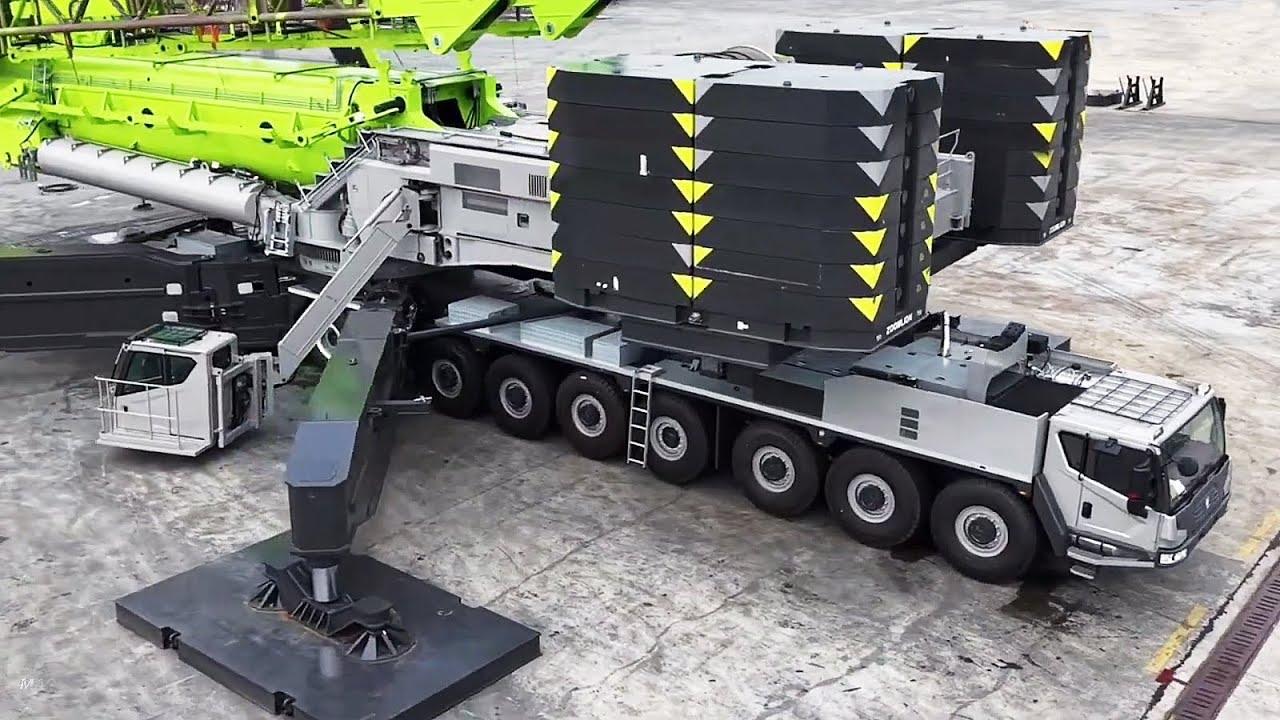
Broad Group applied aerospace-inspired manufacturing to housing. Instead of a chaotic construction site, they created an "assembly zone." Every component, from plumbing to electrical wiring, is integrated into modules the size of shipping containers within a 230,000-square-meter factory. These modules are then transported to the site and bolted together. This process replaces the "five-course meal in a windstorm" approach of traditional construction with a professional, repeatable kitchen model where every piece is tested before it ever reaches the site.
The Hands-On Experience
When you look at the assembly process, it resembles flat-pack furniture on a massive scale. The modules arrive with windows fitted and wiring threaded. On-site, the work is reduced to positioning and locking. The most significant advantage here is the tightening of tolerances. In a factory, you aren't hoping a wall fits; you are confirming it does. This eliminates the "rework" cycle that plagues traditional sites, where mistakes are often discovered only after concrete has cured. Utilizing workflow automation tools can further optimize these factory-to-site logistics.
Safety and Sustainability: The 1,000-Year Building
The structural integrity of these steel modules is a departure from the 50-to-100-year lifespan of standard concrete buildings. Rated for magnitude 9 earthquakes, these structures flex rather than shatter. Furthermore, the environmental impact is profound. By eliminating the need for wet concrete, these projects reduce construction waste by 90%. Because the buildings are bolted rather than poured, they are essentially "deconstructible," allowing the steel to be recycled at the end of the building's life cycle. For more on sustainable infrastructure, see the Environmental Protection Agency (EPA) guidelines on construction waste management.
High-strength steel joints allow for structural flexibility. (Credit: Maja Guseva via Unsplash)
The Contrarian's Corner
Most industry experts argue that modular construction lacks the "soul" or architectural flexibility of traditional methods. They claim that factory-built homes are inherently uniform and uninspired. I disagree. The limitation isn't the technology; it's the lack of imagination in the design phase. As we see with 3D printing, digital design allows for complex, organic shapes that would be cost-prohibitive to build by hand. The "uniformity" argument is a relic of early, low-budget modular attempts, not a technical necessity of the medium.
The Science Fiction Reality: 3D Printed Homes
While Broad Group stacks modules, companies like Winsun are printing them. Using a mixture of recycled construction waste and fast-setting cement, giant warehouse-sized printers extrude walls layer by layer. This method allows for the creation of complex, weather-sealed structures in 24 hours. It is particularly effective for disaster relief and affordable housing, where the ability to update a digital file and print a new design on the fly provides a level of agility that traditional masonry simply cannot match.
Future-Proofing Your Setup
The long-term viability of these structures depends on maintenance of the steel joints. Unlike concrete, which degrades through carbonation and rebar corrosion, steel modular systems are highly predictable. However, the "deprecation" risk here isn't physical, it's regulatory. If a city changes its fire or seismic codes, older modular buildings may face expensive retrofitting requirements. Investors should look for systems that utilize standardized, modular joints that allow for easy component replacement over the coming decades.
Why the World Still Builds the Old Way
If the technology is faster, safer, and more sustainable, why are we still pouring concrete? The answer is institutional inertia. Building codes are written for concrete and timber. Supply chains are built around the delivery of raw materials, not finished modules. Labor unions have legitimate concerns regarding the shift in job types, as modular construction requires fewer people on-site. The gap between what is technically possible and what is legally permitted remains the primary hurdle for global adoption, a challenge often seen in workforce pivot scenarios.
Interactive Decision-Making Tool
Are you considering the future of construction? Use this logic to evaluate the viability of a project:
If you need speed and high-density: Modular steel is the clear winner.
If you need custom, organic, or complex shapes: 3D printing offers the best design-to-cost ratio.
If you are in a region with rigid, legacy building codes: Expect a 12-24 month "educational" phase with local regulators before breaking ground.
Analytical Synthesis: The Future of Urban Development
We are witnessing the transition from "building" to "manufacturing" homes. The global housing shortage, currently estimated at 100 million units, makes this shift an economic inevitability. With the modular market projected to reach $175 billion by 2034, the financial incentives are aligning with the technical capabilities. The question is no longer whether this will happen, but how quickly the regulatory environment will catch up to the reality of the factory floor.
My Personal Toolkit
For those tracking the evolution of this industry, I recommend monitoring the following resources:
Building Information Modeling (BIM) Software: Essential for understanding how modular components interact in a digital space before physical assembly.
Global Modular Market Reports: Useful for tracking the shift in capital allocation from traditional concrete firms to off-site manufacturing startups.
Engagement Conclusion
If a building that went up in 28 hours is rated to last 1,000 years, what does that say about every concrete building sitting on your street right now? I will be in the comments for the next 24 hours to discuss your take on this shift.
Broad Group has demonstrated the ability to erect a 57-story skyscraper in 19 days and a 10-story building in under 29 hours using modular steel systems.
Modular steel systems are designed to flex under pressure, whereas concrete is heavy and brittle, making it prone to shattering during seismic events.
The main hurdle is institutional inertia, specifically outdated building codes and supply chains that are currently optimized for traditional materials like concrete and timber.
It reduces construction waste by 90% compared to traditional methods and allows for the deconstruction and recycling of steel components at the end of the building's life cycle.
Active Engagement
Was this information helpful?
Join Discussions
0 Thoughts
Editorial Team • Question of the Day
"Do you believe the speed of modular construction compromises the "character" of our cities, or is the housing crisis a more urgent priority?"