How to Make Your First $100K as a Songwriter (No Label Required)
Tobiloba OdejinmiBy Tobiloba Odejinmi
Education
May 26, 2026 • 8:05 PM
9m9 min read
Verified
Source: Unsplash
The Core Insight
Brianna Marin shares her journey from struggling with traditional publishing deals to generating over $100,000 independently. By shifting from a 'fame-chasing' mindset to a 'business-first' approach, she leveraged platforms like SoundBetter and BeatStars to create predictable, scalable income streams. The strategy focuses on home-studio production, direct-to-consumer service models, and establishing strict business policies to protect creative time.
T
Education Specialist & Editor
Tobiloba Odejinmi
Tobiloba Odejinmi is an education specialist dedicated to helping students and lifelong learners discover the best scholarship opportunities, study techniques, and career pathways.
The Kodawire Editorial Team consists of experienced journalists and subject matter experts dedicated to delivering accurate, well-researched, and engaging content.
The Independent Songwriter: How to Build a Six-Figure Career Without a Label
The Short Version
Own Your Infrastructure: Stop relying on high-end studio rentals. A professional home setup is your primary business asset.
Adopt a Service-First Mindset: Platforms like SoundBetter allow you to monetize your talent immediately rather than waiting on elusive royalty checks.
Enforce Business Boundaries: Protect your time with strict revision limits and upfront payment policies to avoid "scope creep."
Build a Passive Catalog: Use licensing platforms like BeatStars to turn one-time creative efforts into recurring, compounding revenue streams.
For years, the industry narrative has been clear: you need a label, a publisher, and a "big break" to be considered a professional. I spent my early career chasing that exact dream, only to find that the reality of a six-figure publishing deal often involves delayed payments, dependency on artist schedules, and the constant threat of being dropped. When my own publishing income stalled, I was forced to pivot. That pivot didn't just save my career, it taught me that the most reliable path to financial stability in music isn't fame; it’s treating your craft as a direct-to-consumer business, much like the 4 AI business models that are currently disrupting traditional industries.
The Myth of the 'Big Break'
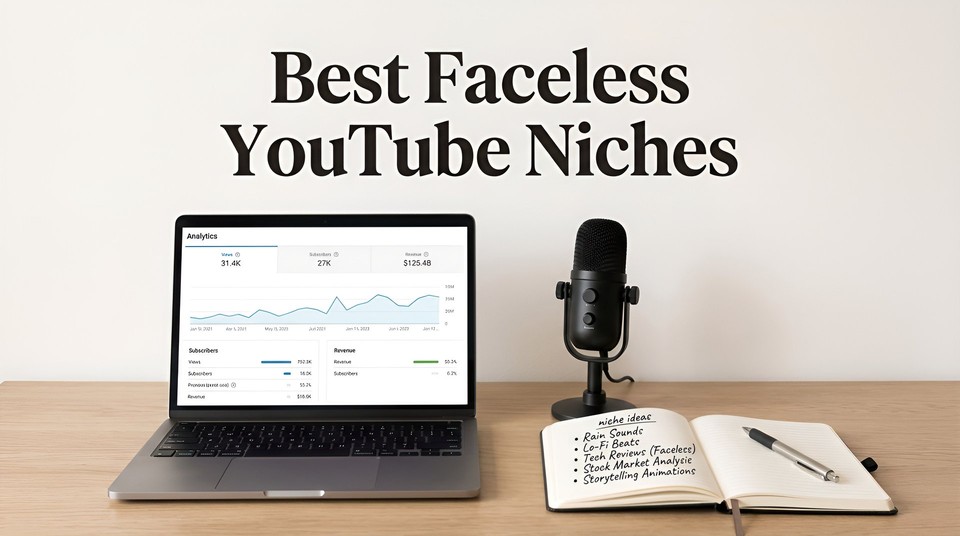
We are often sold the idea that fame equals financial security. In reality, many of the most successful songwriters I know are entirely anonymous to the general public. They are working professionals, background singers, jingle writers, and session vocalists, who have built sustainable careers by solving problems for others. When I moved to Los Angeles, I realized that the "big leagues" aren't defined by a Billboard chart position, but by the ability to meet your own financial needs through your work. Relying on gatekeepers means your income is tied to their decisions, their tour schedules, and their artistic whims. When you remove the gatekeeper, you regain control, similar to how creators are finding success with faceless YouTube niches to bypass traditional media gatekeepers.
Why You Can Trust This
My perspective comes from years of navigating the transition from traditional industry dependency to independent entrepreneurship. I have personally vetted the platforms and business models discussed here, moving from the uncertainty of royalty-based income to the predictability of service-based revenue. This analysis is based on direct experience with studio infrastructure, client management, and the mechanics of digital licensing, ensuring that the strategies provided are grounded in practical, real-world application rather than theoretical industry advice.
Phase 1: Building Your Foundation
If you want to earn money, you must be able to deliver professional-grade files from your own space. You don't need a million-dollar studio to start. I began by consulting with an engineer who knew my voice to select a reliable microphone and interface. The goal is to create a "vocal chain" and a recording template that allows you to deliver high-quality, radio-ready files consistently. If you are just starting, use what you have, but prioritize reinvesting your early earnings into better gear. Your equipment is not an expense; it is the machinery of your business.
A professional home studio setup is the foundation of your independent music business. (Credit: Peter Dyllong via Pexels)
Market Dynamics
The music industry is shifting toward a hybrid model. Businesses and independent creators are increasingly bypassing traditional agencies in favor of direct-hire platforms. For a songwriter, this means your ROI is no longer tied to a single hit song, but to the volume and quality of your service output. By treating your home studio as a production hub, you reduce overhead costs while increasing your profit margins per project, a strategy that mirrors the efficiency found in lazy business models that prioritize high-margin output.
Phase 2: The Direct-to-Consumer Model
Platforms like SoundBetter changed everything for me. The ability to negotiate a project, deliver the work, and receive payment within the hour is a massive shift from the "wait-and-see" nature of traditional publishing. To succeed here, you must treat your profile like a storefront. Use high-quality photos, curate a reel of your best work, and clearly define your services, whether that’s writing hooks, providing background vocals, or finishing lyrics. When you stop acting like a "star" and start acting like a service provider, you become a magnet for high-end clients, including DJs and TV music libraries.
Most people in the music industry will tell you that you should always be open to "exposure" or "collaborative splits" (50/50 deals) to build your network. I disagree. In the early stages of building a business, 50/50 splits on small projects are often a recipe for lost revenue and administrative headaches. If you want to be a professional, you must be willing to charge for your time upfront. If a client isn't willing to pay for your expertise, they aren't a client, they are a hobbyist, and your time is too valuable to spend on projects that don't move your bottom line.
Phase 3: Essential Business Policies
Talent is only half the equation. The other half is the "business sense" that protects your time. I learned the hard way that without clear policies, clients will consume your schedule with endless revisions. My solution was to implement strict boundaries: no 50/50 splits on small projects, a set number of free revisions, and clear turnaround times. These policies don't just protect you; they actually attract better clients. Serious professionals appreciate clear expectations. If someone pushes back on your boundaries, they aren't the right client for your business.
Clear business policies and project management are essential for scaling your songwriting career. (Credit: Tim Mossholder via Pexels)
The Execution Strategy
To implement this, start by drafting a "Client Onboarding Document." This should outline your payment terms, revision policy, and expected delivery dates. When a new inquiry comes in, send this document immediately. This sets the tone that you are a professional business entity. By automating these expectations, you reduce the time spent on back-and-forth emails and ensure that every project you accept is profitable from day one.
Phase 4: Scaling with Passive Licensing
Once you have a steady stream of project-based income, the next step is to build a catalog that pays you while you sleep. Partnering with producers on platforms like BeatStars allows you to license your hooks to independent artists. This is the "real estate" of the music world: you record the hook once, and it continues to generate revenue every time a license is purchased. By offering tiered licensing, from basic to unlimited, you create a scalable income stream that compounds over time. Consistency is the key; as your catalog grows, so does your monthly revenue.
The Decision Matrix
Not sure where to focus your energy? Use this simple guide:
If you need immediate cash flow: Focus on service-based platforms (SoundBetter) where you trade time for money.
If you have a backlog of unreleased hooks: Focus on licensing platforms (BeatStars) to build long-term passive income.
If you are struggling with client disputes: Stop taking projects without a written policy on revisions and payment terms.
The Resilient Income Model
If you successfully combine service-based income with a growing licensing catalog, you create a "resilient income" model. In a best-case scenario, your SoundBetter profile provides the cash to cover your monthly overhead, while your BeatStars catalog acts as a high-margin investment portfolio. This dual-stream approach protects you from market fluctuations, if one platform slows down, the other continues to provide stability, allowing you to focus entirely on your creative output.
Recording Interface: A high-quality, low-latency interface is non-negotiable for professional vocal delivery.
DAW Templates: Pre-configured project files that allow you to start recording the moment inspiration strikes.
Client Management System: A simple, organized folder structure for tracking project status, revisions, and final file delivery.
Over to You
The transition from a creative outlet to a sustainable business is rarely easy, but it is entirely within your control. If you had to choose one, would you prioritize the immediate, high-touch income of service-based work, or the long-term, passive potential of a licensing catalog? I will be in the comments for the next 24 hours to discuss your strategy.
No. You do not need a million-dollar studio. You need a reliable microphone, a quality interface, and a consistent recording template to deliver radio-ready files from your own space.
50/50 splits on small projects often lead to administrative headaches and lost revenue. Charging for your time upfront establishes you as a professional and ensures you are compensated for your expertise.
You can build a catalog of hooks and license them on platforms like BeatStars. By offering tiered licensing, you create a scalable income stream that generates revenue every time a license is purchased.
Active Engagement
Was this information helpful?
Join Discussions
0 Thoughts
Editorial Team • Question of the Day
"What is the biggest barrier currently stopping you from treating your music career as a full-time business?"