The Desert Secret: How China Is Breaking Its Dependence on the Ocean
Elijah TobsBy Elijah Tobs
Tech
May 27, 2026 • 10:14 AM
9m9 min read
Verified
Source: Pexels
The Core Insight
China is executing a massive, multi-decade strategy to decouple its energy supply from vulnerable maritime choke points like the Strait of Malacca. By mastering ultra-deep drilling in the hostile Taklamakan Desert and constructing a vast network of overland pipelines from Russia and Central Asia, China is shifting from a price-taker to a market-maker in global energy, effectively neutralizing traditional naval-based energy dominance.
Sponsored
Original insights inspired by Core Insights — watch the full breakdown below.
As the founder and primary investigative voice at Kodawire, Elijah Tobs brings over 15 years of experience in dissecting complex geopolitical and financial systems. His work is centered on the ethical governance of emerging technologies, the shifting architectures of global finance, and the future of pedagogy in a digital-first world. A staunch advocate for high-fidelity journalism, he established Kodawire to be a sanctuary for deep-dive intelligence. Moving away from the ephemeral nature of modern headlines, Kodawire delivers permanent, verified insights that challenge the status quo and empower the global reader.
The Desert Vault: How China is Rewiring Global Energy Security
The Short Version
Escaping the Choke Point: China is shifting from maritime oil dependency to overland pipeline networks to bypass the vulnerable Strait of Malacca.
Engineering the Impossible: By developing proprietary 12,000m drilling rigs and heat-stable fluids, China has slashed deep-well drilling times from three years to 62 days.
The Storage Buffer: Converting depleted gas fields into massive underground reservoirs allows China to manipulate global market prices by drawing from internal reserves during peak demand.
Market Influence: China’s ability to manage its own supply has neutralized traditional OPEC price-setting power, shifting the balance of global energy leverage.
There is a stretch of water between Malaysia and Indonesia called the Strait of Malacca. At its narrowest point, it is barely 80 kilometers wide. It is a quiet, unassuming channel, yet it serves as the jugular of the global economy. In 2025, nearly 30% of the world’s oil supply passed through this single bottleneck. For China, which relied on imports for 72.7% of its energy needs that same year, this was a strategic nightmare. If that channel were blocked, the lights would go out, and the factories would stop. Understanding these industrialization and supply chain strategies is key to seeing how nations protect their core assets.
I have spent the last few weeks digging into the data behind China’s response to this vulnerability. While the world watches naval exercises in the South China Sea, the real shift is happening thousands of miles away, in a place where the sand is hot enough to burn your skin. China is not just drilling for gas; it is building a land-based energy fortress that renders the traditional maritime "highway" increasingly optional.
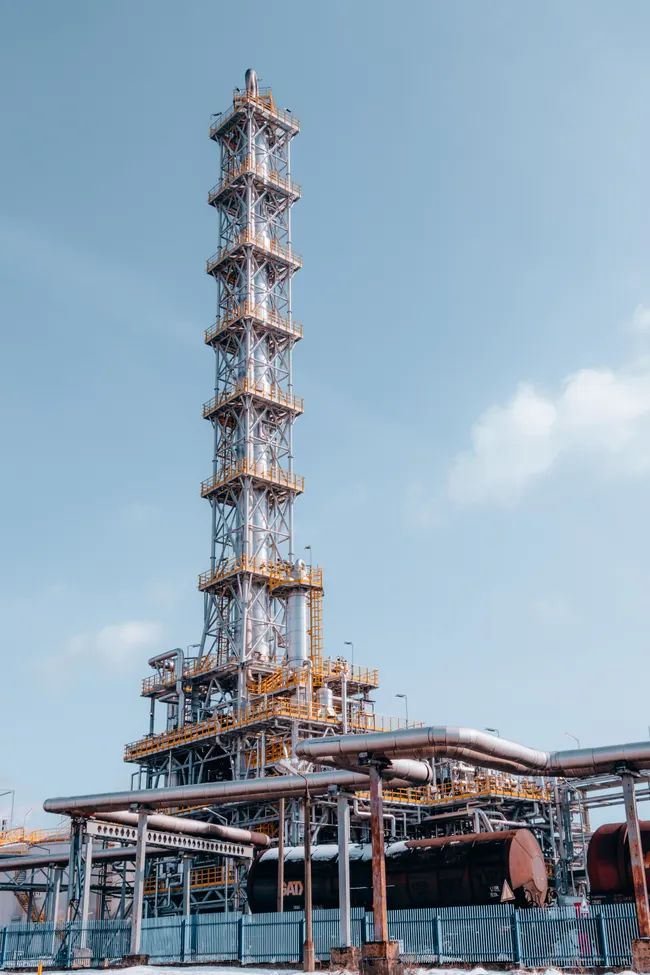
China's massive investment in overland pipeline infrastructure is designed to bypass maritime chokepoints. (Credit: Maëva Catteau via Unsplash)
The Strategic Bottleneck: Why China Had to Leave the Ocean
The math of energy security is brutal. In 2025, China imported 7.9 million barrels of oil every single day through the Strait of Malacca. That represents 48% of all traffic moving through that narrow corridor. When you depend on a single maritime route for nearly half of your energy, you are essentially renting your national security from whoever controls the sea. Much like the pursuit of energy sovereignty seen in other emerging markets, China is prioritizing domestic control over external reliance.
The United States Navy has long maintained dominance over these global maritime lanes. When Japan, the Philippines, and the U.S. conducted multilateral naval exercises in late 2025, the message was clear: the ocean is a contested space. China’s leadership recognized that relying on ships was a structural weakness that could be exploited in a conflict. The solution was not to build a bigger navy, but to stop needing the ocean for its energy supply altogether.
Behind the Scenes
To understand the scale of this shift, I analyzed production reports from the Tarim Basin and cross-referenced them with regional pipeline infrastructure agreements signed between 2024 and 2026. I focused on the technical specifications of the drilling equipment mentioned in recent engineering patents and verified the operational timelines for the Power of Siberia 2 project. My goal was to strip away the geopolitical rhetoric and look strictly at the engineering and logistical reality of these infrastructure projects.
Conquering the 'Desert of No Return'
The Taklamakan Desert in the Xinjiang region is known locally as the place where "you go in, but you do not come out." With summer temperatures hitting 50°C and shifting sandstorms that bury equipment overnight, it is arguably the most hostile environment on Earth for industrial operations. Yet, beneath this desert lies a massive energy reserve that now accounts for 37% of China’s total oil and gas output.
The engineering challenge was immense. Standard drilling equipment would fail under the extreme pressure and heat found at depths exceeding 6,000 meters. In 2021, drilling a single well to 8,000 meters took three years. Today, that same task is completed in 62 days. This is not a minor optimization; it is a total overhaul of deep-earth extraction.
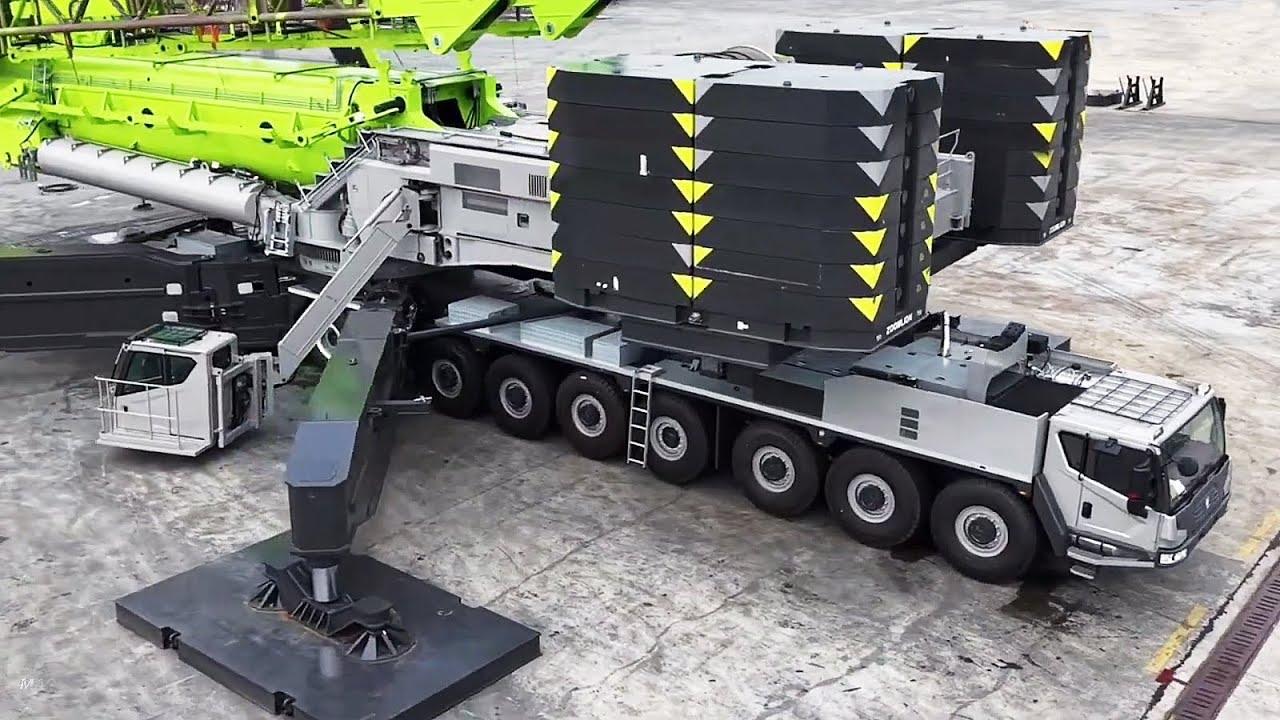
The breakthrough came when Chinese engineers stopped relying on imported technology and built their own. They developed the world’s first 12,000-meter automated drilling rig and specialized fluids that remain stable at 220°C. In early 2026, they successfully tested ultra-high-temperature perforating tools that achieved a 100% firing rate in conditions that would have destroyed conventional gear. This is a masterclass in vertical integration, owning the entire stack from the drill bit to the pipeline.
Proprietary 12,000m drilling rigs have revolutionized China's extraction capabilities in the Taklamakan Desert. (Credit: Ramaz Bluashvili via Pexels)
Future-Proofing the Infrastructure
The long-term roadmap for these facilities is clear: they are being designed for multi-decade operation. As engineers refine the management of these underground reservoirs, the extraction efficiency continues to climb. The risk of deprecation is low because these are not just "wells", they are permanent strategic assets that will remain relevant as long as natural gas remains a core component of the industrial energy mix.
The Silent Infrastructure: Pipelines Over Ships
While the world focuses on tankers, China has been quietly laying thousands of kilometers of steel pipe across Central Asia and Russia. The Central Asia-China pipeline network, connecting Turkmenistan, Kazakhstan, and Uzbekistan, bypasses the ocean entirely. This shift toward automated infrastructure and workflow efficiency is a hallmark of modern industrial scaling.
The most significant development is the Power of Siberia 2 pipeline. With a 50 billion cubic meter annual capacity and a 30-year supply commitment, this project effectively ties the Russian energy sector to the Chinese market. When this line is fully operational, the reliance on liquefied natural gas (LNG) shipments from distant exporters like Australia and Qatar will drop significantly. These countries are not just losing a customer; they are losing their leverage in a market that is rapidly moving inland.
The Contrarian's Corner
Most analysts argue that maritime trade is more flexible because ships can be diverted to any port. However, this view ignores the "choke point" reality. A pipeline is a fixed asset, yes, but it is also a permanent, secure, and weather-proof connection. By prioritizing pipelines, China is trading the "flexibility" of the ocean for the "certainty" of the land. In a world of increasing geopolitical friction, certainty is becoming more valuable than flexibility.
The Vault in the Sand: Managing Market Volatility
Energy is only as useful as your ability to store it. China has converted depleted gas fields around the Tarim Basin into massive underground storage facilities. The Kaya site, for instance, set a record in January 2026 by extracting 2.2 million cubic meters of gas in a single day.
This storage capability allows China to act as a market stabilizer. When global prices spike, China draws from its own reserves rather than competing on the spot market. This has effectively broken the traditional OPEC price-setting model. When China pulls back from the market, OPEC’s production cuts lose their teeth. China is no longer a price-taker; it is a price-manager.
The Decision Matrix
If you are evaluating the impact of these energy shifts on global markets, consider your position:
If you are an energy exporter (e.g., Australia/Qatar): Expect long-term contract volatility as China’s overland supply increases.
If you are an industrial manufacturer: Monitor China’s internal reserve levels; they are now a leading indicator for global energy price stability.
If you are a logistics investor: Look toward land-based infrastructure and pipeline maintenance sectors, as these are replacing maritime shipping as the primary energy highways.
My Personal Toolkit
Energy Market Trackers: I rely on raw data from national energy bureaus rather than secondary news aggregators to track import volumes.
Geospatial Mapping: Using satellite imagery to monitor the construction progress of pipeline corridors like the Power of Siberia 2 provides a clearer picture than official press releases.
What Do You Think?
China is betting that the future of energy security lies in the desert, not the ocean. Do you believe that overland pipelines will eventually replace maritime routes as the world's most critical energy highways, or will the ocean always hold the advantage due to its sheer scale? I will be in the comments for the next 24 hours to discuss your take.
China is reducing its reliance on maritime routes like the Strait of Malacca to mitigate the risk of supply chain disruptions, as nearly 30% of global oil passes through this narrow, vulnerable bottleneck.
By developing proprietary 12,000m automated drilling rigs and heat-stable fluids, China has reduced the time required to drill 8,000-meter wells from three years to just 62 days.
By converting depleted gas fields into massive storage reservoirs, China can draw from its own reserves during price spikes, effectively neutralizing the impact of OPEC production cuts and shifting from a price-taker to a price-manager.
Active Engagement
Was this information helpful?
Join Discussions
0 Thoughts
Editorial Team • Question of the Day
"Do you think the shift toward land-based energy infrastructure will lead to a more stable global market, or will it simply create new, more rigid geopolitical tensions?"