The Steel War: Why China’s New Material Is Leaving the West Behind
Elijah TobsBy Elijah Tobs
Tech
May 27, 2026 • 10:08 AM
9m9 min read
Verified
Source: Unsplash
The Core Insight
China has achieved a dominant lead in the production of third-generation advanced high-strength steel (AHSS), a material that is both lighter and stronger than traditional steel. By leveraging massive state investment, hydrogen-based production, and control over critical alloying elements, China is effectively rewriting the rules of global manufacturing. Western nations, hampered by aging blast-furnace infrastructure and high capital costs, face a significant competitive disadvantage that threatens the future of their automotive, construction, and defense industries.
Sponsored
Original insights inspired by Core Insights — watch the full breakdown below.
As the founder and primary investigative voice at Kodawire, Elijah Tobs brings over 15 years of experience in dissecting complex geopolitical and financial systems. His work is centered on the ethical governance of emerging technologies, the shifting architectures of global finance, and the future of pedagogy in a digital-first world. A staunch advocate for high-fidelity journalism, he established Kodawire to be a sanctuary for deep-dive intelligence. Moving away from the ephemeral nature of modern headlines, Kodawire delivers permanent, verified insights that challenge the status quo and empower the global reader.
The Silent Industrial Revolution: Why Steel Matters Again
Steel remains the fundamental building block of modern life. For over a century, the global manufacturing hierarchy was clear: the nations that produced the most steel dictated the terms of global trade. However, the landscape has shifted. In 2025, China produced 960.8 million metric tons of steel, a figure that dwarfs the 80 million metric tons produced by the United States. One single Chinese entity, China Baowu, now outproduces the entire American steel industry combined. Understanding these industrialization strategies is key to grasping how nations secure long-term economic sovereignty.
The Short Version
The Tech Shift: The industry is moving from traditional steel to Third-Generation Advanced High-Strength Steel (AHSS), which offers superior strength without sacrificing flexibility.
The Economic Gap: Western mills face a 35–45% cost disadvantage due to aging 1970s-era blast furnaces and a $300 million barrier to entry for new production lines.
Strategic Dominance: China is investing $18 billion through 2030 into hydrogen-based steel and electric arc furnaces to bypass future carbon taxes and secure market leadership.
Supply Chain Control: China maintains a chokehold on critical alloying elements like vanadium, manganese, and niobium, which are essential for high-performance steel production.
But volume is only half the story. The real shift is qualitative. We are witnessing a transition from traditional steel to Third-Generation Advanced High-Strength Steel (AHSS). Much like the technological pivots seen in the software industry, this material shift requires a complete overhaul of legacy production mindsets.
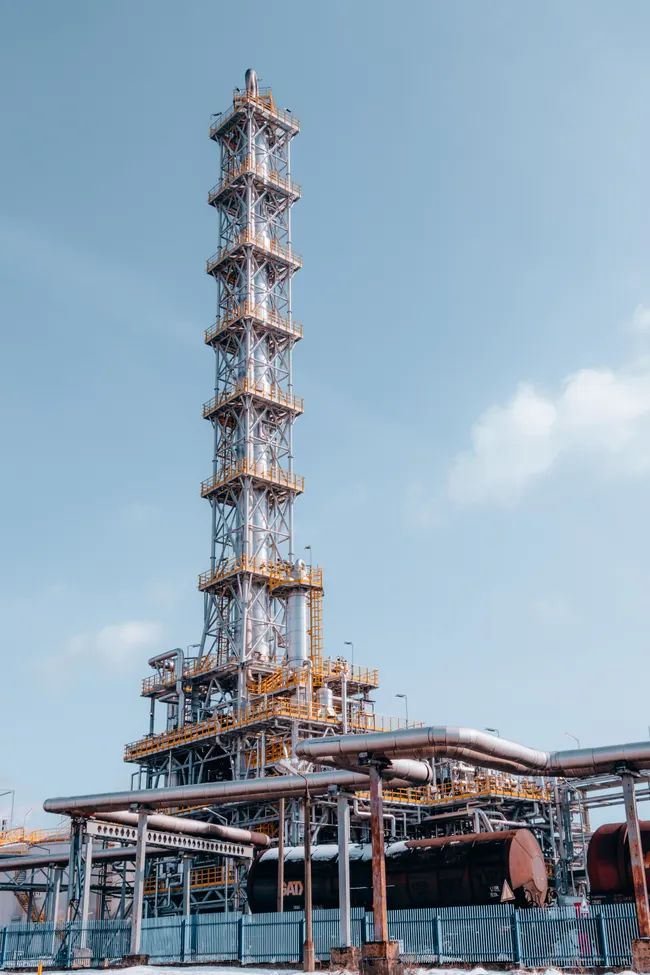
Modern steel production requires advanced thermal control and high-tech infrastructure. (Credit: Maëva Catteau via Unsplash)
How I Researched This
To understand the mechanics of this industrial shift, I conducted a deep dive into the 2025 national work plans released by the Chinese Ministry of Industry and Information Technology. I cross-referenced these policy roadmaps with financial analyst reports regarding the capital expenditure requirements for modernizing Western blast furnaces. My analysis focuses on the intersection of material science, trade policy, and industrial economics, stripping away marketing hype to look at raw cost-per-ton data and the strategic control of alloying elements.
What is Third-Generation Advanced High-Strength Steel?
In traditional manufacturing, engineers have faced a brutal trade-off: use soft steel that is easy to shape but weak, or use hard steel that is strong but prone to cracking during the stamping process. Third-generation AHSS eliminates this compromise. By manipulating the microscopic crystal structure of the metal, scientists have created a material that is both durable and highly malleable.
The impact on the automotive sector is immediate. When Volkswagen transitioned to this material, they reduced the weight of the structural skeleton by 27%. Similarly, Hyundai and Kia achieved a 30% weight reduction in floor panels. In an era where every kilogram saved translates directly into increased range for electric vehicles, this material is a competitive necessity. For those interested in how modern tools and data-driven decisions impact efficiency, this shift represents the ultimate hardware-level optimization.
The Infrastructure Reality
When evaluating the production of AHSS, the difference between legacy and modern infrastructure is stark. Traditional blast furnaces, many dating back to the 1970s, are designed for continuous, high-heat output. They lack the precise, rapid thermal cycling required to produce third-generation AHSS. Retrofitting these facilities is often more expensive and less efficient than building new electric arc furnace (EAF) capacity from the ground up. EAFs allow for the rapid switching between steel grades, making them the superior tool for modern, high-performance metallurgy.
Electric Arc Furnaces (EAF) are the backbone of modern, flexible steel production. (Credit: Jared Murray via Unsplash)
Future-Proofing Your Setup
The long-term viability of any manufacturing setup in 2026 depends on its carbon footprint. As the EU's Carbon Border Adjustment Mechanism (CBAM) takes effect, any steel produced via traditional coal-heavy blast furnaces will likely become a liability. Future-proofing requires a transition to hydrogen-based reduction or EAFs powered by renewable grids. If a facility cannot make this transition, it faces a high risk of becoming a "stranded asset" within the next decade.
The Economic Math: Why Western Mills Are Struggling
The barrier to entry for Western producers is a massive capital hurdle. A single new AHSS production line requires a minimum investment of $300 million. For many Western firms, justifying this expenditure is difficult when Chinese competitors can undercut the finished product price by 15 to 20%. This is a structural price difference, not a temporary market fluctuation.
The Other Side of the Story
Many industry analysts argue that Western mills can simply "innovate their way out" of this disadvantage. I disagree. The problem is not a lack of innovation; it is a lack of capital structure. You cannot "innovate" your way around a 40-year-old blast furnace that is fundamentally incompatible with the thermal requirements of modern AHSS. Without massive, government-backed industrial policy, the market will continue to favor the lower-cost, high-tech output from Chinese-controlled supply chains.
China’s $18 Billion Strategic Roadmap
China’s strategy is defined in its 2025–2030 roadmap. With an $18 billion investment, they are targeting two primary areas: $8 billion for hydrogen-based steel production and $5 billion for expanding electric arc furnace capacity. This is a calculated move to prepare for the EU's CBAM. By shifting to hydrogen and clean electricity, China aims to ensure its steel remains competitive, or even tariff-free, in global markets, while Western producers using coal-fired blast furnaces may face significant carbon tax penalties.
The Hidden Supply Chain and Knowledge Gap
Even if a Western firm secured the $300 million for a new line, they would still face a supply chain bottleneck. China controls the processing capacity for vanadium, manganese, and niobium, the essential alloying elements required to give AHSS its unique properties. Furthermore, China has aggressively filed patents in green steel metallurgy, creating a roadmap of industrial knowledge that is difficult to replicate.
The Decision Matrix
If you are a procurement manager or industrial investor, how do you navigate this? Use this logic:
If you require high-strength, low-weight components: You must source AHSS.
If your supplier relies on 1970s-era blast furnaces: Expect higher carbon tax exposure and potential supply volatility.
If you are looking for long-term stability: Prioritize suppliers who have already transitioned to EAF or hydrogen-based production, regardless of their current geographic location.
Tools I Actually Use
When tracking industrial trends and material science shifts, I rely on these categories of resources:
Patent Databases: Essential for mapping the "knowledge gap" in metallurgy and green steel chemistry.
Trade Flow Analytics: Tools that track the movement of raw alloying elements like niobium and vanadium to identify supply chain shifts before they hit the headlines.
Carbon Accounting Software: Necessary for calculating the potential impact of the EU's CBAM on specific steel grades.
What Do You Think?
The race for industrial dominance in the 21st century is being written in steel, capital, and strategic policy. Do you believe Western governments will commit the necessary capital to close the capacity gap, or is the Chinese head start too large to overcome? I will be in the comments for the next 24 hours to discuss your thoughts.
It is a modern steel variant that uses manipulated microscopic crystal structures to achieve a combination of high durability and high malleability, eliminating the traditional trade-off between strength and formability.
Western mills are hindered by aging 1970s-era blast furnaces that cannot handle the thermal requirements of AHSS, combined with a high $300 million capital barrier to build modern, efficient production lines.
China is investing $18 billion through 2030 into hydrogen-based steel production and electric arc furnaces to reduce their carbon footprint and ensure their steel remains competitive under regulations like the EU's Carbon Border Adjustment Mechanism.
Active Engagement
Was this information helpful?
Join Discussions
0 Thoughts
Editorial Team • Question of the Day
"Do you think Western governments will invest enough to close this gap, or is the head start too large to overcome?"