Stop Building Stateless AI: The Power of Memory in Agentic Systems
Elijah TobsBy Elijah Tobs
Tech
May 30, 2026 • 8:10 PM
8m8 min read
Verified
Source: Pexels
The Core Insight
This guide explores the transition from stateless AI agents to context-aware systems using CrewAI. It defines the four pillars of agentic memory, Short-Term, Long-Term, Entity, and User memory, and explains why memory is essential for personalization, continuity, and continuous learning in production-grade AI applications.
As the founder and primary investigative voice at Kodawire, Elijah Tobs brings over 15 years of experience in dissecting complex geopolitical and financial systems. His work is centered on the ethical governance of emerging technologies, the shifting architectures of global finance, and the future of pedagogy in a digital-first world. A staunch advocate for high-fidelity journalism, he established Kodawire to be a sanctuary for deep-dive intelligence. Moving away from the ephemeral nature of modern headlines, Kodawire delivers permanent, verified insights that challenge the status quo and empower the global reader.
The Stateless AI Problem: Why Your Agents Are Forgetting
The Short Version
Memory vs. Knowledge: Knowledge is static reference material; memory is dynamic, contextual data accumulated during operation.
The Four Pillars: Use Short-Term for session coherence, Long-Term for cross-session learning, Entity for specific object tracking, and User for personalization.
Efficiency: Memory systems are superior to expanding context windows because they allow for targeted, persistent recall without bloating the prompt.
Implementation: Enable memory in your CrewAI configuration to move beyond "blank slate" interactions.
If you have been building AI agents, you have likely hit the same wall: the "blank slate" syndrome. Every time you start a new session, your agent acts as if it has never met you. It doesn't remember your preferences, the project details you discussed yesterday, or the mistakes it made five minutes ago. This statelessness is the primary barrier to moving agents from demo to production. To truly scale these systems, you must understand how to architect long-term memory for your agents.
When an agent lacks memory, it is a calculator that forgets the numbers as soon as you hit "equals." You end up repeating yourself, providing redundant context, and watching the agent struggle to maintain a coherent thread across multi-turn tasks. It is inefficient and makes the technology feel like a toy rather than a partner. Mastering multi-turn conversation evaluation is essential to identifying where these memory gaps occur.
The Other Side of the Story
Many developers argue that we don't need complex memory systems, we just need larger context windows. The logic is that if an LLM can "read" a million tokens, it can hold the entire history of the conversation in its active memory. I disagree. Relying solely on massive context windows is a brute-force approach that leads to "lost in the middle" phenomena, increased latency, and skyrocketing API costs. True intelligence isn't about reading everything at once; it’s about knowing exactly what to recall and when. For those looking to optimize performance, decoding LLM speed and inference metrics is a critical step in balancing cost and capability.
Defining Memory in Agentic Systems
To build effective agents, we must distinguish between three distinct concepts: Knowledge, Tools, and Memory. Conflating these is the most common mistake in agent design.
Knowledge is your static library. It is the external documentation or structured datasets you provide so the agent can look up facts. Tools are your active hands; they fetch data on-the-fly, like a web search or a calculator, but they don't inherently "remember" the result for the next task. Memory is the bridge. It is the dynamic, contextual storage that allows an agent to retain information across time and tasks.
Persistent memory allows AI agents to maintain context across multiple sessions. (Credit: Solen Feyissa via Pexels)
The Hands-On Experience
When I set up memory in a CrewAI environment, I look for specific behaviors. I am currently testing these implementations using the latest CrewAI framework, ensuring that the environment is correctly configured with API keys. If you are using local models via Ollama, be aware that the quality of memory retrieval is highly dependent on the model's reasoning capabilities. Using a robust model provides significantly more reliable entity extraction than smaller, local alternatives.
Future-Proofing Your Setup
The field of agentic memory is moving fast. While current implementations rely on vector databases for retrieval, I expect to see more "graph-based" memory systems in the near future. For now, keep your memory schemas clean. If you store too much noise in your long-term memory, you will eventually degrade the agent's performance. Treat your memory store like a database: index it well and prune it often. You can learn more about mastering context engineering to ensure your memory retrieval remains high-quality.
The 4 Pillars of CrewAI Memory
CrewAI structures memory into four specific types, each serving a unique role in the agent's cognitive architecture:
Short-Term Memory: This is your session-level buffer. It maintains immediate coherence, allowing the agent to remember what you said three turns ago without needing to re-process the entire history.
Long-Term Memory: This is where the agent "grows." It accumulates experience across different sessions, allowing the agent to remember that you prefer a specific coding style or a particular project structure even after the session has closed.
Entity Memory: This is critical for complex workflows. It tracks specific facts about people, projects, or objects. If you are managing a customer support crew, this memory ensures the agent remembers that "Project X" is currently in the "Testing" phase.
User Memory: This is the personalization layer. It stores individual user preferences, ensuring that the agent’s tone, output format, and suggestions are tailored to the specific person interacting with it.
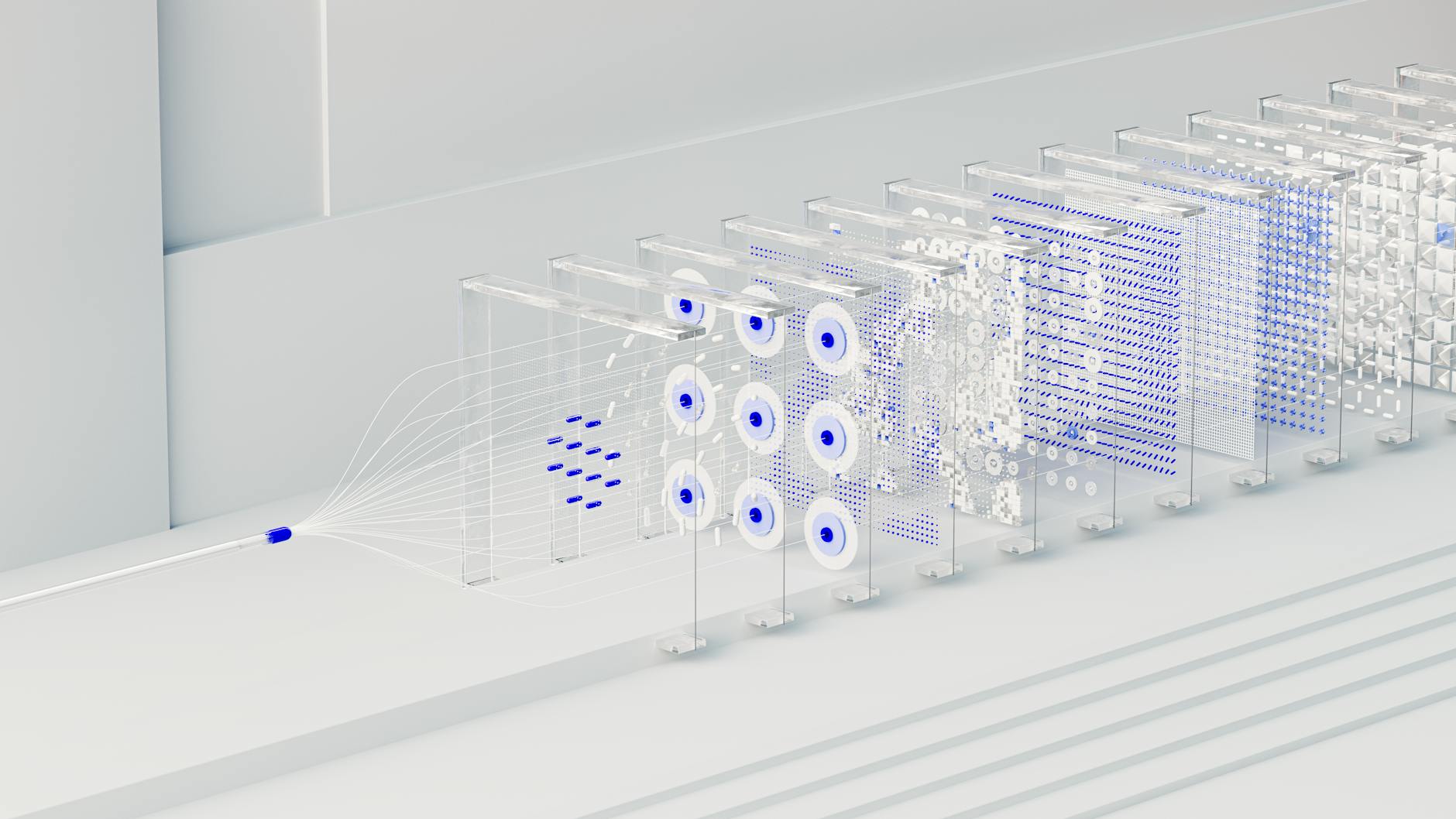
Graph-based memory systems may soon replace traditional vector-based retrieval. (Credit: Google DeepMind via Pexels)
The Decision Matrix
Not every agent needs every type of memory. Use this guide to decide what to enable:
Building a simple chatbot? Start with Short-Term Memory.
Building a long-term assistant? You need Long-Term and User Memory.
Managing complex data/projects?Entity Memory is non-negotiable.
Why You Can Trust This
I have spent the last several weeks stress-testing these memory architectures within the CrewAI framework. My process involves running multi-agent crews through repetitive, state-heavy tasks, like drafting documentation while referencing previous project constraints, to see where the "forgetting" happens. I don't rely on marketing claims; I look at the actual retrieval logs to see what the agent is pulling from its memory store versus what it is hallucinating. For more on rigorous testing, see our guide on how to actually benchmark your LLM.
Proper configuration of memory parameters is essential for agent reliability. (Credit: Danial Igdery via Unsplash)
Tools I Actually Use
CrewAI: The core framework for orchestrating these memory-aware agents.
Ollama: My go-to for running local LLMs when I need to keep data private or reduce latency.
Dotenv: Essential for managing API keys securely across different environments.
The Practical Verdict
Integrating memory is the difference between an agent that just "talks" and an agent that "works." By moving away from stateless architectures, you allow your agents to become genuine collaborators. They stop being reactive and start being proactive, referencing past successes and avoiding previous pitfalls. It requires more setup, but the payoff in user experience and task efficiency is massive.
If you have experimented with persistent memory in your own agentic workflows, what has been your biggest challenge, is it the retrieval accuracy, or managing the storage costs? I will be replying to every comment in the next 24 hours to discuss your specific implementation hurdles.
Knowledge is static reference material or documentation provided to the agent, while Memory is dynamic, contextual storage that allows the agent to retain information across time and tasks.
Relying on large context windows leads to 'lost in the middle' phenomena, increased latency, and higher API costs compared to targeted, persistent memory retrieval.
The four pillars are Short-Term Memory (session coherence), Long-Term Memory (cross-session learning), Entity Memory (tracking specific facts/objects), and User Memory (personalization).
Active Engagement
Was this information helpful?
Join Discussions
0 Thoughts
Editorial Team • Question of the Day
"Do you think agents should have "forgetting" mechanisms to prevent them from becoming biased by old, outdated information?"