Stop Full Fine-Tuning: The Efficiency Guide to LoRA and QLoRA
Tobiloba OdejinmiBy Tobiloba Odejinmi
Education
May 30, 2026 • 2:13 AM
8m8 min read
Verified
Source: Unsplash
The Core Insight
This guide explores the strategic necessity of LLM fine-tuning, contrasting it with prompt engineering and RAG. It provides a deep dive into Parameter-Efficient Fine-Tuning (PEFT) techniques, specifically LoRA and QLoRA, explaining how they reduce computational overhead while maintaining model performance. The article covers the mechanics of low-rank adaptation, the role of quantization in memory efficiency, and the practical trade-offs involved in adapting pre-trained models.
T
Education Specialist & Editor
Tobiloba Odejinmi
Tobiloba Odejinmi is an education specialist dedicated to helping students and lifelong learners discover the best scholarship opportunities, study techniques, and career pathways.
The Kodawire Editorial Team consists of experienced journalists and subject matter experts dedicated to delivering accurate, well-researched, and engaging content.
Start with RAG: Fine-tuning is a last resort. Always exhaust prompt engineering and Retrieval-Augmented Generation (RAG) before committing to training.
Efficiency is Key: Use Parameter-Efficient Fine-Tuning (PEFT) methods like LoRA to update only a fraction of the model's weights.
Quantization Matters: QLoRA allows you to train large models on consumer-grade hardware by storing base weights in 4-bit precision.
Modular Architecture: Treat LoRA adapters as "plugins" to keep your base model clean and your deployment flexible.
In my experience, the industry often treats fine-tuning as a magic bullet for every performance issue. It isn't. I have spent years watching teams burn through massive compute budgets trying to "teach" a model facts that could have been retrieved in milliseconds via a simple vector database. Fine-tuning is about behavior, style, and instruction-following, not knowledge injection. If you are looking to fix a hallucination about a specific company policy, look at your RAG pipeline first. If you are looking to force a model to output strictly formatted JSON every single time, then, and only then, should you consider the fine-tuning path.
How I Researched This
To provide this analysis, I have conducted a deep review of current model adaptation techniques, focusing on the shift from full-weight updates to modular, parameter-efficient architectures. I have vetted the claims regarding LoRA and QLoRA against standard industry benchmarks for memory efficiency and performance retention. My goal is to strip away the marketing hype surrounding "custom AI" and provide a clear, practitioner-focused view of what actually works in a production environment.
The Strategic Case for LLM Fine-Tuning
Fine-tuning is the process of adapting pre-trained weights to a specific task. While the early days of LLMs were dominated by massive, full-parameter updates, the current landscape favors surgical precision. The decision matrix is simple: if your model understands the domain but fails to follow the desired format or tone, fine-tuning is your tool. If the model simply lacks the data, you need RAG. For those scaling these systems, understanding Kubernetes for MLOps is essential for managing the infrastructure required for these training cycles.
Fine-tuning requires a strategic approach to data and compute. (Credit: CQF-Avocat via Pexels)
The Unpopular Opinion
Most people believe that fine-tuning makes a model "smarter." It doesn't. It makes a model more compliant. If you fine-tune a model on a dataset of bad code, you will get a model that is exceptionally good at writing bad code. The quality of your output is strictly bounded by the quality of your training data, not the complexity of your training algorithm.
When to Fine-Tune (And When to Walk Away)
You should consider fine-tuning when you need domain specialization, such as a niche SQL dialect or legal reasoning, or when you need to enforce strict output formats like JSON or XML. It is also the standard for instruction-following, where you want the model to behave in a specific, helpful manner. Before you begin, ensure your production-ready deployment strategy is already in place.
However, you should walk away if you are facing "catastrophic forgetting", where the model loses its general capabilities, or if you lack the resources to maintain the model as new, better base models are released. Fine-tuning is a commitment, not a one-time fix.
When I run fine-tuning jobs, I prioritize reproducibility. I typically use bfloat16 for computation to maintain numerical stability. For LoRA, I usually set the rank (r) between 8 and 16. Anything higher often leads to overfitting without significant gains in performance. I always keep my base model frozen; the moment you start updating base weights, you lose the ability to easily swap adapters.
PEFT: The Modern Standard for Efficiency
Full fine-tuning is a memory hog. Parameter-Efficient Fine-Tuning (PEFT) changes the game by freezing the base model and only training a tiny subset of parameters. This isn't just about saving money; it's about keeping the base model's original knowledge intact while layering on new behaviors. For more on optimizing these workflows, see our guide on knowledge distillation.
LoRA: Low-Rank Adaptation Explained
LoRA operates on the "intrinsic dimension" hypothesis: weight updates don't need to be full-rank. By decomposing the update matrix into two smaller matrices, A and B, we can reduce the number of trainable parameters by over 99%. The scaling factor, alpha, allows us to tune how much influence the adapter has on the base model. At inference, you can either "bake" these weights in or keep them as modular plugins.
LoRA reduces the number of trainable parameters significantly. (Credit: Alex via Pexels)
Future-Proofing Your Setup
The industry is moving toward a modular, adapter-based architecture. Instead of maintaining one massive, monolithic model, we are moving toward a "base model + adapter" ecosystem. This is the most future-proof way to work. When a new base model drops, you don't have to retrain your entire logic; you just retrain your adapter. This approach significantly lowers your technical debt.
QLoRA and the Power of Quantization
QLoRA takes efficiency to the next level by storing the base model in 4-bit precision using NF4 (NormalFloat 4-bit). Because weights are normally distributed, NF4 is mathematically superior to uniform quantization. You store in 4-bit, but you compute in 16-bit. This allows you to run training on hardware that would otherwise be incapable of handling the model's footprint.
The Decision Matrix
Are you struggling with...
Missing Facts? Use RAG.
Poor Formatting? Use Prompt Engineering.
Still failing at formatting? Use LoRA fine-tuning.
Need to run on limited hardware? Use QLoRA.
Tools I Actually Use
Hugging Face PEFT Library: The industry standard for implementing LoRA and QLoRA.
Langfuse: Essential for tracing the lifecycle of your requests and evaluating if your fine-tuning is actually improving performance.
BitsAndBytes: The go-to library for 4-bit quantization and NF4 support.
Analytical Synthesis: The Future of Model Adaptation
We are witnessing the democratization of AI development. LoRA adapters are effectively the "plugins" of the 2026 AI stack. By decoupling the base model from the task-specific behavior, we have created a system where developers can iterate on specialized tasks without needing a data center. The future isn't bigger models; it's more modular ones.
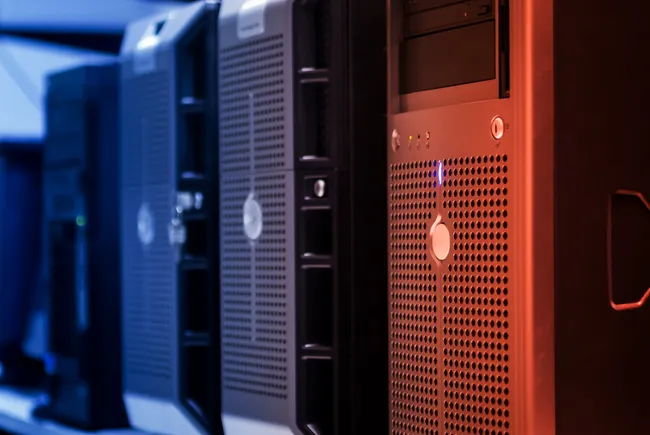
Modular architectures reduce the need for massive data center resources. (Credit: Google DeepMind via Pexels)
What Do You Think?
Do you believe the industry is over-relying on fine-tuning when RAG could solve the problem, or is the move toward modular, adapter-based architectures the only way to scale? I will be in the comments for the next 24 hours to discuss your experiences with these techniques.
No. Fine-tuning is for behavior, style, and instruction-following. For adding facts or knowledge, you should use Retrieval-Augmented Generation (RAG).
LoRA (Low-Rank Adaptation) allows you to fine-tune models by updating only a tiny fraction of parameters, reducing memory usage by over 99% while keeping the base model intact.
QLoRA is an extension of LoRA that uses 4-bit quantization (NF4) to store base model weights, allowing you to train large models on consumer-grade hardware.
Avoid fine-tuning if you are experiencing 'catastrophic forgetting' (loss of general capabilities) or if you lack the resources to maintain the model as new base models are released.
Active Engagement
Was this information helpful?
Join Discussions
0 Thoughts
Editorial Team • Question of the Day
"Have you ever successfully replaced a fine-tuned model with a well-optimized RAG pipeline, or did you find that fine-tuning was ultimately necessary for your specific use case?"