Mercury's Sulfur Secret Defies Earth Rules

The Core Insight
Mercury's Sulfur-Rich Interior Challenges Earth Models
A new experimental study published in Geochimica et Cosmochimica Acta reveals that Mercury’s sulfur-rich interior behaves in ways that challenge long-standing Earth-based models of planetary evolution, opening a new window into how rocky worlds solidify and evolve.
A Planet That Refuses To Follow Earth’s Rules
For decades, planetary scientists have relied on Earth as the benchmark for understanding how rocky planets form and evolve. That assumption is now under pressure as new laboratory simulations recreate the extreme and unusual chemistry of Mercury, the most chemically reduced planet in the solar system. Its surface, depleted in iron and enriched in sulfur, presents a composition unlike any other terrestrial planet we have studied in detail. Similar model challenges appear in early universe observations, as seen in JWST's findings on ancient galaxies.
“Mercury’s surface looks completely different than Earth’s,” said Rajdeep Dasgupta, the Maurice Ewing Professor in Earth Systems Science and director of the Rice Space Institute Center for Planetary Origins to Habitability. “We couldn’t study its magmatic evolution using assumptions built off our understanding of Earth, and missions data are difficult to interpret. We had to find ways to bring the planet closer to our lab, specifically, through the meteorite Indarch.”
That shift in approach marks a turning point. Rather than forcing Mercury into familiar frameworks, researchers are now building models rooted in its own chemistry. The implications extend far beyond one planet. If Mercury can evolve under such different internal rules, then the diversity of rocky planets across the galaxy may be far greater than previously assumed. This work signals a move toward planet-specific geochemistry, where each world is interpreted on its own terms rather than as a variation of Earth. Advanced telescopes like the upcoming Roman Space Telescope may further reveal such unique planetary traits.

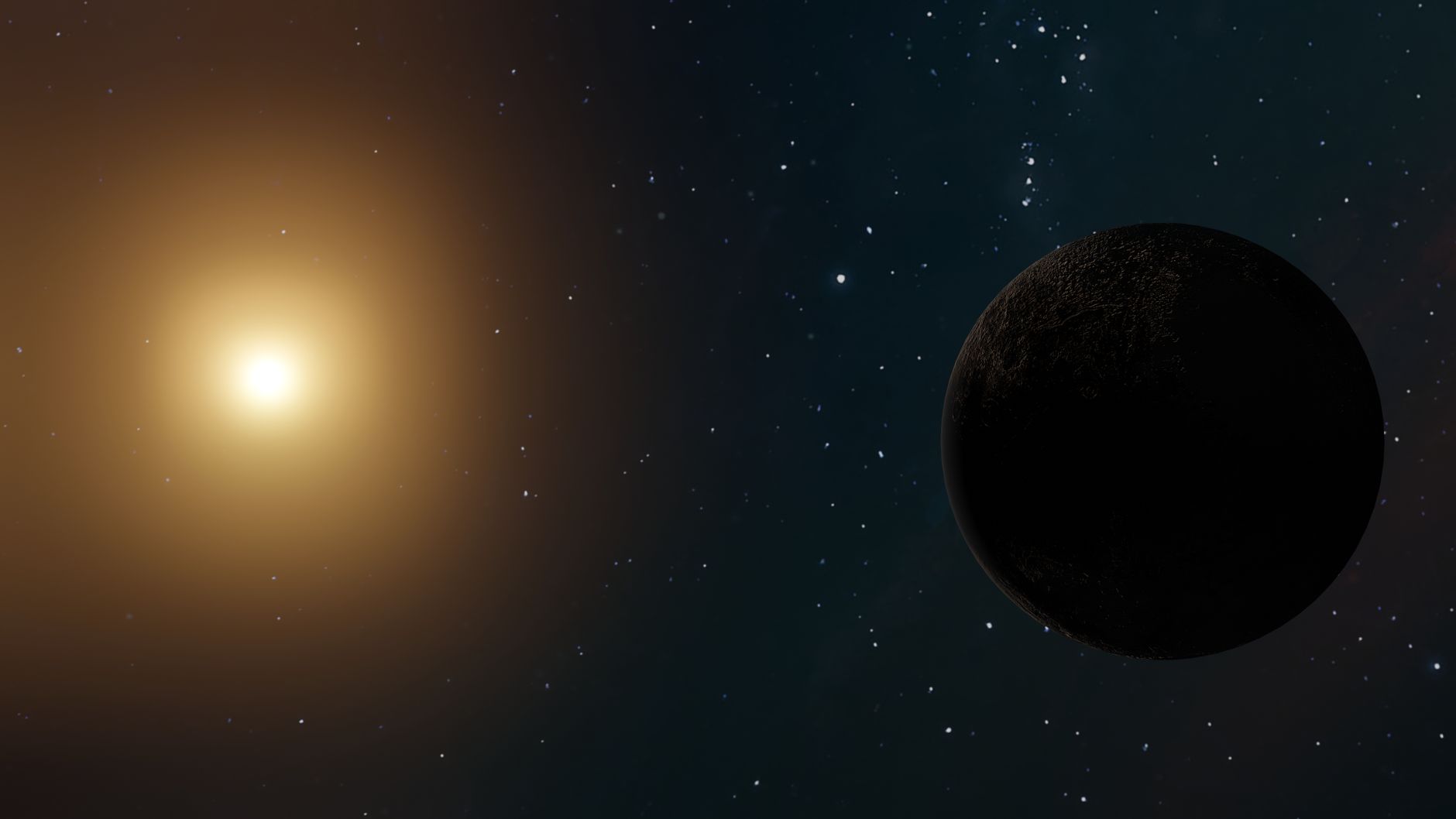
(Credit: Zelch Csaba via Pexels)

Recreating Mercury In The Lab With A 19th Century Meteorite
The key to unlocking Mercury’s secrets came from an unexpected source: Indarch, a meteorite that fell in Azerbaijan in 1891. Its chemical composition closely mirrors that inferred for Mercury, especially its highly reduced state and sulfur richness. By using Indarch as a starting point, scientists were able to simulate Mercury-like magmas under controlled laboratory conditions. Early Earth chemistry studies, like those on molybdenum's role in ancient life, echo such meteorite-based insights.
“Indarch chemically is as reduced as rocks on Mercury,” said Yishen Zhang, a postdoctoral researcher in Dasgupta’s lab and first author of the study published in Geochimica et Cosmochimica Acta. “It is believed to be a possible building block of the planet.”
Inside high-pressure, high-temperature experimental systems, researchers recreated the intense environment of Mercury’s interior. They carefully adjusted temperature, pressure, and chemical composition to match spacecraft observations, akin to techniques enhancing clarity in astronomical laser guide stars.
“This process of cooking a rock can show us what happened chemically inside of Mercury,” Zhang said. “By using the temperature, pressure and chemical constraints derived from spacecraft observations and models, we recreate Mercury-like conditions to understand how magmas form and evolve there,even without direct samples from the planet.”
These experiments revealed something striking. Sulfur dramatically lowers the temperature at which magma begins to crystallize. That means Mercury’s magmas could remain molten far longer and at lower temperatures than similar materials on Earth. This single difference reshapes how scientists think about the planet’s internal cooling, volcanic history, and surface formation.

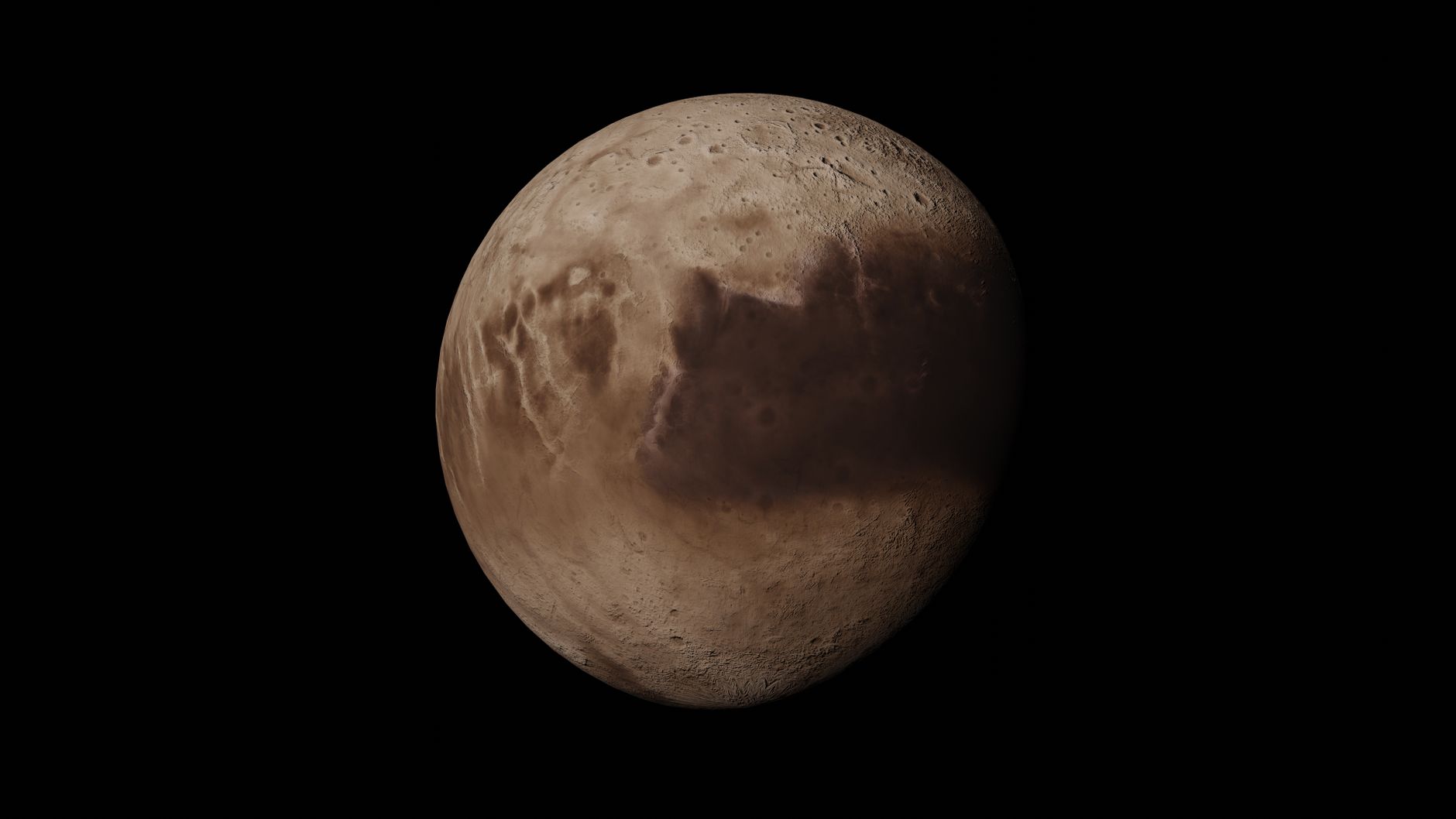
(Credit: cottonbro studio via Pexels)

Sulfur Takes Oxygen’s Role And Changes Everything
On Earth, the structure of rocks is dominated by oxygen, which bonds with silicon and other elements to form stable silicate networks. These networks define how magma behaves, how it cools, and how it solidifies into rock. Mercury breaks that pattern in a fundamental way.
Because the planet contains very little iron, sulfur is not locked away in iron compounds as it is on Earth or Mars. Instead, sulfur bonds with major rock-forming elements such as magnesium and calcium, effectively stepping into a structural role usually occupied by oxygen.
“As Indarch may represent Mercury’s proto-planet state,” Zhang said, “these experiments show that Mercury likely formed with sulfur occupying a structural position that on Earth belongs to oxygen. This fundamentally changes how the planet’s mantle solidified.”
This substitution weakens the overall mineral structure, lowering crystallization temperatures and altering the physical properties of the magma. The result is a planetary interior that behaves in ways that would be impossible under Earth-like conditions. It also suggests that Mercury’s mantle may have cooled and solidified along a completely different timeline, influencing everything from volcanic activity to crust formation.

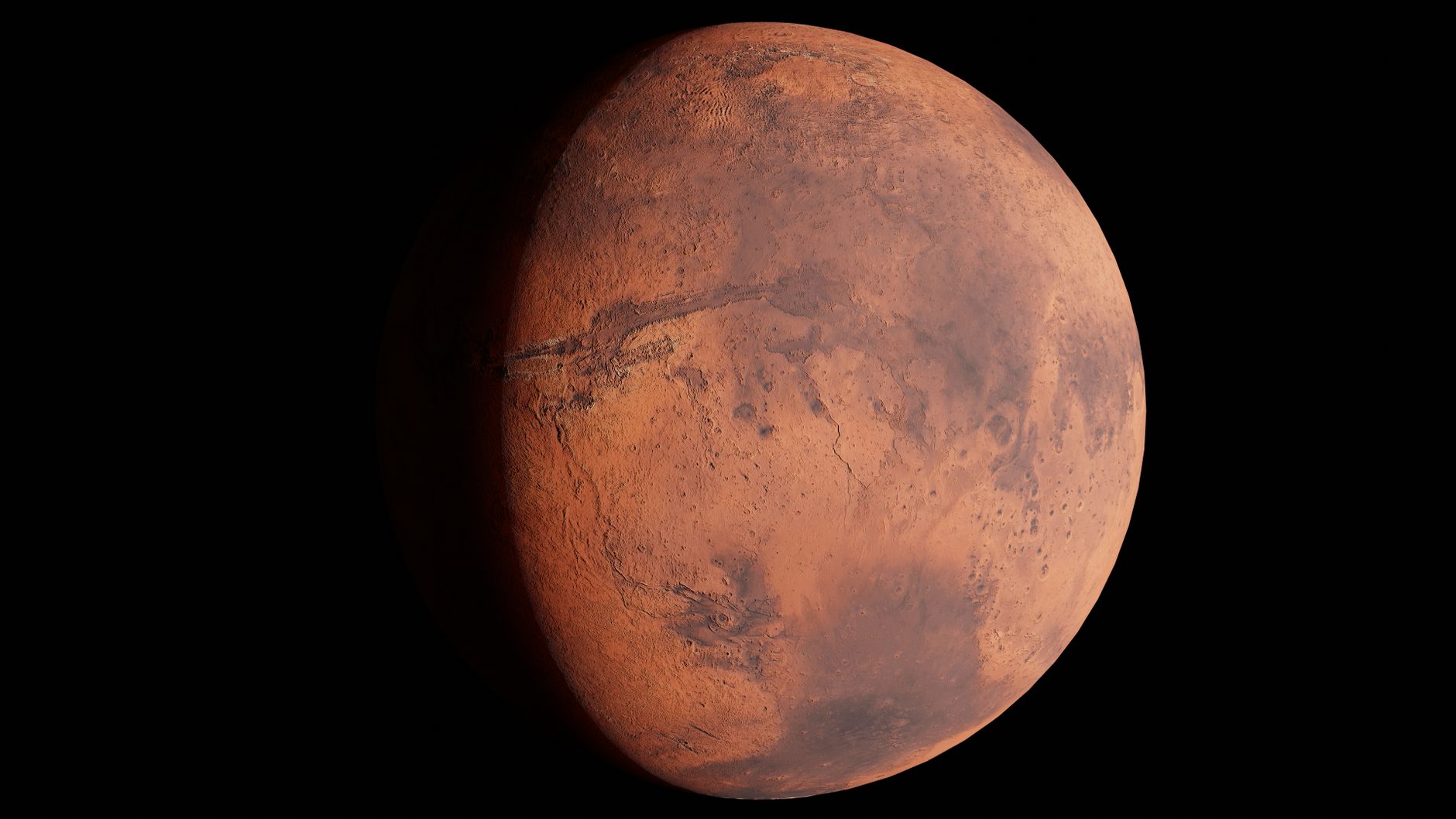
(Credit: Maxime LEVREL via Pexels)
A New Framework For Understanding Alien Worlds
The findings, published in Geochimica et Cosmochimica Acta, extend beyond Mercury itself. They highlight the limitations of using Earth as a universal template for rocky planets and point toward a more flexible framework that accounts for diverse chemical environments. NASA's MESSENGER mission data (NASA.gov) and Rice University press release provide key context.
“This is a fascinating glimpse of how Mercury may have evolved as a planet to its unique current-day surface chemistry,” Dasgupta said. “More importantly, it provides a way for us to think about planets not based on how Earth was formed, but based on their own unique chemistry and magmatic processes under vastly different conditions. What water or carbon does to the magmatic evolution of Earth, sulfur does on Mercury.”
This perspective reshapes how scientists interpret data from current and future missions, including those targeting Mercury, Mars, and rocky exoplanets orbiting distant stars. A planet’s chemistry is no longer a minor detail. It becomes the central driver of its geological identity.
As researchers continue to refine these models, Mercury stands as a reminder that even the smallest planet in the inner solar system can challenge the biggest assumptions in planetary science, and force a rethink of how worlds are built from the inside out.
Hand picked for you by Author

First-Ever Twin Black Holes Orbiting in Mrk 501
Astronomers led by Silke Britzen have discovered the first confirmed pair of supermassive black holes orbiting each other in galaxy Markarian 501, rev...
JAXA's 2030s Hunt for Life's Origins in Ancient Comet
JAXA's Next Generation Small-Body Return (NGSR) mission targets low-activity comet 289P/Blanpain in the 2030s to collect untouched samples revealing e...

2026 Solar Eclipse: 157 Years Until It Repeats?
A total solar eclipse on August 12, 2026, will cross the Arctic, Greenland, Iceland, and northern Spain, with max totality of 2m18s in the North Atlan...
LHC's Stunning Glimpse Into Big Bang's Chaos
ALICE team at LHC observed quark-gluon plasma signatures in proton-proton and proton-lead collisions for the first time, revealing anisotropic flow pa...

Black Hole Starves: 95% Dimmer in Just 20 Years
Astronomers observed galaxy J0218−0036's supermassive black hole fade 95% in brightness over 20 years due to a sudden 98% gas supply cut in just seven...
You Might Also Like





Elijah Tobs
A seasoned content architect and digital strategist specializing in deep-dive technical journalism and high-fidelity insights. With over a decade of experience across global finance, technology, and pedagogy, Elijah Tobs focuses on distilling complex narratives into verified, actionable intelligence.
Learn More About Elijah Tobs