First-Ever Twin Black Holes Orbiting in Mrk 501

The Core Insight
Astronomers Discover First-Ever Pair of Supermassive Black Holes on the Verge of Merging
Astronomers have discovered what could be the first-ever pair of supermassive black holes on the verge of merging. This rare find, published in the Monthly Notices of the Royal Astronomical Society, offers an unprecedented opportunity to witness one of the most powerful events in the universe: the merger of two black holes. The discovery deepens our understanding of black holes and provides insights into galaxy evolution, with the potential to observe gravitational waves as the black holes spiral closer to collision.

(Credit: Iceberg San via Pexels)
Discovery of Black Hole Binary System in Markarian 501
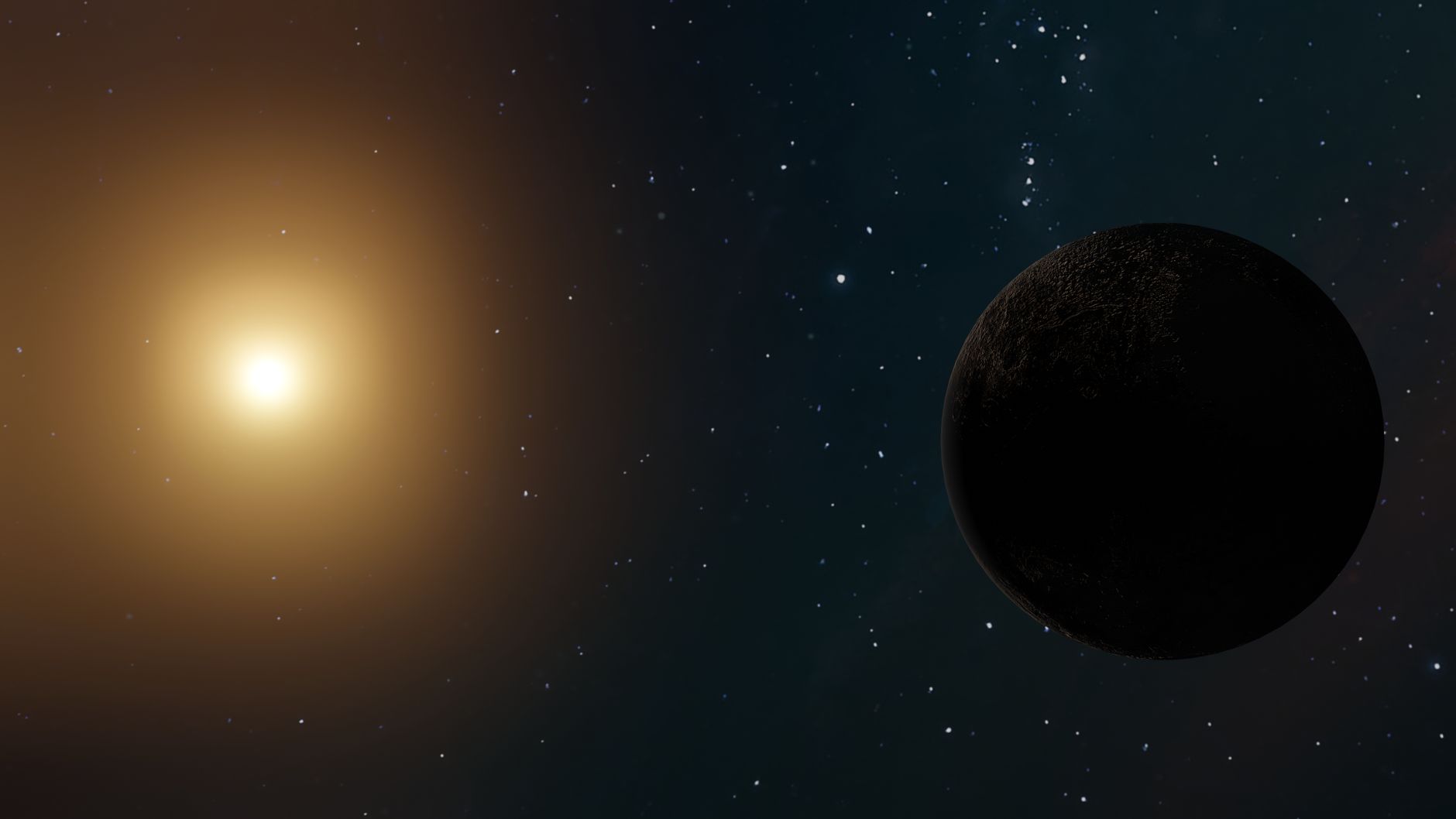
A team led by Silke Britzen from the Max Planck Institute for Radio Astronomy (MPIfR) in Bonn has identified two supermassive black holes orbiting each other in the galaxy Markarian 501. The study uses decades of high-resolution radio data to reveal two powerful particle jets from the galaxy's center. These black holes have masses between 100 million and a billion times that of the Sun and are separated by about 250 to 540 times the Earth-Sun distance.
Jets Reveal the Hidden Black Hole
A single jet shooting toward Earth from Markarian 501 was observed for years. Analysis of over 20 years of data across radio frequencies detected a second jet moving in a different direction. This second jet, originating from the second supermassive black hole, became visible over time and moves counterclockwise around the larger black hole, completing a full orbit every 121 days.


(Credit: Pixabay via Pexels)
“We searched for it for so long, and then it came as a complete surprise that we could not only see a second jet, but even track its movement,” says Britzen.
Dynamic Dance of the Black Holes
The black holes orbit each other, causing their jets to sway as the orbital plane shifts. “Evaluating the data felt like being on a ship. The entire jet system is in motion. A system of two black holes can explain this: The orbital plane sways,” explains Britzen. This offers a rare glimpse into the dynamics of supermassive black holes on the brink of merging.

(Credit: 3D Render via Pexels)
Future: Gravitational Waves from the Merger
As the black holes spiral closer and merge, they will produce gravitational waves detectable by pulsar timing arrays (PTAs). “If gravitational waves are detected, we may even see their frequency steadily rise as the two giants spiral toward collision, offering a rare chance to watch a supermassive black hole merger unfold,” says co-author Héctor Olivares. Learn more about NASA's black hole research.
Source: Monthly Notices of the Royal Astronomical Society

(Credit: Julien Tromeur via Pexels)
Hand picked for you by Author
JAXA's 2030s Hunt for Life's Origins in Ancient Comet
JAXA's Next Generation Small-Body Return (NGSR) mission targets low-activity comet 289P/Blanpain in the 2030s to collect untouched samples revealing e...

2026 Solar Eclipse: 157 Years Until It Repeats?
A total solar eclipse on August 12, 2026, will cross the Arctic, Greenland, Iceland, and northern Spain, with max totality of 2m18s in the North Atlan...
LHC's Stunning Glimpse Into Big Bang's Chaos
ALICE team at LHC observed quark-gluon plasma signatures in proton-proton and proton-lead collisions for the first time, revealing anisotropic flow pa...

Black Hole Starves: 95% Dimmer in Just 20 Years
Astronomers observed galaxy J0218−0036's supermassive black hole fade 95% in brightness over 20 years due to a sudden 98% gas supply cut in just seven...

JWST's Stingray Galaxy Unlocks Little Red Dots Secret
NASA's James Webb Space Telescope has spotted a 'stingray' galaxy blending traits of little red dots (LRDs) and compact active galactic nuclei (AGN), ...
You Might Also Like





Elijah Tobs
A seasoned content architect and digital strategist specializing in deep-dive technical journalism and high-fidelity insights. With over a decade of experience across global finance, technology, and pedagogy, Elijah Tobs focuses on distilling complex narratives into verified, actionable intelligence.
Learn More About Elijah Tobs