JWST's Ancient Giant Galaxy: No Spin, Milky Way x Stars?

The Core Insight
JWST Reveals Slow-Rotating Massive Galaxy from Early Universe, Challenging Galaxy Evolution Models
The James Webb Space Telescope (JWST) has discovered a slow-rotating galaxy, XMM-VID1-2075, from the early universe, located at a redshift corresponding to roughly 12 billion years ago when the universe was still under 2 billion years old. This massive galaxy challenges astronomers' understanding of galaxy evolution in their infancy.
Astronomers previously believed that early universe galaxies rotated at high speeds, gradually losing rotation over time through mergers. However, XMM-VID1-2075 shows an advanced state of evolution without the typical organized rotational movement seen in most large galaxies today.

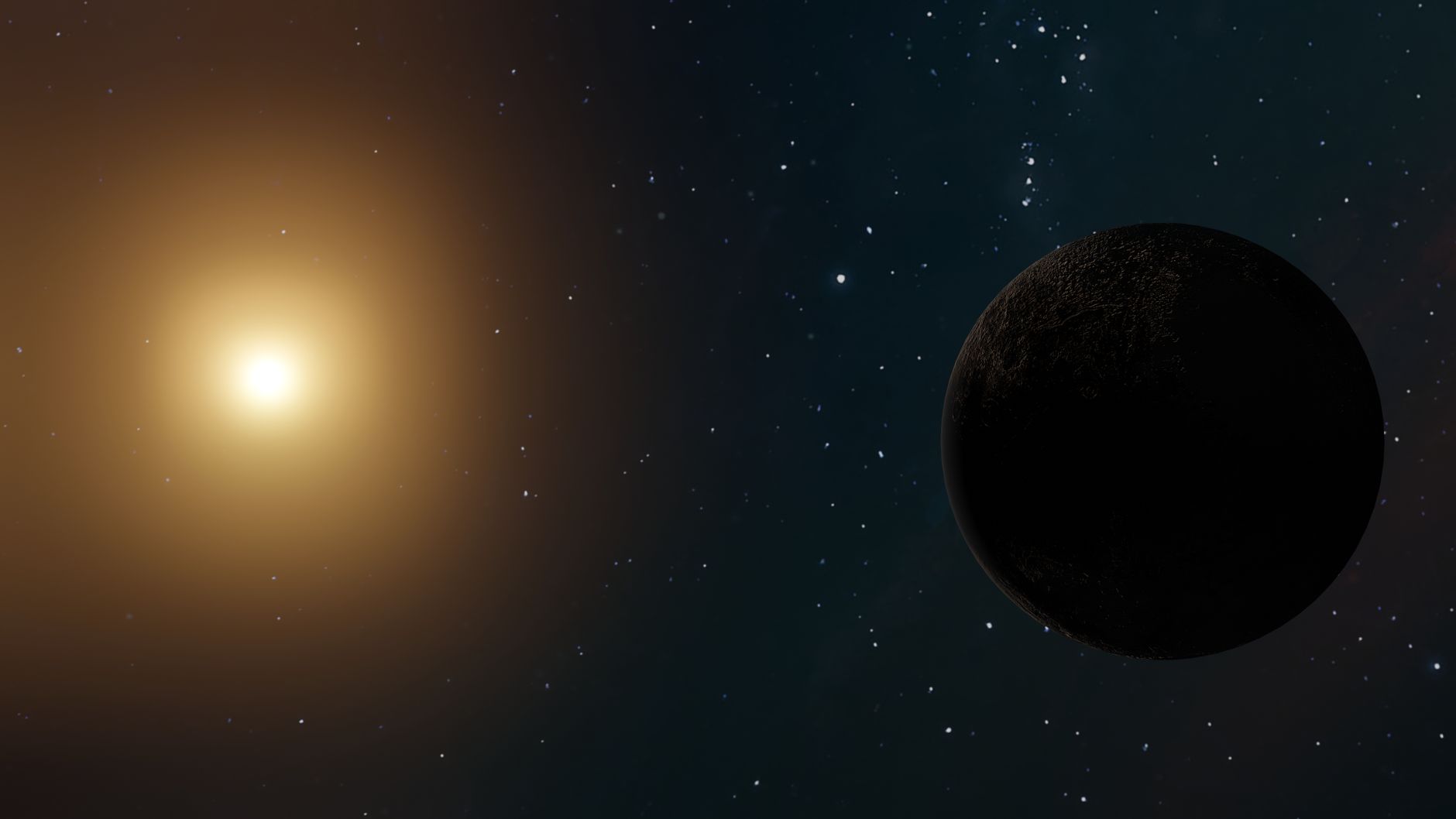
(Credit: Lucas Pilon Ferro via Pexels)
A New Kind of Galaxy
Most large galaxies today are held together by organized rotation, but "slow rotators" have stars moving in random, chaotic directions. These are typically no longer forming stars and are rare in the local universe.
Dr. Ben Forrest, an astronomer at the University of California, Davis, noted:
“That’s something only seen in the most massive, mature galaxies that are closer to us in space and time,” he said. “This one in particular did not show any evidence of rotation, which was surprising and very interesting.”

XMM-VID1-2075 is one of the most massive galaxies from the early universe, with several times as many stars as the Milky Way. Its lack of rotational movement is a characteristic typically associated with older, more evolved galaxies.
Observation with JWST
This discovery, published in Nature Astronomy, was enabled by JWST's infrared capabilities to observe faint, distant objects. Redshift shifts the light to longer wavelengths due to the universe's expansion, allowing views of the galaxy as it appeared 12 billion years ago. Such observations build on advanced space telescope technologies.
Dr. Forrest explained that prior MAGAZ3NE observations confirmed its massive size and lack of star formation, making it a compelling target:
“Previous MAGAZ3NE observations had confirmed this was one of the most massive galaxies in the early Universe, with already several times as many stars as our Milky Way, and also confirmed that it was no longer forming new stars, making it a compelling target for follow-up observations.”

(Credit: Pixabay via Pexels)

Unlike today's galaxies with orderly movements, XMM-VID1-2075 lacks the expected rotation for an early universe galaxy.
Explaining the Slow Rotation
Slow rotators in the nearby universe result from mergers that disrupt rotational motion. For XMM-VID1-2075, Dr. Forrest suggests a single high-energy collision between two galaxies moving in opposite directions, rather than multiple mergers. This aligns with JWST's ongoing deep field studies.
“For this particular galaxy, we see a large excess of light off to the side. And so that’s suggestive of some other object which has come in and is interacting with the system and potentially changing its dynamics.”

(Credit: Jens Mahnke via Pexels)

The galaxy's unusual light patterns indicate an external perturbation affecting its dynamics, potentially explaining its lack of rotation without relying on gradual mergers.
(Credit: Jens Mahnke via Pexels)
Hand picked for you by Author
First-Ever Twin Black Holes Orbiting in Mrk 501
Astronomers led by Silke Britzen have discovered the first confirmed pair of supermassive black holes orbiting each other in galaxy Markarian 501, rev...

JAXA's 2030s Hunt for Life's Origins in Ancient Comet
JAXA's Next Generation Small-Body Return (NGSR) mission targets low-activity comet 289P/Blanpain in the 2030s to collect untouched samples revealing e...

2026 Solar Eclipse: 157 Years Until It Repeats?
A total solar eclipse on August 12, 2026, will cross the Arctic, Greenland, Iceland, and northern Spain, with max totality of 2m18s in the North Atlan...
LHC's Stunning Glimpse Into Big Bang's Chaos
ALICE team at LHC observed quark-gluon plasma signatures in proton-proton and proton-lead collisions for the first time, revealing anisotropic flow pa...

Black Hole Starves: 95% Dimmer in Just 20 Years
Astronomers observed galaxy J0218−0036's supermassive black hole fade 95% in brightness over 20 years due to a sudden 98% gas supply cut in just seven...
You Might Also Like



Elijah Tobs
A seasoned content architect and digital strategist specializing in deep-dive technical journalism and high-fidelity insights. With over a decade of experience across global finance, technology, and pedagogy, Elijah Tobs focuses on distilling complex narratives into verified, actionable intelligence.
Learn More About Elijah Tobs