Why Astronomers Fire Lasers Skyward for Epic Universe Views
The Core Insight
Astronomers Are Shooting Giant Lasers Into The Sky To See The Universe With Unmatched Clarity
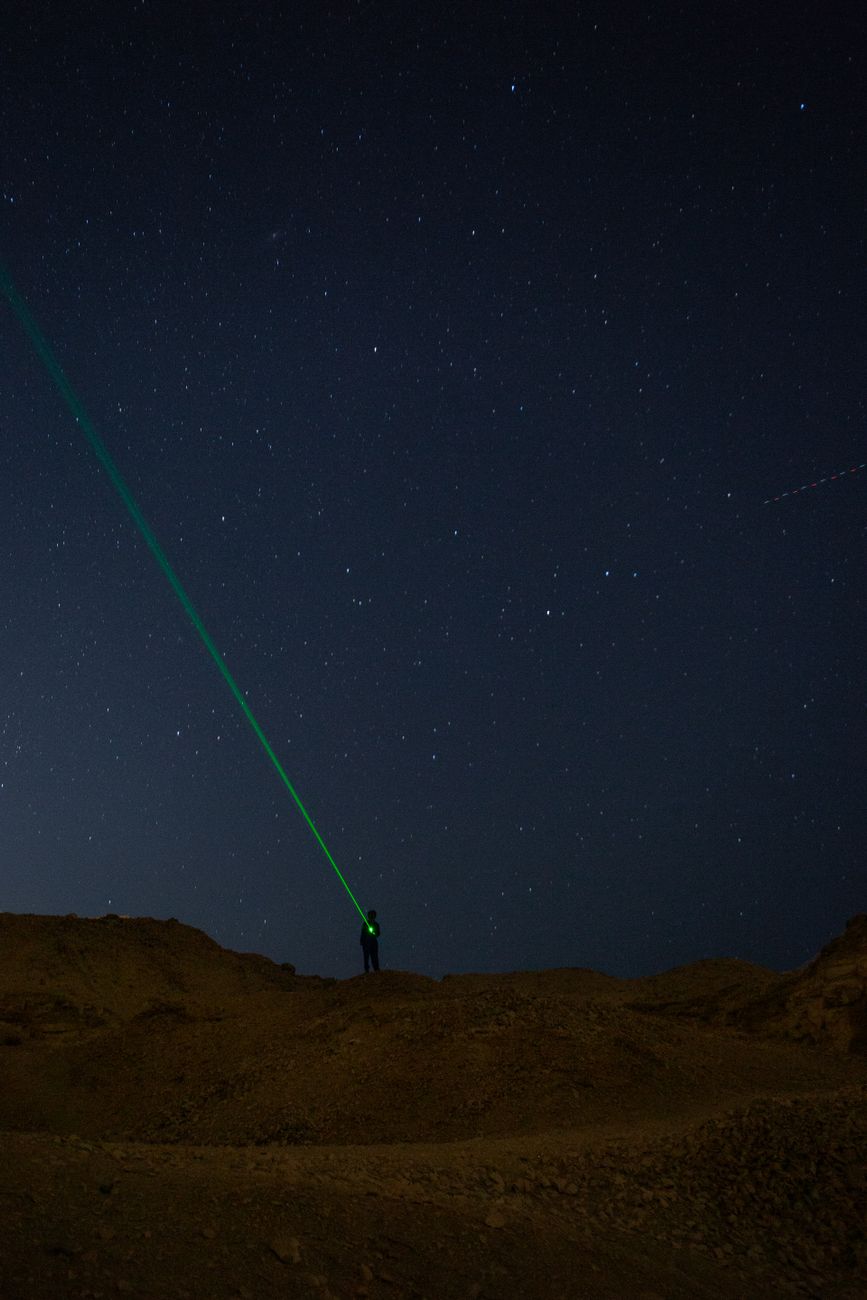
A striking image from the European Southern Observatory’s (ESO) Very Large Telescope Interferometer (VLTI) reveals four blazing laser beams cutting through the night sky, tied to a major leap in observing the cosmos. This system overcomes one of astronomy’s oldest challenges: Earth’s turbulent atmosphere.
(Credit: Bakr Magrabi via Pexels)
A Futuristic System That Mimics Stars
These lasers create artificial guide stars high in Earth’s atmosphere by exciting sodium atoms located about 90 kilometers above the surface. The result is bright reference points that telescopes can track in real time.
As light from distant celestial objects passes through Earth’s atmosphere, it becomes distorted by temperature shifts and air motion. The artificial stars allow scientists to measure this distortion.
Advanced adaptive optics systems then use complex algorithms and ultra-fast mirrors to adjust the telescope’s optics hundreds of times per second, canceling out atmospheric blur and producing images approaching the clarity of space-based telescopes from the ground.

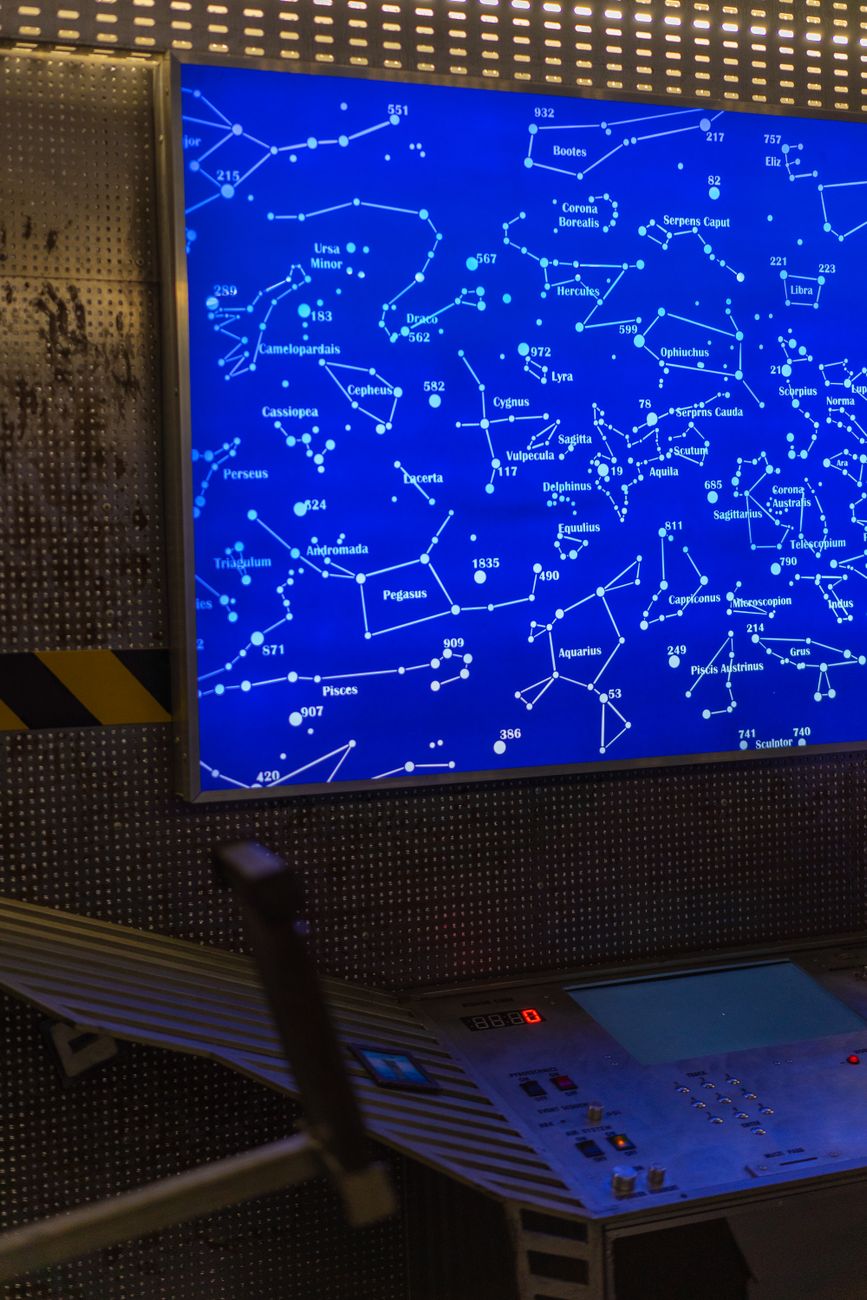
(Credit: Mikhail Nilov via Pexels)
The VLTI: A Powerful Observatory In The Atacama Desert
The VLTI is located atop Cerro Paranal in Chile’s Atacama Desert, offering some of the clearest skies on the planet. Similar advancements are seen in other space telescope projects like the Roman Telescope.
The VLTI combines four separate telescopes into a single instrument with greater resolving power. Since 2016, it has been equipped with the Four Laser Guide Star Facility, enhancing its observational precision. Facilities like ESA's Space Rider highlight ongoing European space innovations.
According to the European Southern Observatory (ESO), this setup allows astronomers to study distant cosmic structures in unprecedented detail, such as the Tarantula Nebula, located roughly 160,000 light-years away in the Large Magellanic Cloud. This stellar nursery is one of the most active star-forming regions near the Milky Way. For more on ESO's adaptive optics, see ESO NACO page.


(Credit: Marek Piwnicki via Pexels)
Peering Deeper Into The Cosmos Than Ever Before
By correcting atmospheric interference, astronomers can capture sharper views of stars, planets, and galaxies previously blurred from Earth-based observatories. NASA's adaptive optics research complements these efforts.
This is especially important for faint or distant objects, revealing fine details such as the structure of protoplanetary disks, the motion of stars near black holes, or the composition of distant nebulae.
Only a limited number of observatories worldwide use such advanced adaptive optics systems. The VLTI stands among the leaders, pushing the boundaries of ground-based astronomy. Learn more from ESO VLTI overview.
Hand picked for you by Author

First-Ever Twin Black Holes Orbiting in Mrk 501
Astronomers led by Silke Britzen have discovered the first confirmed pair of supermassive black holes orbiting each other in galaxy Markarian 501, rev...
JAXA's 2030s Hunt for Life's Origins in Ancient Comet
JAXA's Next Generation Small-Body Return (NGSR) mission targets low-activity comet 289P/Blanpain in the 2030s to collect untouched samples revealing e...

2026 Solar Eclipse: 157 Years Until It Repeats?
A total solar eclipse on August 12, 2026, will cross the Arctic, Greenland, Iceland, and northern Spain, with max totality of 2m18s in the North Atlan...
LHC's Stunning Glimpse Into Big Bang's Chaos
ALICE team at LHC observed quark-gluon plasma signatures in proton-proton and proton-lead collisions for the first time, revealing anisotropic flow pa...

Black Hole Starves: 95% Dimmer in Just 20 Years
Astronomers observed galaxy J0218−0036's supermassive black hole fade 95% in brightness over 20 years due to a sudden 98% gas supply cut in just seven...
You Might Also Like



Elijah Tobs
A seasoned content architect and digital strategist specializing in deep-dive technical journalism and high-fidelity insights. With over a decade of experience across global finance, technology, and pedagogy, Elijah Tobs focuses on distilling complex narratives into verified, actionable intelligence.
Learn More About Elijah Tobs