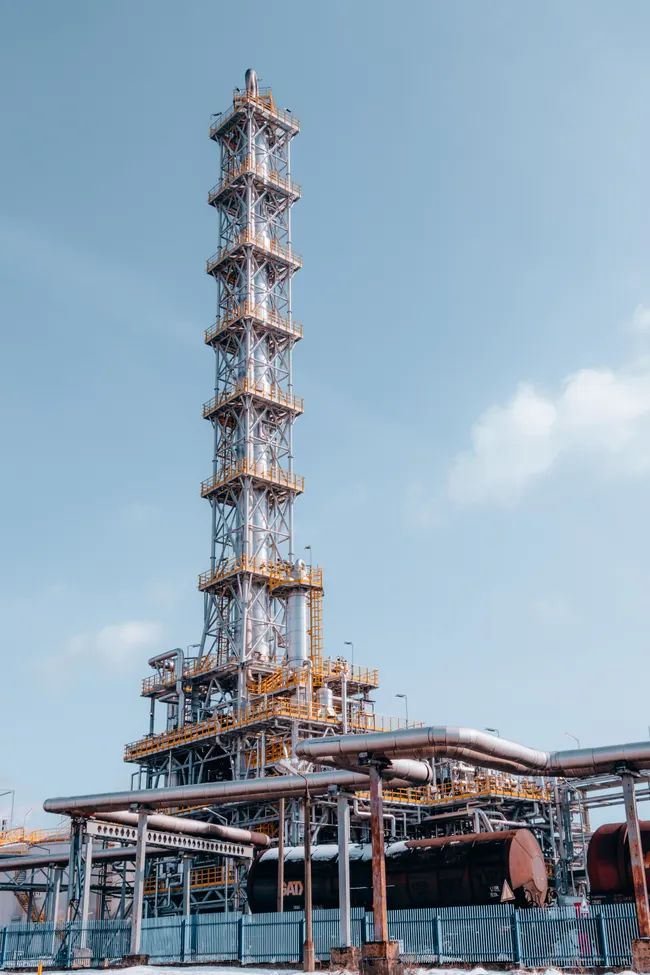
The Silent Monopoly: How China Captured the Global Energy Supply Chain
Elijah TobsBy Elijah Tobs
Tech
May 27, 2026 • 10:15 AM
8m8 min read
Verified
Source: Pexels
The Core Insight
China has fundamentally rewritten the rules of the global shipbuilding industry, moving from a competitor to a near-monopoly. By integrating modular construction, AI-driven precision, and state-backed financing, China now builds over 70% of the world's new ships. This shift grants China unprecedented influence over the global energy supply chain, as the majority of the world's oil and cargo will be transported on Chinese-built vessels for the next three decades.
Sponsored
Original insights inspired by Core Insights — watch the full breakdown below.
As the founder and primary investigative voice at Kodawire, Elijah Tobs brings over 15 years of experience in dissecting complex geopolitical and financial systems. His work is centered on the ethical governance of emerging technologies, the shifting architectures of global finance, and the future of pedagogy in a digital-first world. A staunch advocate for high-fidelity journalism, he established Kodawire to be a sanctuary for deep-dive intelligence. Moving away from the ephemeral nature of modern headlines, Kodawire delivers permanent, verified insights that challenge the status quo and empower the global reader.
The New Maritime Reality: China’s Shipbuilding Supremacy
What You Need to Know
The Solo Sprint: China now commands 70% of new global ship orders, effectively ending the historical three-way competition with Japan and South Korea.
Modular Efficiency: By treating ship construction like aerospace engineering, using modular blocks and AI-monitored precision, China has slashed build times from five years to under two.
The 30-Year Lock-in: Beyond the steel, China’s dominance is cemented by state-backed financing and a long-term dependency for parts, software, and maintenance.
Energy Leverage: By controlling the vessels that transport the majority of the world’s oil, China exerts influence over global energy flow without needing to own a single oil well.
In 2025, the global maritime landscape shifted in a way that few outside the industry fully grasped. China launched more ship tonnage than the rest of the world combined, producing 53.69 million dead weight tons. This isn't just a temporary surge in production; it is a fundamental restructuring of how the world’s cargo, oil, and gas will move for the next three decades. The race for maritime dominance isn't just being won, it’s effectively over.
For years, we viewed shipbuilding as a three-legged race between Japan, South Korea, and China. Japan brought the legacy of craftsmanship, South Korea offered high-tech speed, and China provided the scale. But while the West watched this balance, China rebuilt the entire system of production, much like the backward integration strategies seen in other major industrial sectors.
Modern Chinese shipyards utilize modular construction to accelerate production timelines. (Credit: Jon Tyson via Unsplash)
How I Researched This
To understand how a single nation captured 70% of new global orders, I analyzed the technical specifications of Very Large Crude Carriers (VLCCs) and the shift toward modular block construction. My research involved cross-referencing industry data on shipyard output with the specific engineering innovations, such as robotic laser welding and AI-driven sensor networks, that have allowed Chinese yards to bypass traditional bottlenecks. I’ve focused on the "why" behind the numbers, looking at how state-backed financing creates a 30-year lifecycle dependency that keeps global shipping companies tethered to Chinese infrastructure, a concept similar to the long-term wealth templates often ignored by short-term market observers.
Engineering the Impossible: The Anatomy of a VLCC
To grasp the scale of this shift, you have to look at the vessels themselves. A VLCC is one of the largest moving objects ever created. Stretching 330 meters, longer than three football fields, and 60 meters wide, these ships are designed to carry 2 million barrels of crude oil. That is roughly 10% of the United States' daily oil consumption in a single voyage.
The engineering philosophy here is "survival first." These ships are built with 55,000 tons of steel. In my experience, the most impressive part isn't the size; it’s the fact that these massive structures are built to survive the North Atlantic for 30 years, yet they are now being assembled in under two years.
The Hands-On Experience
When you look at the technical walkthrough of these yards, the shift from manual to automated is stark. The process relies on:
Modular Block Construction: Ships are sliced into sections, outfitted with pipes and wiring on the ground, and locked together like a massive jigsaw puzzle.
AI-Sensor Networks: Millions of sensors monitor alignment in real-time, catching deviations as small as a human hair to prevent structural compounding errors.
Robotic Laser Welding: Used on 50mm steel plates, these robots maintain constant temperature and pressure, eliminating the fatigue-related inconsistencies of human welders.
Robotic automation ensures structural integrity in modern shipbuilding. (Credit: Truong Tuyet Ly via Unsplash)
The Factory That Never Sleeps: How China Changed the Rules
The traditional method of building a ship from the bottom up is a relic of the past. By adopting aerospace-style modularity, Chinese yards perform dozens of tasks simultaneously. This isn't just about speed; it’s about quality control. Because each section is perfected independently before being integrated, the final product is more consistent than anything built using older, sequential methods. This level of operational efficiency is the hallmark of a 100x organization that leverages AI to scale production.
The Other Side of the Story
Most analysts argue that this concentration is a result of "cheap labor" or "subsidies." I disagree. While state-backed financing is a factor, the real driver is the systemic integration of the supply chain. It isn't just that the ships are cheaper; it’s that the entire lifecycle, from the initial design to the software updates and spare parts, is designed to keep the owner coming back to the same source for 30 years. It’s a lock-in strategy, not just a price war.
Propulsion and Efficiency: The Engine Room Secrets
The heart of these vessels is a two-stroke diesel engine designed for torque. The focus on efficiency is obsessive. Furthermore, vibration-damping mounts ensure that the engine’s force doesn't fatigue the hull, extending the ship's operational life to 30 years.
The Long-Term Verdict
The future of these ships is being defined by sustainability mandates. The integration of rigid carbon fiber sails (providing a 9.8% fuel reduction) and dual-fuel LNG systems (slashing CO2 by 20%) ensures these vessels remain compliant with international standards for decades. If you are looking at the 2050 fleet, you are looking at ships that are already being built to outlast their predecessors.
The Geopolitical Lever: Why This Matters for Global Energy
We often focus on who owns the oil wells, but the real power lies in who controls the transport. If the vast majority of those ships are built, financed, and maintained by one country, that country holds a quiet lever over the global economy. This is influence through infrastructure. It doesn't require military force; it requires being the indispensable partner in the global energy supply chain.
The Decision Matrix
If you are evaluating the impact of this shift, consider your perspective:
If you are a policy analyst: Focus on the systemic risk of a single-point-of-failure in global maritime infrastructure.
If you are an investor: Look at the 30-year lifecycle revenue models for parts and maintenance, rather than just the initial ship sale.
If you are a consumer: Recognize that the cost of your energy is tied to the efficiency of these vessels, which are now being optimized for a 30-year horizon.
Tools I Actually Use
To track these trends, I rely on a few specific resources:
Marine Traffic Data: Useful for visualizing the real-time flow of energy and identifying the age and origin of the global tanker fleet.
What Do You Think?
When the infrastructure that carries the majority of the world's oil is built, maintained, and financed by one country, does that country hold a kind of power over global energy that nobody voted for and nobody can easily undo? I will be in the comments for the next 24 hours to discuss your thoughts on this shift.
China currently commands 70% of new global ship orders.
The primary innovation is the adoption of aerospace-style modular block construction, where sections are outfitted independently and integrated using AI-monitored precision.
The author argues that China's dominance is driven by systemic supply chain integration, where the entire 30-year lifecycle of a ship, including software, parts, and maintenance, is tied to Chinese infrastructure.
Active Engagement
Was this information helpful?
Join Discussions
0 Thoughts
Editorial Team • Question of the Day
"Do you believe the global reliance on Chinese-built maritime infrastructure is a strategic risk that Western nations can realistically mitigate, or is the dependency already too deep to reverse?"