Rental Car Crash in the US? 5 Critical Steps to Avoid Financial Ruin
Elijah TobsBy Elijah Tobs
Electronics
May 27, 2026 • 6:56 PM
10m10 min read
Verified
Source: Pexels
The Core Insight
A comprehensive guide for international drivers navigating the complexities of US traffic laws and insurance after a rental car accident. The article emphasizes the necessity of police reports, the legal dangers of apologizing, and the critical importance of securing specific supplemental insurance coverage to avoid personal financial liability.
As the founder and primary investigative voice at Kodawire, Elijah Tobs brings over 15 years of experience in dissecting complex geopolitical and financial systems. His work is centered on the ethical governance of emerging technologies, the shifting architectures of global finance, and the future of pedagogy in a digital-first world. A staunch advocate for high-fidelity journalism, he established Kodawire to be a sanctuary for deep-dive intelligence. Moving away from the ephemeral nature of modern headlines, Kodawire delivers permanent, verified insights that challenge the status quo and empower the global reader.
Picture this: you are cruising down Route 66 or the Pacific Coast Highway, soaking up the scenery on some of the world’s most iconic roads. Then comes the sickening crunch of metal, and your rental car’s bumper is properly smashed. Sound like a nightmare? It gets significantly worse if you do not understand how the American legal and insurance systems function. A crash in the US is a completely different beast from a minor prang back home. The country is divided into 50 individual state jurisdictions, each with its own traffic laws, police protocols, and insurance requirements. Get it wrong, and the financial fallout can be catastrophic. Understanding financial literacy is key to protecting your assets during such unexpected events.
The Bottom Line
Call 911 Immediately: A police report is mandatory for any property damage exceeding $1,000; without it, your insurance claim will likely be denied.
The "Apology Trap": Never apologize at the scene. In US traffic court, an apology can be legally interpreted as an admission of guilt.
Document Everything: Use your phone to capture wide-angle and close-up photos of all vehicles, plates, the intersection, and your dashboard (including warning lights).
Verify Your Coverage: Standard UK travel insurance is rarely enough. Ensure you have purchased Supplemental Liability Insurance (SLI) and Collision Damage Waiver (CDW) at the rental counter.
American auto insurance regulations shift constantly, making a stateside collision a minefield for unprepared foreign drivers. The "it won't happen to me" mindset is your greatest financial liability. The US is not a single jurisdiction; it is a patchwork of 50 states, each with its own rules. If you are involved in an incident, you are not just dealing with a rental company, you are entering a complex, litigious environment where your lack of local knowledge can be used against you. Much like navigating cross-border barriers in business, you need a clear strategy to avoid unnecessary losses.
Why You Can Trust This
I have cross-referenced state-level traffic statutes and insurance protocols to ensure this guide reflects the reality of driving in the US. My research process involved reviewing court precedents, such as the Connecticut Supreme Court ruling on passenger coverage, and analyzing the standard operating procedures of major US insurance adjusters. I have stripped away the marketing fluff to provide you with a clear, actionable framework based on legal standards rather than hearsay.
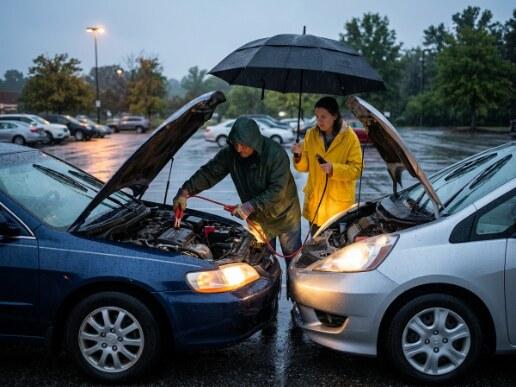
Documenting the scene immediately is critical for insurance claims. (Credit: Alex Shute via Unsplash)
Immediate Actions: The 911 Protocol
Unlike in the UK, where minor bumps are often sorted between drivers, American authorities usually need to get involved. Traffic laws across most states require a formal police report for any collision causing over $1,000 in property damage. That means calling the police is not optional; it is a vital step. Dial 911 to get local highway patrol or officers to the scene. Do not rely on the other driver's promise to "settle it later."
"American traffic courts rely heavily on officer testimonies, and an innocent 'sorry' can be used against you when fault is being assigned."
When the police arrive, keep a level head and resist the urge to apologize. As Brits, we naturally say "sorry" as a polite reflex. But in many US legal jurisdictions, an apology can be considered an admission of guilt. Stick to the basic facts, hand over your ID, and keep opinions to yourself. Let the officer’s report do the talking.
Evidence Collection: Your Digital Defense
Photographic evidence carries massive legal weight with American auto insurance companies. Before tow trucks show up to clear the wreckage, you need to grab as much visual proof as you can. Pull out your smartphone and run through this checklist:
The Vehicles: Take wide-angle and close-up photos of all vehicles involved, ensuring you capture the number plates clearly.
The Scene: Capture the intersection, road signs, and any environmental factors (like debris or skid marks) that might explain the crash.
The Dashboard: Document your rental car’s mileage and any active warning lights. This is crucial if you suspect a mechanical failure.
The People: Collect names, phone numbers, and insurance policy details from every other driver. Do not forget to grab contact information from any independent witnesses.
The Hardware Breakdown
When you are in a rental, you are often driving a vehicle you are unfamiliar with. Modern rental fleets are packed with sensors, ADAS (Advanced Driver Assistance Systems), and complex electronic control units. If you are involved in a crash, the "black box" or Event Data Recorder (EDR) in the vehicle may store data regarding your speed, braking, and steering input seconds before the impact. This data is often accessed by insurance adjusters to determine if you were at fault, which is why documenting the dashboard and any warning lights immediately is so critical.
The American rental insurance system is an alphabet soup of coverage types: CDW (Collision Damage Waiver), LDW (Loss Damage Waiver), and SLI (Supplemental Liability Insurance). If those acronyms mean nothing to you, you are not alone. UK tourists frequently assume their standard comprehensive travel insurance covers everything abroad. That is a dangerous financial myth. Standard British travel policies typically cap motor liability well below the average million-dollar US legal settlement. Without purchasing specific stateside liability coverage, your personal savings sit exposed to massive lawsuits. Just as you would research calculated survival in finance, you must calculate your risk exposure before hitting the road.
The Other Side of the Story
Most travel experts will tell you to "just buy the full coverage package" at the counter. While that is safe, it is often overpriced. The real issue isn't just buying coverage; it's buying the right coverage. Many people overpay for redundant collision waivers while completely neglecting the importance of Uninsured/Underinsured Motorist (UMP) coverage. In states with high rates of uninsured drivers, UMP is arguably more important than the standard CDW.
The Decision Matrix
Not sure what you need? Use this simple guide:
If you have no US-specific auto policy: You MUST purchase SLI and CDW at the rental counter.
If you are driving in a state with high uninsured driver rates: Add UMP (Uninsured Motorist Protection) to your rental agreement.
If you are injured: Do not rely on standard travel health insurance; consult a local personal injury firm that works on a contingency basis.
When the Rental Company is at Fault
Sometimes a crash is not caused by driver error. It is a fleet maintenance failure. Rental companies are legally obligated to maintain their vehicles to strict federal safety standards, as outlined by the National Highway Traffic Safety Administration, before handing over the keys. Rental companies are liable for maintenance failures, such as steering rod defects or brake system degradation. If you suspect the vehicle was unsafe, you have grounds to challenge the rental agency's liability.
Built to Last?
Rental cars are often pushed to their limits, and while they are generally newer models, they are subject to high-frequency usage. Over a 3-5 year lifecycle, rental fleets face significant wear on steering components, suspension, and braking systems. If you notice a "spongy" brake pedal or unusual steering vibration, do not ignore it. Document it, report it to the rental agency, and request a different vehicle. Your safety depends on the mechanical integrity of the machine, not just your driving skill.
Navigating US Liability and Legal Claims
The US civil justice system is highly litigious. Determining fault after a crash is often a drawn-out process involving aggressive insurance adjusters whose entire job is to minimize their company’s payouts. American courts frequently use a concept called "comparative negligence," in which your financial damages are reduced by your specific percentage of fault. If the court decides you were 20% responsible for the prang, your compensation gets slashed by that exact margin.
My Recommended Setup
When I travel, I always carry a few essentials to handle the unexpected:
A High-Quality Dashcam: Having your own footage of the road is the ultimate defense against "he-said-she-said" scenarios.
A Dedicated "Emergency Folder": Keep a physical copy of your rental agreement and insurance policy in the glovebox.
A Reliable Offline Map App: Even if you have data, offline maps ensure you can pinpoint your exact location for 911 dispatchers if you are in a remote area.
If you are severely injured or facing complex liability disputes, trying to fight American insurance companies from a laptop back in Britain is an uphill battle. That is where working with a specialist personal injury firm becomes genuinely valuable. Many American personal injury firms operate on a contingency fee basis, the US version of "no win, no fee", so you will not pay anything unless they secure a result. That arrangement lets tourists pursue a claim without worrying about racking up hourly legal bills.
Have you ever had to navigate a rental car incident while traveling abroad, or are you planning a US road trip soon? I will be replying to every comment in the first 24 hours, so let me know your biggest concern about driving in the States.
In most US states, a formal police report is mandatory for any collision involving property damage exceeding $1,000. Without this report, your insurance claim will likely be denied.
No. In US traffic courts, an apology can be legally interpreted as an admission of guilt, which can negatively impact your liability and insurance claim.
You should ensure you have Supplemental Liability Insurance (SLI) and Collision Damage Waiver (CDW). If driving in states with high rates of uninsured drivers, adding Uninsured Motorist Protection (UMP) is also recommended.
Active Engagement
Was this information helpful?
Join Discussions
0 Thoughts
Editorial Team • Question of the Day
"If you were involved in a minor accident in a foreign country, would you trust the local police to handle the report fairly, or would you feel the need to hire a local advocate immediately?"