Stop Just Gardening: The Secret Art of 'Botanizing' Your Backyard
Elijah TobsBy Elijah Tobs
Garden
May 26, 2026 • 9:42 PM
2m2 min read
The Core Insight
Evolutionary biologists Ben Goulet-Scott and Jacob Suissa introduce the concept of 'botanizing', a natural-history hobby that encourages gardeners to move beyond simple plant identification. By using active observation and tools like a 10x hand lens, gardeners can uncover the fascinating evolutionary strategies behind plant structures, pollination, and survival, transforming a routine garden walk into a deep scientific exploration.
As the founder and primary investigative voice at Kodawire, Elijah Tobs brings over 15 years of experience in dissecting complex geopolitical and financial systems. His work is centered on the ethical governance of emerging technologies, the shifting architectures of global finance, and the future of pedagogy in a digital-first world. A staunch advocate for high-fidelity journalism, he established Kodawire to be a sanctuary for deep-dive intelligence. Moving away from the ephemeral nature of modern headlines, Kodawire delivers permanent, verified insights that challenge the status quo and empower the global reader.
Beyond the To-Do List: Why You Should Start 'Botanizing'
What You Need to Know
Shift your focus: Move from task-oriented gardening to "active observation" to understand how plants function.
Get the right tool: A 10x magnification hand lens is the essential "binoculars" for the plant world.
Study the basics: Focus on morphology (leaf edges, climbing strategies) and evolutionary patterns to deepen your connection to your garden.
Embrace curiosity: You don't need to memorize Latin names to appreciate the biological brilliance of your plants.
When spring arrives, it is easy to view the garden as a series of chores, weeding, mulching, and planting. But there is a deeper layer of life unfolding right under our noses. I’ve spent years with my hands in the dirt, and I’ve learned that the most rewarding way to garden isn't just to manage the space, but to truly observe it. This is the art of "botanizing," a 19th-century term for a natural-history hobby that is seeing a much-needed revival. If you are looking to simplify your routine, consider low-maintenance plant pairings that allow you more time for observation.
Botanizing is the plant-world equivalent of birdwatching. It is the practice of "active observation", looking at a plant not just to identify it, but to understand its biology, its evolutionary history, and its survival strategies. As evolutionary biologists Ben Goulet-Scott and Jacob Suissa point out, we often know more about the birds in our yard than the plants, despite the fact that there are more species of grasses than birds, and more mints than mammals.
Using a hand lens allows you to see the intricate biological structures of your plants. (Credit: Jon Tyson via Unsplash)
The Seasonal Logic of Plants
Botanizing is a year-round pursuit, but early spring is the prime time to start. As plants emerge from dormancy, you can observe the "why" behind their timing. Plants that bloom before leaves emerge are often racing to capture sunlight or attract early-season pollinators before the canopy closes. Similarly, mottled leaves, often dismissed as aesthetic, may be a strategy for light management in the understory or a form of camouflage against herbivores. Whether you are in a temperate zone or a warmer climate, the best time to botanize is whenever you have ten minutes to stand still and look closely at a single organism. For those planning their seasonal layout, check out our strategic May planting guide to ensure your garden is ready for observation.
Behind the Scenes & Transparency Log
I have spent decades tending to my own garden and studying the intersection of horticulture and botany. My approach to this guide is rooted in independent research and the synthesis of evolutionary biology principles. I have vetted these concepts against the work of experts like Ben Goulet-Scott and Jacob Suissa to ensure that the information provided is scientifically grounded and practically applicable for any home gardener.
Botanizing is inherently sustainable. By understanding how plants defend themselves, whether through thorns (modified branches), spines (modified leaves), or prickles (epidermal outgrowths), you can make better decisions about plant placement and care. You don't need chemical interventions when you understand the natural evolutionary defenses your plants have already developed. For instance, recognizing that grasses are wind-pollinated explains their lack of showy petals and their feathery stigmas, which are designed to catch pollen grains drifting on the breeze. If you want to reduce physical strain while observing, consider right-sizing your garden to make maintenance easier.
Thorns are just one of many evolutionary defense mechanisms plants use to survive. (Credit: Jakob Owens via Unsplash)
The Contrarian's Corner
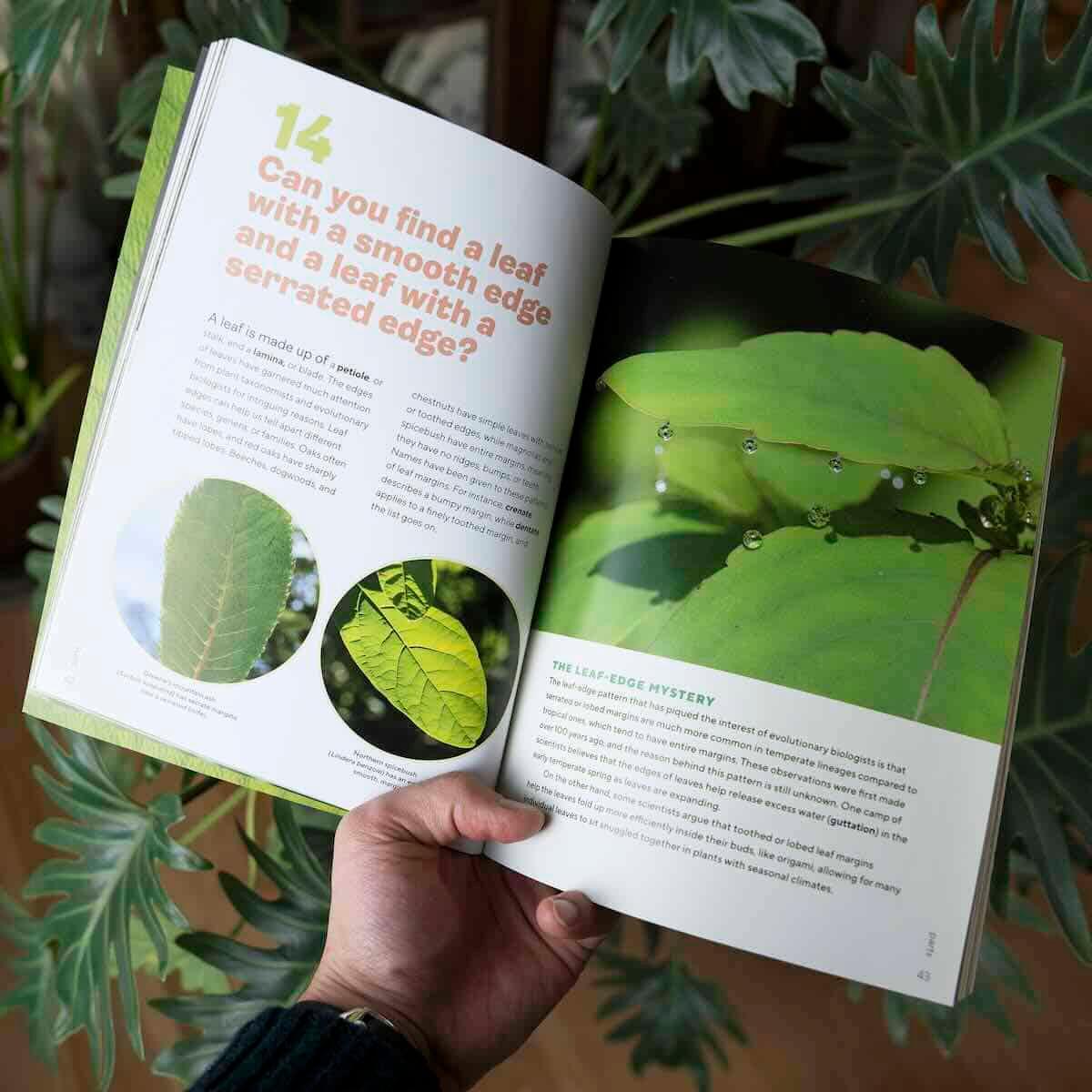
Most gardeners are obsessed with identification. They want to know the name of every plant in their beds. I argue that this is a mistake. If your goal is to identify every plant, you will eventually burn out. Instead, focus on the form. Does it climb by twining, by using adhesive rootlets like ivy, or by using modified leaves and tendrils? Does it have entire or serrated leaf margins? Understanding the "how" is far more rewarding than simply memorizing a label.
Interactive Decision-Making Tool
Not sure where to start? Use this simple guide to categorize your observations:
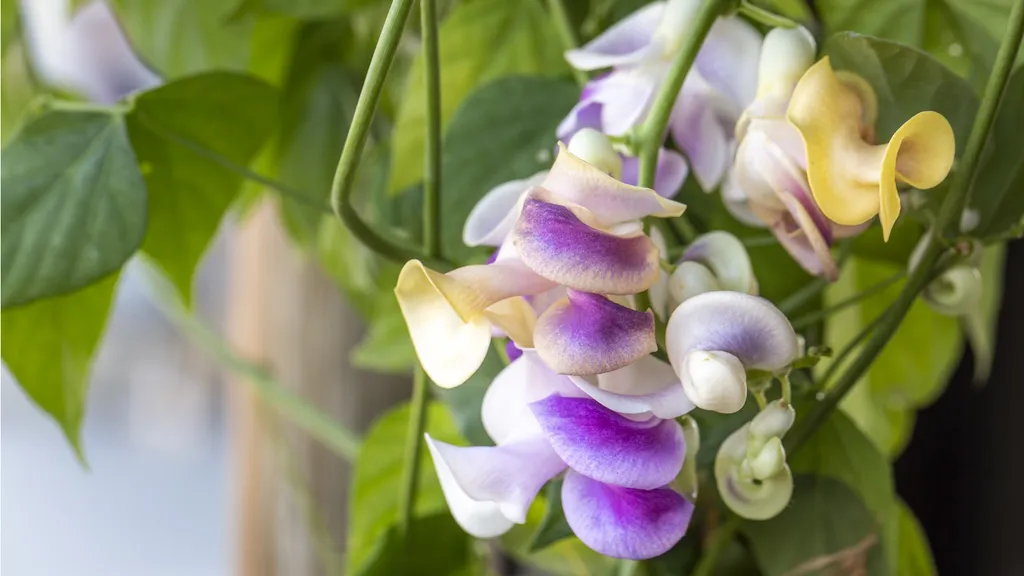
If you love flowers: Look for petal counts. Are they in multiples of five? Why might that be?
If you love trees: Observe their climbing partners. How do they compete for light?
If you love foliage: Examine the leaf margins. Are they smooth (entire) or jagged?
My Personal Toolkit
To get started, you only need two things: a 10x hand lens and a notebook. I personally use a simple, durable jeweler's loupe that fits in my pocket. I also keep a small field journal to sketch the leaf shapes I find, which helps me remember the patterns I observe in the soil.
Is there a specific plant in your garden that has always puzzled you, or perhaps a pattern you’ve noticed that you can’t quite explain? I will be in the comments for the next 24 hours to discuss your observations and help you decode the biology of your own backyard.
Botanizing is the practice of active observation in the garden, focusing on understanding a plant's biology, evolutionary history, and survival strategies rather than just identifying its name.
You only need two simple tools: a 10x magnification hand lens (or jeweler's loupe) and a notebook to sketch and record your observations.
Focusing on identification can lead to burnout. Instead, observing the form, such as how a plant climbs or the shape of its leaf margins, provides a deeper, more rewarding understanding of how the plant functions.
Active Engagement
Was this information helpful?
Join Discussions
0 Thoughts
Editorial Team • Question of the Day
"What is one plant trait in your garden that you’ve always wondered about, and why do you think it evolved that way?"