Rocky Planet Beyond Gas Giants Defies All Rules

The Core Insight
Rocky Planet Beyond Gas Giants Forces Rethink of Planet Formation

(Credit: Zelch Csaba via Pexels)
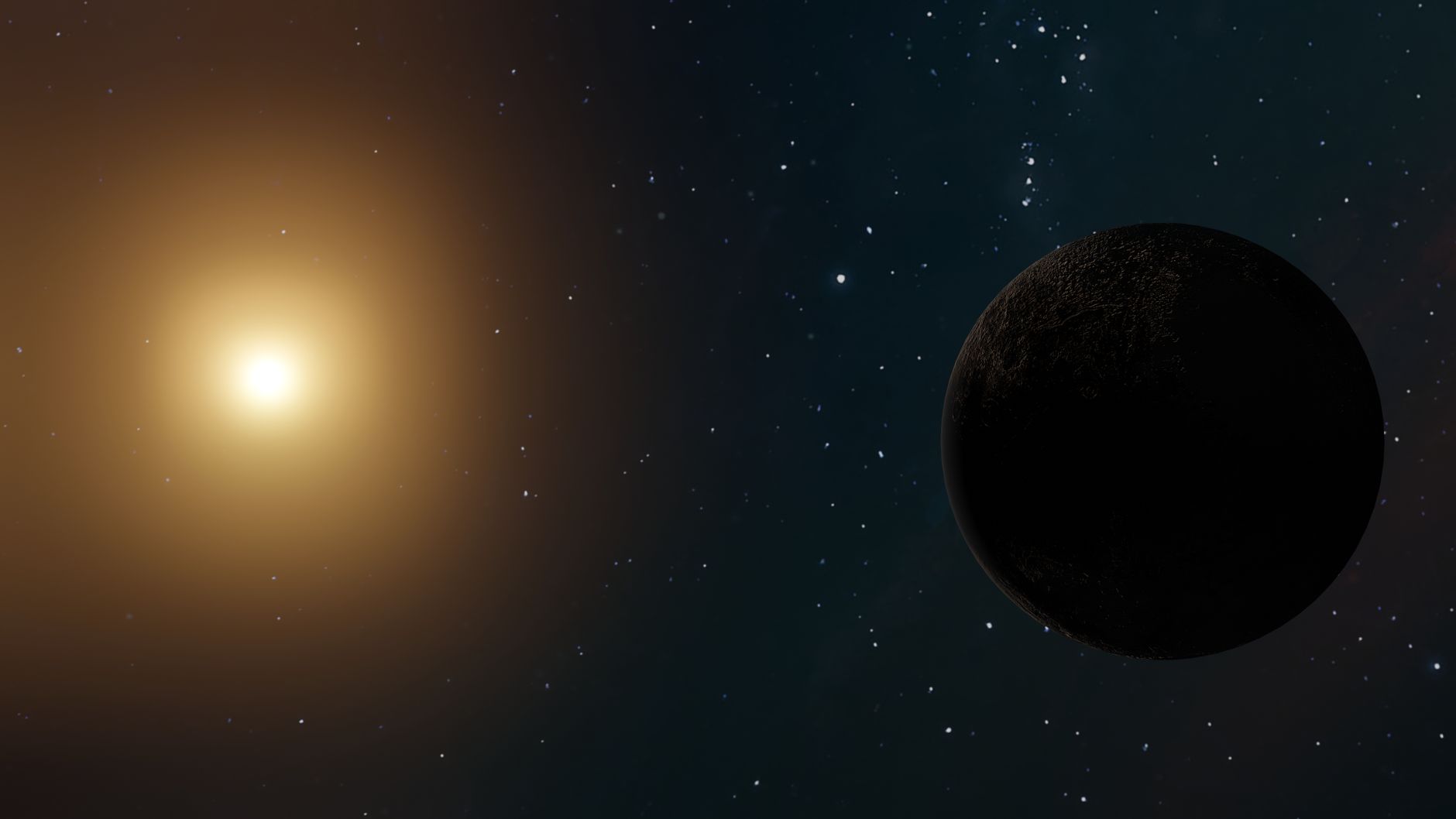
A newly identified planetary system is forcing astronomers to rethink how worlds form and evolve. A small rocky planet appears beyond two massive gas giants in the LHS 1903 system, located in the constellation Lynx,an arrangement that contradicts widely accepted theories.
Under normal conditions, gas giants form in the colder outer regions of a protoplanetary disk, while smaller rocky planets emerge closer to the host star. The presence of a rocky world beyond these giants suggests the system did not evolve in the expected sequence, much like challenges seen in other rocky exoplanets.
The discovery was made using the European Space Agency's CHEOPS space telescope, which specializes in measuring exoplanet sizes and refining orbital characteristics through high-precision observations of starlight variations caused by transiting planets.
“It is thanks to the precision of CHEOPS that we were able to detect this new planet,” says Monika Lendl (UNIGE). “Since rocky planets do not usually form beyond gas giants, this one completely overturns our theories!”
Credit: Stellarium (image of LHS 1903 system location in Lynx).
Evidence Points to Late Formation

(Credit: Djamel Ramdani via Pexels)
The findings, published in Science (doi:10.1126/science.adl2348), suggest the rocky planet,identified as the fourth,formed after the gaseous material in the protoplanetary disk had dissipated. Gas giants like the second and third planets accumulate thick atmospheres of hydrogen and helium early on. A rocky planet in the same region would typically grow into a gas giant, but the absence of such an atmosphere indicates a later timeline, leaving only heavier elements for its composition. This dynamic echoes questions in planet formation models.
“Indeed, the fourth planet should have accumulated and retained a large amount of gas,” says Yann Alibert (Space Research and Planetary Sciences Division-UNIBE). “Our hypothesis is that it formed after gas disappeared from the protoplanetary disk, and thus after the second and third planets of the system, which are gas giants.”
Credit: Science (measured properties of the four planets orbiting LHS 1903 and schematic of proposed formation scenario).
Implications for Planetary Evolution

(Credit: Rodolfo Boscan via Pexels)
This discovery challenges traditional models of an orderly planetary formation process. If rocky planets can form late and at large orbital distances, systems may be far more dynamic, with planets developing in distinct phases based on local conditions and material availability, similar to insights from planetary interior studies.
Astronomers are reconsidering how common such configurations might be, potentially revealing overlooked distant rocky planets. This expands the environments for habitable, Earth-like worlds and underscores the value of instruments like CHEOPS in detecting such anomalies.
Hand picked for you by Author

First-Ever Twin Black Holes Orbiting in Mrk 501
Astronomers led by Silke Britzen have discovered the first confirmed pair of supermassive black holes orbiting each other in galaxy Markarian 501, rev...

JAXA's 2030s Hunt for Life's Origins in Ancient Comet
JAXA's Next Generation Small-Body Return (NGSR) mission targets low-activity comet 289P/Blanpain in the 2030s to collect untouched samples revealing e...

2026 Solar Eclipse: 157 Years Until It Repeats?
A total solar eclipse on August 12, 2026, will cross the Arctic, Greenland, Iceland, and northern Spain, with max totality of 2m18s in the North Atlan...
LHC's Stunning Glimpse Into Big Bang's Chaos
ALICE team at LHC observed quark-gluon plasma signatures in proton-proton and proton-lead collisions for the first time, revealing anisotropic flow pa...

Black Hole Starves: 95% Dimmer in Just 20 Years
Astronomers observed galaxy J0218−0036's supermassive black hole fade 95% in brightness over 20 years due to a sudden 98% gas supply cut in just seven...
You Might Also Like





Elijah Tobs
A seasoned content architect and digital strategist specializing in deep-dive technical journalism and high-fidelity insights. With over a decade of experience across global finance, technology, and pedagogy, Elijah Tobs focuses on distilling complex narratives into verified, actionable intelligence.
Learn More About Elijah Tobs