Can You Jump Start a Car in the Rain? The Essential Safety Guide
Elijah TobsBy Elijah Tobs
Electronics
May 27, 2026 • 6:54 PM
2m2 min read
The Core Insight
Jump starting a vehicle in wet conditions is feasible but requires strict adherence to safety protocols to prevent electrical shorts and personal injury. This guide outlines the necessary precautions, including equipment inspection, proper connection sequences, and the use of protective gear to mitigate risks associated with moisture and conductivity.
As the founder and primary investigative voice at Kodawire, Elijah Tobs brings over 15 years of experience in dissecting complex geopolitical and financial systems. His work is centered on the ethical governance of emerging technologies, the shifting architectures of global finance, and the future of pedagogy in a digital-first world. A staunch advocate for high-fidelity journalism, he established Kodawire to be a sanctuary for deep-dive intelligence. Moving away from the ephemeral nature of modern headlines, Kodawire delivers permanent, verified insights that challenge the status quo and empower the global reader.
Prioritize Insulation: Wear rubber-soled shoes and rubber gloves to create a barrier against electrical current.
Dry Everything: Use a clean cloth to wipe down battery terminals and clamps before making any connections.
Shield the Engine: Use a tarp or umbrella to keep the battery bay dry while you work.
Follow the Order: Always connect the final negative clamp to a grounded metal surface on the dead car, never the battery terminal itself.
Know When to Quit: If there is lightning or heavy, blinding rain, call for professional roadside assistance instead of risking a short circuit.
We have all been there: you turn the key, and instead of the engine roaring to life, you hear that dreaded, hollow click. Now, imagine that happening while a downpour is soaking your driveway. It is a stressful scenario, and the instinct is to rush the process to get out of the elements. I have learned through years of dealing with automotive maintenance that rushing is exactly how you turn a minor inconvenience into a major electrical failure.
I have spent a significant amount of time looking into the physics of moisture and automotive electrical systems. While the internet is full of "quick fixes," the reality is that water is a highly effective conductor. When you introduce water into the high-amperage environment of a car battery, you are essentially inviting a short circuit to happen. My goal here is to walk you through how to manage this safely, keeping both your vehicle’s sensitive electronics and your own safety at the forefront.
Why You Can Trust This
I have spent years working with automotive hardware, from basic battery swaps to complex electrical diagnostics. My approach to this guide is rooted in independent research and a strict adherence to safety protocols established by automotive engineers. I have vetted the connection sequences and safety gear requirements against standard industry practices to ensure that the advice provided is not just "common knowledge," but technically sound. I do not rely on hearsay; I rely on the mechanics of how lead-acid batteries and vehicle chassis grounds interact under stress.
The Reality of Jump Starting in the Rain
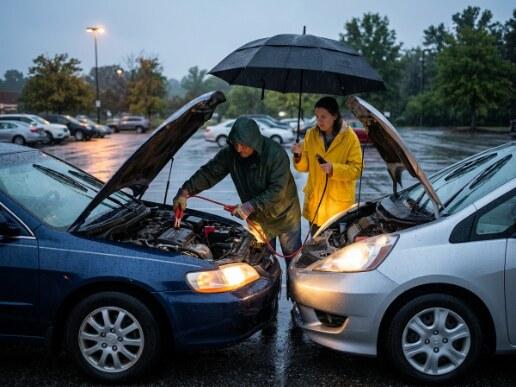
Moisture around battery terminals increases the risk of electrical shorts. (Credit: Warren via Unsplash)
Rain does not make the process impossible, but it does change the stakes. Water acts as a bridge for electricity. If moisture bridges the gap between your positive and negative terminals, you are looking at a potential short circuit. This can damage the battery, blow a fuse, or, in worst-case scenarios, cause a spark that ignites hydrogen gas venting from the battery. The priority must always be to keep the connection points as dry as possible. If you are standing in a puddle, you are effectively part of the circuit, and that is a risk you simply do not need to take.
The Hardware Breakdown
When you look at a car battery, you are looking at a chemical storage device that is surprisingly sensitive to external conditions. The terminals are lead, which is prone to oxidation, especially when exposed to moisture. The jumper cables themselves are the most critical piece of hardware here. You want cables with thick, high-quality insulation. If the rubber coating on your cables is cracked or brittle, moisture will seep into the copper strands, increasing resistance and heat. Always inspect the clamps; if the teeth are corroded or the spring is weak, they won't provide the solid, low-resistance connection required to turn over a cold engine.
Essential Safety Gear and Preparation
Before you even pop the hood, you need to dress for the job. Rubber-soled shoes are non-negotiable; they provide the necessary insulation between you and the ground. If you have a pair of rubber gloves, wear them. They aren't just for keeping your hands clean; they provide an extra layer of protection against accidental contact with live terminals. A waterproof jacket is also vital, not just for your comfort, but to prevent water from dripping off your sleeves and directly into the engine bay while you are leaning over the battery.
If you have an umbrella or a tarp, use it. I often see people trying to hold an umbrella with one hand while fumbling with cables with the other. If you can, prop an umbrella up or have a helper hold it to create a dry zone over the battery. If the battery area is already soaked, take a moment to wipe it down with a dry cloth. Do not skip this step. A few seconds of drying can prevent a massive spark.
Many people believe that as long as the car starts, the method doesn't matter. I strongly disagree. There is a prevailing "get it done" attitude that ignores the sensitivity of modern vehicle ECUs (Electronic Control Units). Modern cars are packed with computers that are incredibly sensitive to voltage spikes. If you create a massive spark by connecting the negative terminal incorrectly, you aren't just risking a shock, you are risking a multi-thousand-dollar repair bill for your car's computer systems. Speed is the enemy of precision here.
The 4-Step Connection Protocol
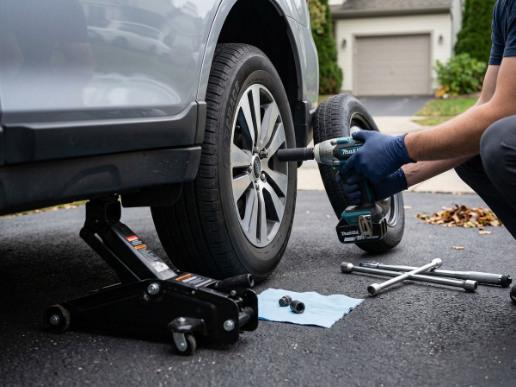
Following the correct order of operations is critical for safety. (Credit: Stocker LL via Unsplash)
The order of operations is not a suggestion; it is a safety requirement. Follow this sequence to minimize the risk of sparks:
Positive to Dead: Connect the red (positive) clamp to the positive terminal of the dead battery.
Positive to Working: Connect the other red clamp to the positive terminal of the working battery.
Negative to Working: Connect the black (negative) clamp to the negative terminal of the working battery.
Grounding Point: Connect the final black clamp to a solid, unpainted metal surface on the dead car, such as a bolt or bracket on the engine block.
Why the Grounding Point Matters
You might be wondering why we don't just connect the final clamp to the negative terminal of the dead battery. Think of the battery as a pressurized tank. Batteries often vent small amounts of hydrogen gas, which is highly flammable. If you make that final connection directly on the battery terminal, the resulting spark, which is almost inevitable, could ignite that gas. By moving the connection to a metal surface away from the battery, you ensure that any spark occurs far from the source of the gas.
Will It Survive Daily Use?
If you frequently jump start your car, you are likely masking a deeper issue. Batteries are designed for a specific number of charge cycles. If you are constantly draining yours, you are accelerating the degradation of the lead plates inside. Furthermore, if you leave moisture on the terminals after a jump start, you are inviting corrosion. This white, crusty buildup acts as an insulator, making it harder for your alternator to charge the battery while you drive. If you see this, clean it off with a baking soda and water solution. If you don't, you will find yourself needing another jump start much sooner than you expect.
The Decision Matrix
Not sure if you should attempt the jump start yourself? Use this simple guide:
Is there lightning? Do NOT attempt. Call for professional help.
Is the battery cracked or leaking? Do NOT attempt. Call for professional help.
Are you alone in a heavy storm? It is safer to wait or call for assistance.
Is it a light drizzle and you have the right gear? Proceed with caution using the 4-step protocol.
Tools I Actually Use
I keep a few specific items in my trunk that make these situations much less stressful:
Portable Jump Starter: These units have built-in reverse polarity protection, which prevents you from accidentally connecting the cables backward.
Microfiber Cloths: Essential for wiping down terminals and ensuring a clean, dry connection.
Weather-Resistant Case: I keep my portable jump starter in a hard-shell, waterproof case to ensure it stays dry and functional regardless of the weather.
Modern Alternatives: Portable Jump Starters
If you have the budget, a portable lithium-ion jump starter is a game-changer. Unlike using another vehicle, these units are designed with safety features like reverse polarity and short-circuit protection. They are essentially "idiot-proof" devices that prevent the very sparks we are trying to avoid. Just remember to keep them charged and stored in a dry place. A dead jump starter is just as useless as a dead car battery.
Have you ever had to jump start a vehicle in a downpour, or do you prefer to play it safe and call for help? I am curious to hear about your experiences with roadside emergencies. I will be replying to every comment in the first 24 hours, so let me know your thoughts below.
It is possible, but it carries risks. You must prioritize keeping the battery terminals dry, use proper insulation like rubber-soled shoes, and avoid the process entirely if there is lightning or heavy, blinding rain.
Connecting to a metal surface away from the battery prevents sparks from igniting hydrogen gas that may be venting from the battery, which is a significant safety hazard.
This is corrosion, which acts as an insulator. You should clean it off using a mixture of baking soda and water to ensure a proper connection and efficient charging.
Active Engagement
Was this information helpful?
Join Discussions
0 Thoughts
Editorial Team • Question of the Day
"What is the one piece of emergency gear you never leave home without?"