

Nobel Prize in Physics 2026: Served on the Rocks — IceCube and theDiscovery of High-Energy Neutrinos at Bard College
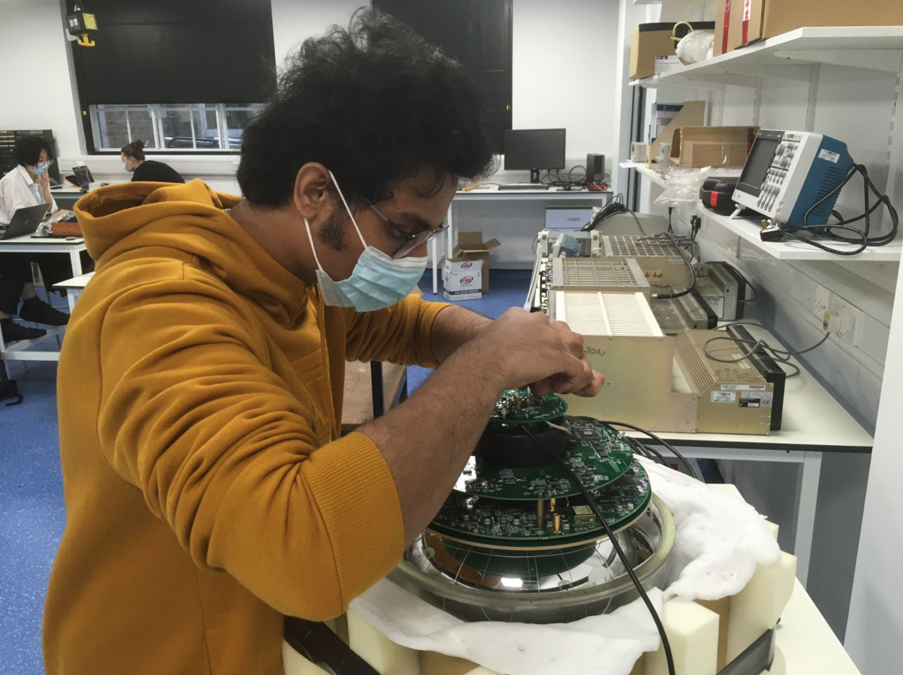
The 2026 Nobel Prize in Physics was announced on 6 October 2026. Roar sat down to talk with Dr Teppei Katori about the prize and his experience working with the person who won, Francis Halzen.
Coverage across the spectrum
How we rate outletsThe story so far
- IceCube detects ghost particles with 10 billion times the energy of solar neutrinos.
Who's reporting it
All 7 sources- Phys.orgPPhys.orgCenter
Figuring out where cosmic neutrinos come from is tricky—radio telescopes could help find 'ghost particles' origin
- AEAlexandria Echo PressCenter
Alexandria alum played a role in Nobel Prize-winning research
- SDScience DailyCenter
IceCube detects ghost particles with 10 billion times the energy of solar neutrinos
- roarnews.co.ukRroarnews.co.ukCenter
The 2026 Nobel prize in Physics: In conversation with Teppei Katori
- BCBard CollegeCenter
Nobel Prize in Physics 2026: Served on the Rocks — IceCube and theDiscovery of High-Energy Neutrinos at Bard College
Timeline
38m ago
Science Daily: Mysterious particles called neutrinos constantly stream through our bodies, and scientists are now detecting incredibly powerful versions ar
35m ago
Bard College: Events and Performances at Bard College.
35m ago
The Lion's Roar Newspaper: The 2026 Nobel Prize in Physics was announced on 6 October 2026. Roar sat down to talk with Dr Teppei Katori about the prize and his experie
35m ago
Science Daily: Mysterious particles called neutrinos constantly stream through our bodies, and scientists are now detecting incredibly powerful versions ar
35m ago
Science Daily: Mysterious particles called neutrinos constantly stream through our bodies, and scientists are now detecting incredibly powerful versions ar
35m ago
Alexandria Echo Press: Alexandria alum played a role in Nobel Prize-winning research
35m ago
Phys.org: Figuring out where cosmic neutrinos come from is tricky—radio telescopes could help find 'ghost particles' origin
More in Health

‘DADDY, I HOPE YOU ENJOY PRISON’ - HIV-positive Vredenburg pa gets life sentence for raping daughter, 13
Multiple outlets • 2h ago
An HIV-positive Vredenburg father who raped his 13-year-old daughter without a condom, knowing he could infect her with the virus, has been sentenced to life imprisonment for the horrific crime.
5 sources

Alexander Zverev Becomes 30th No. 1 In ATP History
Multiple outlets • 3h ago
Zverev surpassed Jannik Sinner, who had been No. 1 since April 13 but has been out since Wimbledon with a knee injury, and is the first German No. 1 since Boris Becker in 1991.
3 sources

Netflix Layoffs Hit U.K., With VP, Production Anna Mallett Among 2-3 Percent of Staff Affected
Multiple outlets • 3h ago
The seismic changes at Netflix have rippled across the pond, with up to 3% of the streamer’s London HQ laid off, it has now been confirmed. The aftershocks from last month’s U.S. re-org have also claimed U.K. and EMEA production VP Anna Mallett, who has exited amid the shake-up. Mallett, who was vice president…
5 sources

Russell Brand Is Not ‘Some Kind of Psychopath Who Rapes People and Thinks It’s Normal,’ Defense Lawyer Says in Closing Argument
Multiple outlets • 4h ago
The trial is now entering its closing stages, with the jury set to deliberate on three counts of rape, three counts of sexual assault and one count of attempted indecent assault, all of which Brand denies.
8 sources

Women’s college basketball top 25: Who really deserves No. 1? South Carolina or UConn?
Multiple outlets • 4h ago
Sometimes, the “No Offseason” moniker here at The Athletic is a little too on-the-nose. With the WNBA Finals ending Saturday evening and the NCAA season tipping off 14 hours later, this is the shortest gap yet between the professional and the college games. The NCAA offseason has only become more hectic in recent years. The 5-in-5 eligibility rule brought back some players whose careers we thought were over. (Welcome back, Brooklyn Meyer!) The transfer portal continued late into the summer,…
3 sources

Sultan’s 20th anniversary: Sokoto to offer free treatment to 500 patients, secure release of 56 inmates
Multiple outlets • 4h ago
Chiroma, who represents Bali/Gassol Federal Constituency of Taraba State, described the Sultan’s two decades of leadership as remarkable, highlighting his efforts to promote interfaith relations, peace and the preservation of Nigeria’s cultural heritage.
3 sources
Reader Discussion
Loading comments…