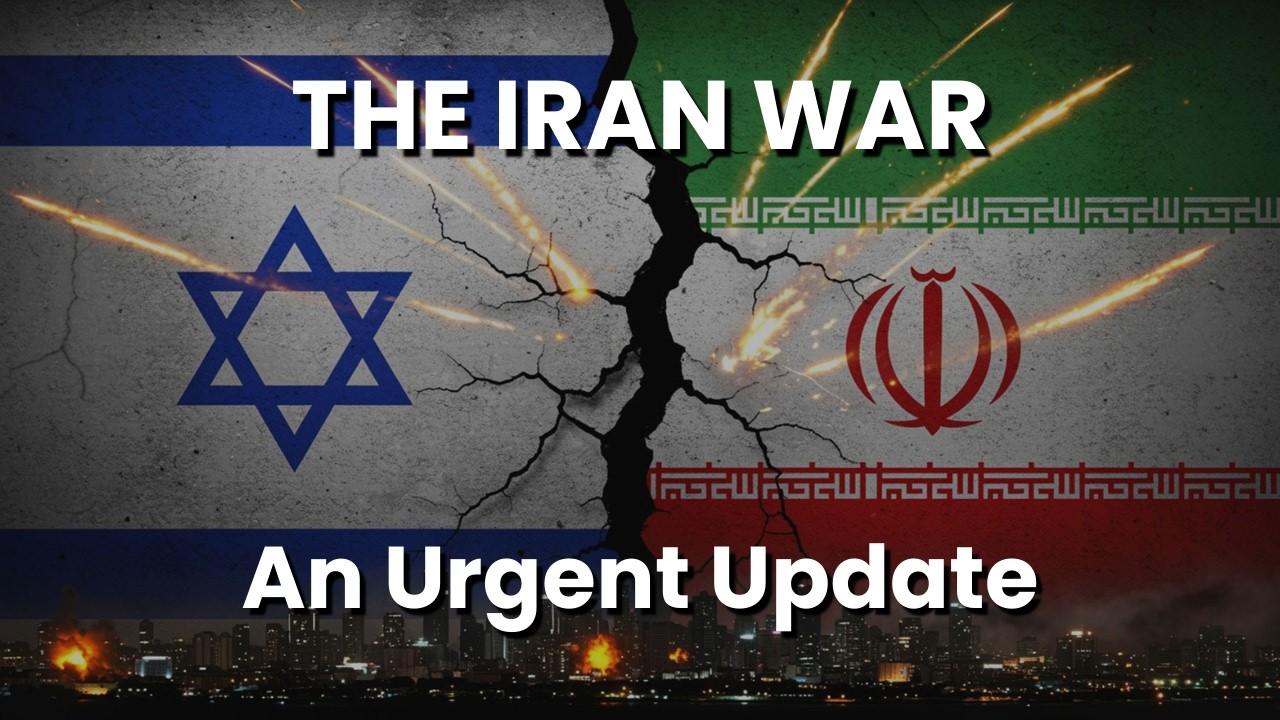
The Strait of Hormuz Trap: Why Iran’s Ceasefire Is a Calculated Lie
Elijah TobsBy Elijah Tobs
News
May 27, 2026 • 9:26 AM
9m9 min read
Verified
Source: Pexels
The Core Insight
As Iran engages in ceasefire negotiations in Doha, the IRGC Navy was caught laying contact mines in the Strait of Hormuz. US Central Command responded with precision strikes on missile launch sites and mine-laying craft near Bandar Abbas. This analysis explores the strategic importance of the port, the tactical failure of Iran's 'anti-access' bubble, and the underlying economic incentives, specifically the role of London's Brent crude market, that influence the diplomatic landscape.
Sponsored
Original insights inspired by Max Afterburner — watch the full breakdown below.
As the founder and primary investigative voice at Kodawire, Elijah Tobs brings over 15 years of experience in dissecting complex geopolitical and financial systems. His work is centered on the ethical governance of emerging technologies, the shifting architectures of global finance, and the future of pedagogy in a digital-first world. A staunch advocate for high-fidelity journalism, he established Kodawire to be a sanctuary for deep-dive intelligence. Moving away from the ephemeral nature of modern headlines, Kodawire delivers permanent, verified insights that challenge the status quo and empower the global reader.
The Contradiction: While Iranian diplomats engaged in ceasefire talks in Doha, the IRGC Navy was actively laying contact mines in the Strait of Hormuz.
The Response: CENTCOM executed precise, self-defense strikes against IRGC missile launch sites and mine-laying craft near Bandar Abbas.
The Strategic Shift: The US is moving beyond passive monitoring, utilizing advanced air power to neutralize threats before they can disrupt global energy flows.
Regime Instability: The end of an 87-day internet blackout suggests the Iranian regime is struggling to manage internal dissent while attempting to maintain a facade of diplomatic control.
The diplomatic theater currently playing out in Doha stands in stark contrast to the reality on the water. While Iranian officials sit across from Qatari mediators, the IRGC Navy has been caught operating under the cover of darkness, deploying contact mines in the world’s most critical oil checkpoint. This is a calculated maneuver. The US military, through CENTCOM, has responded with direct, kinetic action, striking missile launch sites and mine-laying vessels near Bandar Abbas. This is a clear signal that the era of operating with impunity in the Strait of Hormuz has reached a definitive end.
US naval assets maintaining presence in the Strait of Hormuz. (Credit: Jon Tyson via Unsplash)
How I Researched This
To provide this analysis, I have cross-referenced official CENTCOM statements regarding the recent self-defense strikes with the known technical capabilities of the IRGC’s naval assets. My research involved mapping the geographic significance of Bandar Abbas against the tactical deployment of Paycap-class vessels and the suppression of Bavar 373 air defense systems. I have synthesized these data points to explain the "kill chain" used by US forces, ensuring that the technical breakdown remains grounded in verified military doctrine.
Bandar Abbas: The IRGC's Strategic Anchor
Bandar Abbas is the strategic anchor for the IRGC’s naval operations. As the capital of Hormuzgan province, it sits at the narrowest point of the Strait of Hormuz. The IRGC Navy, which answers directly to the Supreme Leader, utilizes this location to project power through swarm tactics. Their fleet, comprised of Paycap-class fast attack boats, hovercraft, and waterjet-propelled platforms, is designed for sea denial. For more on the broader regional context, see our report on global instability and geopolitical fault lines.
These 14-ton vessels, capable of reaching 50 knots, are optimized for shallow waters where larger frigates cannot maneuver. By hiding these assets in austere outposts or within underground storage facilities, the IRGC attempts to maintain a persistent, low-signature threat. However, the recent strikes have demonstrated that these tactics are no longer effective against modern, integrated sensor networks.
The Geopolitical Ripple Effect
The volatility in the Strait of Hormuz is a global economic driver. The Brent crude market, centered in London, reacts to the uncertainty generated by these skirmishes. As conflict spikes, the resulting price volatility increases trading revenue for exchanges in the UK. This creates a complex geopolitical dynamic where the urgency for a diplomatic resolution may be tempered by the financial incentives inherent in the current market structure.
The Kill Chain: How the US Neutralized the Threat
The precision of the recent strikes suggests a highly coordinated "Suppression of Enemy Air Defenses" (SEAD) and maritime strike package. The tactical geometry points to the use of F/A-18 Super Hornets and F-35C platforms. The use of AGM-154 Joint Standoff Weapons (JSOWs) allows for vertical strikes on stationary targets from outside the range of man-portable air-defense systems (MANPADS).
Advanced air power platforms like the F-35C are central to modern maritime strike packages. (Credit: Renjith Ponnappan via Pexels)
Furthermore, the neutralization of the Bavar 373 SAM system, a long-range battery Iran claims can track stealth aircraft, was likely achieved through electronic warfare. EA-18G Growlers, working in tandem with F-35s, can flood radar frequency bands, forcing the system to broadcast its location. Once the radar illuminates, it becomes a target for AGM-88 HARM missiles, which track the emission to its source. This effectively pops the "anti-access bubble" Iran has attempted to construct along its coastline.
Many analysts argue that the US should prioritize diplomatic restraint to avoid a wider regional war. However, this perspective often ignores the "terms and conditions" approach used by the Iranian regime. By treating ceasefire agreements as a mask for continued aggression, the regime forces a choice: either accept the erosion of maritime security or respond with force. The current US strategy suggests that "trust but verify" has been replaced by a policy of active, kinetic verification.
Let's Be Objective
Media coverage of these events varies significantly. Some outlets frame the US strikes as a dangerous escalation that threatens the ceasefire, while others highlight the necessity of protecting commercial shipping from illegal mining operations. By examining the ownership and reliability of these sources, it becomes clear that the narrative often depends on whether the focus is placed on the diplomatic process or the tactical reality on the ground. Compare this with our analysis of ongoing Iran conflict updates.
Global Roundup: Russia’s Unannounced Nuclear Drills
While the world’s attention has been fixed on the Middle East, Russia conducted a significant, unannounced nuclear exercise between May 19 and May 21. The drill involved 65,000 troops, 200 missile launchers, 140 aircraft, and eight strategic nuclear submarines. The live firing of Yars ICBMs and Seneva SLBMs serves as a clear signal to NATO, demonstrating that Moscow remains capable of large-scale power projection despite its ongoing commitments elsewhere.
What Should You Do Next?
If you are tracking the stability of the global energy market or regional security, consider the following:
Monitor Energy Benchmarks: Watch Brent crude futures to understand how market participants are pricing the risk of further escalation.
Analyze Source Reliability: Use tools that track media bias to ensure you are seeing the full picture of the conflict, rather than a single narrative.
Evaluate Regime Stability: Pay attention to internal Iranian communications, such as the status of internet access, as a barometer for the regime's control over its population.
My Recommended Setup
To stay informed on these complex issues, I rely on a few specific categories of tools:
Bias-Aware News Aggregators: Platforms that allow for the comparison of multiple sources on a single story to identify blind spots.
Geopolitical Risk Dashboards: Specialized services that track maritime traffic and military movements in real-time.
Technical Defense Analysis: Open-source intelligence (OSINT) reports that provide deep dives into the capabilities of specific weapon systems like the Bavar 373 or Paycap-class boats.
The Big Question Mark
The most pressing question remains: If the IRGC continues to operate independently of the civilian government, can any ceasefire agreement truly hold? The disconnect between diplomatic promises and tactical actions suggests that the regime may be fractured, leaving the international community to wonder who, if anyone, is actually in charge of the decision-making process in Tehran.
Strategic Synthesis: The Regime's Last Breath?
The decision to end the 87-day internet blackout is a telling indicator of the regime's current state. This is not a move toward transparency; it is a desperate attempt to control the flow of information and push state-sanctioned propaganda to a population that has been largely cut off from the outside world. When a regime begins to fear its own people more than external threats, its long-term stability is in question. The IRGC’s continued aggression in the Strait of Hormuz, even while negotiating, suggests they are operating on a timeline that prioritizes short-term survival over long-term diplomatic legitimacy.
Do you believe the current US strategy of kinetic self-defense is the most effective way to maintain stability in the Strait of Hormuz, or does it risk a broader conflict that could destabilize the region further? I will be replying to every comment in the first 24 hours.
The US military, through CENTCOM, conducted strikes in self-defense after the IRGC Navy was caught deploying contact mines in the Strait of Hormuz while simultaneously engaging in ceasefire talks.
The Bavar 373 is an Iranian long-range air defense system that claims to track stealth aircraft. Its neutralization by US forces was a key part of the strike package, effectively disabling Iran's 'anti-access' capabilities.
The end of the 87-day internet blackout suggests the regime is attempting to control the flow of information and push state-sanctioned propaganda to a population that has been largely isolated, indicating potential internal instability.
Active Engagement
Was this information helpful?
Join Discussions
0 Thoughts
Editorial Team • Question of the Day
"Is the current US policy of "kinetic verification" a sustainable long-term strategy for managing the Strait of Hormuz, or is it merely a temporary fix for a deeper systemic issue?"