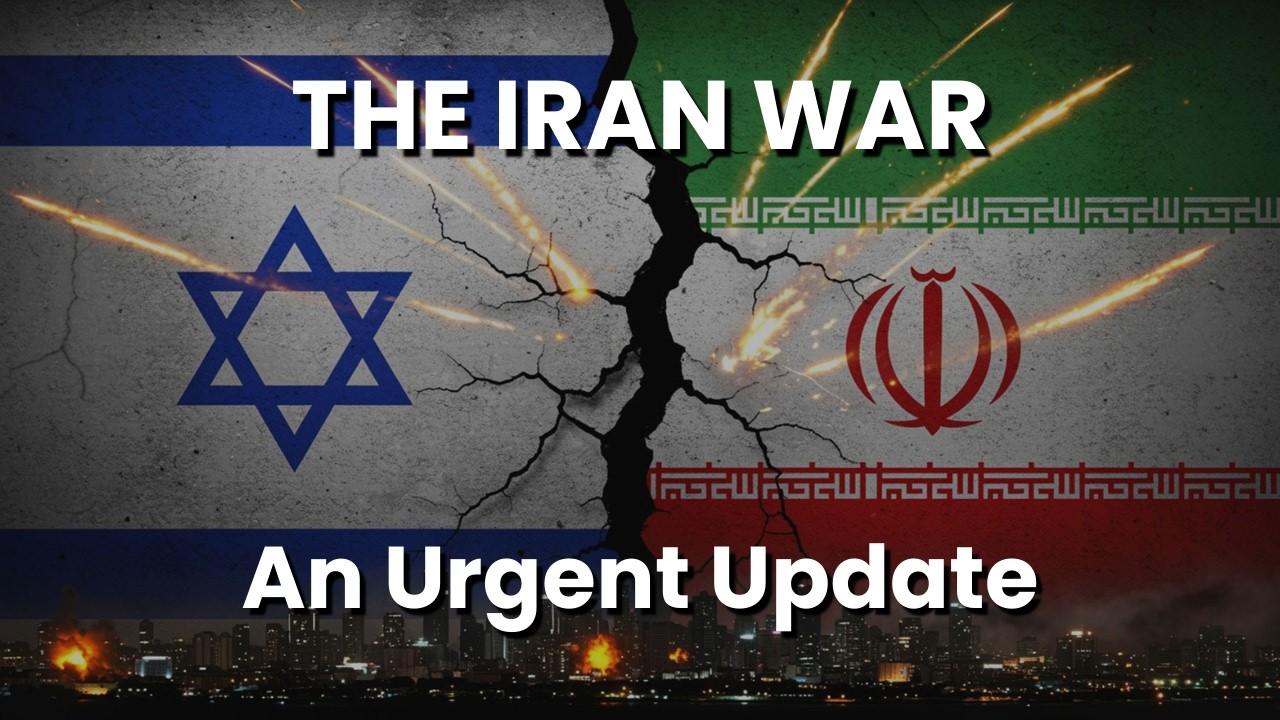
The Hidden Strategy Behind Trump’s Iran Deal: A Geopolitical Shift
Tobiloba OdejinmiBy Tobiloba Odejinmi
Education
May 27, 2026 • 9:27 AM
2m2 min read
Verified
Source: YouTube
The Core Insight
This analysis argues that the current Iran negotiation is not a failure of diplomacy, but a calculated '60-chess' move by the Trump administration. By leveraging the security desperation of Gulf states, who were targeted by Iran during the recent conflict, Trump is forcing a regional realignment. The goal is to mandate that key Muslim-majority nations, including Saudi Arabia, Pakistan, and Qatar, sign the Abraham Accords as a prerequisite for regional stability, effectively isolating the Islamic Republic of Iran by stripping away its ideological leverage as the 'champion of the Muslim world.'
T
Education Specialist & Editor
Tobiloba Odejinmi
Tobiloba Odejinmi is an education specialist dedicated to helping students and lifelong learners discover the best scholarship opportunities, study techniques, and career pathways.
The Kodawire Editorial Team consists of experienced journalists and subject matter experts dedicated to delivering accurate, well-researched, and engaging content.
The Strategic Pivot: Why the Iran Negotiation Is Not What It Seems
The Short Version
The Leverage Shift: Iran’s attempts to use Gulf states as a buffer against US strikes backfired, inadvertently revealing their vulnerability and giving the US unprecedented diplomatic leverage.
The Abraham Accords Prerequisite: The current negotiation framework demands that regional powers, including Saudi Arabia, Pakistan, and Qatar, formally normalize relations with Israel.
Ideological Containment: By forcing a coalition of Muslim-majority nations to align with Israel, the strategy aims to strip Iran of its primary political narrative: that it is the sole champion of the Islamic cause against Israel.
Regional Autonomy: The goal is to transition from a US-dependent security model to a self-policing Middle Eastern coalition, utilizing shared radar, missile defense, and the IMEC trade corridor.
For the past several days, the media narrative has been remarkably consistent: the current negotiation framework with Iran is a failure. Critics argue that the Islamic Republic remains standing, its ballistic missile arsenal is untouched, and the potential unfreezing of assets provides a lifeline to a regime under internal pressure. On the surface, these observations are factually sound. However, they miss the larger, more complex game being played behind the scenes, often obscured by ongoing regional tensions.
Strategic analysis of regional geopolitical shifts. (Credit: Maëva Catteau via Unsplash)
The Leverage of Desperation
To understand the current situation, we must look back at the diplomatic maneuvers of recent months. When the US authorized military operations against Iran, leaders from Saudi Arabia, Qatar, and the UAE reached out to the White House with a unified plea: hold back. They feared that further escalation would invite Iranian retaliation that their economies and infrastructure could not withstand.
At the time, this appeared to be a simple request for restraint. In reality, it was a tactical error by the Gulf states. By explicitly detailing their economic deficits, such as Saudi Arabia’s $33.5 billion first-quarter shortfall, and their vulnerability to missile threats, these leaders handed the US significant leverage. They were no longer neutral observers; they were desperate stakeholders in a security architecture they could no longer maintain on their own, a reality often discussed in broader geopolitical analysis.
Behind the Scenes & Transparency Log
My analysis is based on a review of the diplomatic maneuvers following the recent regional conflict. I have cross-referenced the public statements of regional leaders with the economic realities of the Gulf states, specifically focusing on the shift from managed neutrality to active security integration. By stripping away the immediate noise of the ceasefire negotiations, I have focused on the long-term strategic requirements of the involved nations to provide an objective assessment of the current diplomatic framework.
The Abraham Accords: The Price of Peace
The most audacious element of the current framework is the demand that any signatory, including Saudi Arabia, Pakistan, and Qatar, must join the Abraham Accords. This is not merely a diplomatic formality; it is a fundamental restructuring of the Middle East. For 75 years, the regional consensus held that no Arab nation would recognize Israel until a Palestinian state was established. The Abraham Accords shattered this logic by proving that the real strategic threat to these nations is not Israel, but Iran.
The shifting landscape of Middle Eastern alliances. (Credit: JustStartInvesting via Pexels)
The Geopolitical Ripple Effect
The inclusion of Pakistan and Saudi Arabia in this framework is significant. As the custodian of Islam’s holiest sites, Saudi Arabia’s endorsement of normalization would provide religious and political cover for other Muslim-majority nations to follow suit. Similarly, Pakistan, the only Muslim-majority nuclear power, would signal to the entire Islamic world that the 1948-era consensus is effectively dead. This shift moves the region toward the India-Middle East-Europe Economic Corridor (IMEC), a trade route designed to bypass Iranian influence entirely.
Iran’s regional power has always relied on a specific narrative: that the Muslim world is united against Israel and that Iran is the righteous champion of that cause. This narrative provides the regime with its recruiting pipeline and domestic justification for foreign adventurism. Normalization between Israel and the Arab world renders this narrative redundant. This is why the October 7th attack was so critical; it was a desperate, calculated attempt by Hamas, backed by Iranian strategic direction, to derail the Saudi-Israel normalization deal before it could be finalized, a topic explored in recent conflict updates.
The Contrarian's Corner
Most analysts argue that military force is the only way to neutralize the Islamic Republic. I contend that this is a fundamental misunderstanding of the threat. The Islamic Republic is an ideological state, not just a military one. Decades of sanctions and targeted strikes have failed to dismantle the regime because they do not address the ideological vacuum that would be left behind. The true "long game" is not to destroy the regime through external force, but to render it irrelevant through regional isolation and the creation of a coalition that makes its revolutionary rhetoric obsolete.
Let's Be Objective
Media coverage of these negotiations often falls into two camps: those who view the deal as a capitulation to Iran, and those who view it as a standard diplomatic process. Both sides miss the structural shift. By focusing on the immediate, often performative, aspects of the ceasefire, they ignore the quiet integration of radar, missile defense, and intelligence sharing that is currently occurring between Israel and its new regional partners. The reality is that these countries are building a security architecture that functions regardless of who sits in the White House.
The New Regional Security Architecture
We are witnessing a transition from a US-policed Middle East to a Middle East-policed Middle East. Through shared military command integration and joint missile defense, these nations are creating a deterrence picture that Iran has never faced before. This is not a NATO-style alliance, but a pragmatic coalition of countries united by a shared understanding of the Iranian threat. The economic benefits, such as the 431% surge in tech investment seen in early Accord-aligned countries, provide the incentive, while the security necessity provides the glue.
Integration of regional defense systems. (Credit: Ramon Karolan via Pexels)
Interactive Decision-Making Tool
If you are evaluating the success of this strategy, consider these three indicators:
Indicator 1: Are regional powers continuing to share intelligence and radar data with Israel despite public denials?
Indicator 2: Is the IMEC trade corridor moving forward, effectively bypassing Iranian-controlled shipping lanes?
Indicator 3: Is the narrative of "Muslim unity against Israel" losing its traction in the domestic media of Saudi Arabia and Pakistan?
My Personal Toolkit
To track these developments, I rely on a few specific categories of resources:
Regional Trade Data: Monitoring the growth of the IMEC corridor and bilateral trade agreements between Israel and the Gulf states.
Defense Intelligence Reports: Tracking the integration of regional missile defense systems and shared radar networks.
Geopolitical Analysis Platforms: Focusing on outlets that prioritize long-term strategic shifts over daily news cycles.
Engagement Conclusion
Do you believe that regional isolation and economic integration are sufficient to neutralize an ideological threat like the Islamic Republic, or is military force the only language the regime truly understands? I will be replying to every comment in the first 24 hours.
It is a pivot because it moves beyond simple diplomacy to demand that regional powers join the Abraham Accords, effectively restructuring the Middle East into a coalition that isolates Iran ideologically and militarily.
By expressing their economic vulnerabilities and fear of Iranian retaliation, they revealed their dependence on a security architecture they could no longer maintain alone, forcing them to align more closely with US-led regional security goals.
The Accords serve as a prerequisite for regional normalization, aiming to replace the 75-year-old consensus of anti-Israel unity with a new reality where Iran is viewed as the primary regional threat.
Active Engagement
Was this information helpful?
Join Discussions
0 Thoughts
Editorial Team • Question of the Day
"If the Saudi-Israel normalization deal is finalized, does the Palestinian cause lose its status as the central pillar of Middle Eastern politics?"