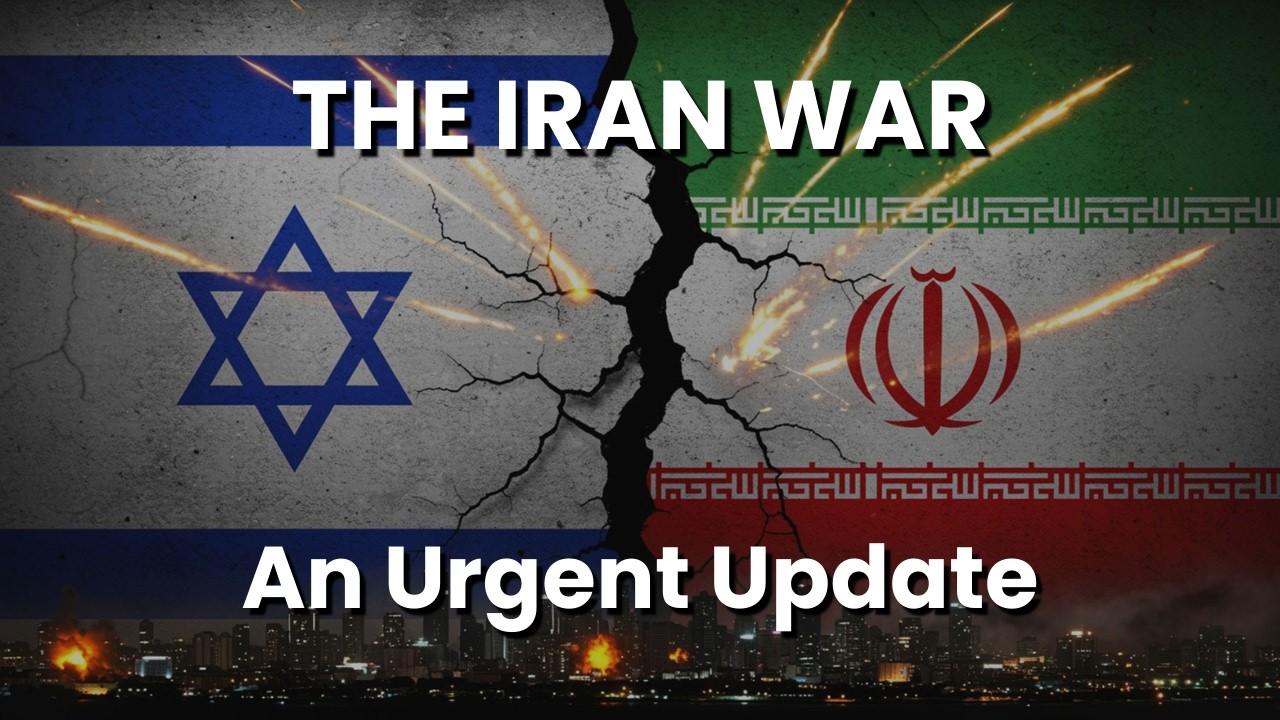
The Secret 'Plaza Accord 2.0': Is a New Global Monetary Order Coming?
Elijah TobsBy Elijah Tobs
News
May 27, 2026 • 9:25 AM
10m10 min read
Verified
Source: Pexels
The Core Insight
This analysis explores the theory that the recent high-profile US-China summit involving 18 CEOs is a precursor to a 'Plaza Accord 2.0', a massive restructuring of the global monetary system. By examining the historical failure of the 1985 Plaza Accord in Japan and current geopolitical tensions (the Thucydides Trap and the Strait of Hormuz oil crisis), the content argues that the US and China may be negotiating a gold-backed devaluation of the dollar to manage debt and stabilize supply chains. The piece highlights the risks of a K-shaped economy and the potential for long-term inflation, suggesting that asset ownership is the primary hedge against this transition.
Sponsored
Original insights inspired by Andrei Jikh — watch the full breakdown below.
As the founder and primary investigative voice at Kodawire, Elijah Tobs brings over 15 years of experience in dissecting complex geopolitical and financial systems. His work is centered on the ethical governance of emerging technologies, the shifting architectures of global finance, and the future of pedagogy in a digital-first world. A staunch advocate for high-fidelity journalism, he established Kodawire to be a sanctuary for deep-dive intelligence. Moving away from the ephemeral nature of modern headlines, Kodawire delivers permanent, verified insights that challenge the status quo and empower the global reader.
The New Monetary Order: A high-stakes negotiation is underway to restructure the global financial system, potentially mirroring the 1985 Plaza Accord.
The Gold Pivot: Rather than a direct currency revaluation, the U.S. and China may be positioning gold as the "escape valve" to manage massive debt loads.
Energy as Leverage: The ongoing closure of the Strait of Hormuz is acting as a critical pressure point, forcing the U.S. to seek a deal before global oil reserves hit operational stress levels.
The K-Shaped Reality: Inflation is being utilized to manage unpayable national debt, widening the wealth gap between asset owners and cash savers.
The recent diplomatic mission to Beijing, featuring an unprecedented delegation of 18 American CEOs, including Elon Musk, Tim Cook, Jensen Huang, and Larry Fink, signals a shift in global power dynamics that transcends traditional trade disputes. While the public narrative focuses on tariffs and market access, the underlying reality suggests a far more complex negotiation: the potential birth of a new monetary order. As Xi Jinping noted, the world is currently navigating a "transformation not seen in a century," a period characterized by fluidity and turbulence that forces both nations to confront the "Thucydides Trap."
The Beijing summit brought together global corporate leaders to discuss the future of international trade and finance. (Credit: Maëva Catteau via Unsplash)
This historical concept, which posits that a rising power and an existing hegemon are statistically prone to conflict, serves as the backdrop for these discussions. The urgency is palpable. With the Strait of Hormuz, a chokepoint for 20% of global energy, remaining closed, the world is effectively borrowing oil from the future. As global inventories approach critical operational stress levels, the window for a managed transition is closing, making the Beijing summit a race against a looming energy and financial deadline. Understanding these shifts is vital, especially as investors look to navigate market volatility in an uncertain climate.
How I Researched This
To piece together this analysis, I have cross-referenced public statements from the Beijing summit with historical economic data and current commodity market trends. My research involved tracking the flow of non-monetary gold exports from the U.S. to international hubs, analyzing bond yield divergence between the U.S. and China, and reviewing energy inventory projections from major financial institutions. By stripping away the "Hollywood" narrative of geopolitics, I have focused on the structural incentives driving these nations toward a potential deal.
Historical Precedent: The 1985 Plaza Accord
To understand the current strategy, one must look back to the 1985 Plaza Accord. In that era, the U.S. faced a ballooning trade deficit and a dollar so strong it crippled domestic manufacturing. The solution was a secret agreement to weaken the dollar against the Japanese yen. While this succeeded in boosting U.S. competitiveness, it triggered a catastrophic asset bubble in Japan, leading to the "lost decades" of economic stagnation. China, having observed this history, is unlikely to accept a direct currency revaluation. Instead, the current negotiations appear to be exploring an alternative path, one that avoids the pitfalls of the 1980s by utilizing gold as a neutral, global asset to facilitate a rebalancing of the world’s balance sheets.
The Geopolitical Ripple Effect
The closure of the Strait of Hormuz is not merely a regional conflict; it is a strategic lever. By maintaining this closure, proxy actors are effectively forcing the U.S. to the negotiating table. The geopolitical implication is clear: the U.S. is being pressured to accept a new, multipolar financial reality. If the U.S. fails to secure a deal, the resulting energy shortage could trigger a systemic shock that would render current debt levels unsustainable. This is why the presence of top-tier corporate leadership is so significant, they are the architects of the infrastructure required to sustain this transition.
The Gold-Centric 'Plaza Accord 2.0' Theory
The proposed deal involves a $1 trillion investment from China into U.S. manufacturing, mirroring the Japanese investment strategy of the 1980s. However, the "escape valve" for this debt-heavy environment is likely gold. The U.S. currently carries its gold reserves on its books at a 1973 valuation of $42 per ounce. Marking these reserves to the current market price, well over $4,500 per ounce, would dramatically improve the U.S. balance sheet, providing the fiscal space to manage national debt without triggering a total collapse of the dollar. As the U.S. continues to export physical gold to China, we are witnessing the physical movement of the foundation of the next monetary system. For those concerned about the wealth hierarchy, understanding these shifts is essential for long-term asset protection.
Gold is increasingly viewed as a neutral asset to rebalance global balance sheets. (Credit: Alexander Mass via Pexels)
The Unpopular Opinion
Most analysts argue that the U.S. and China are locked in a zero-sum game of containment. I contend that this is a misreading of the situation. The "theatre" of conflict, the public posturing regarding nuclear weapons and trade wars, is a distraction. Behind the scenes, both nations are incentivized to cooperate to prevent a global financial meltdown. The "enemy" is not the other nation; it is the systemic instability of the current debt-based monetary order. Both sides are working toward a controlled devaluation, not a total collapse.
Navigating the K-Shaped Economy
Inflation is the primary tool being used to manage unpayable national debt. By allowing the currency to lose value, the real burden of debt shrinks. However, this process is inherently regressive. It creates a K-shaped economy: those who own hard assets, real estate, gold, Bitcoin, and equities, see their wealth protected or expanded, while those reliant on cash savings or fixed wages see their purchasing power eroded. The integration of AI into the labor market further accelerates this divide, displacing traditional roles and increasing social instability. This transition is not accidental; it is a structural shift that necessitates a "digital control grid" to manage the resulting social friction. Investors should consider how to avoid the traps of traditional hustle culture in this new environment.
Let's Be Objective
Media coverage of these events often falls into two camps: the "national security" narrative, which emphasizes the threat of China, and the "economic pragmatism" narrative, which focuses on the necessity of trade. Both perspectives are incomplete. The national security camp ignores the reality of global supply chain interdependence, while the economic camp often overlooks the strategic use of energy and gold as weapons. A balanced view requires acknowledging that both nations are acting in their own self-interest to survive a systemic transition that neither can fully control.
The Decision Matrix
If you are trying to position yourself for this transition, consider your current exposure:
If you are heavily in cash: You are currently on the "downward" slope of the K-shaped economy. Consider diversifying into assets that cannot be printed by central banks.
If you own productive assets: You are likely protected, but monitor the "digital control grid" developments, as regulatory oversight of these assets is expected to increase.
If you are in debt: Inflation may technically reduce the real value of your debt, but rising interest rates and economic instability pose significant risks to your ability to service that debt.
My Recommended Setup
In an environment where the dollar is losing value, I focus on assets with inherent scarcity and utility. My personal approach involves:
Hard Assets: Physical gold and silver as a hedge against currency devaluation.
Digital Scarcity: Bitcoin, which serves as a non-sovereign store of value.
Productive Real Estate: Assets that provide utility and are less susceptible to the volatility of paper markets.
The Big Question Mark
The most significant unresolved question is how the inflation resulting from this transition will be absorbed. Will it be contained within the price of gold, or will it manifest as a permanent increase in the cost of living for the average citizen? Furthermore, if the "digital control grid" is fully implemented, what remains of individual financial privacy? These are the variables that will define the next decade.
Do you believe the U.S. and China are genuinely moving toward a new monetary order, or is this simply a temporary tactical alignment to avoid a larger conflict? I will be replying to every comment in the first 24 hours to discuss your theories.
It is a theory suggesting that the U.S. and China may use gold as a neutral asset to rebalance global balance sheets, potentially marking U.S. gold reserves to current market prices to manage national debt.
The Strait of Hormuz is a critical energy chokepoint. Its closure is acting as a strategic lever, forcing the U.S. to negotiate a new financial reality before global oil reserves reach critical stress levels.
A K-shaped economy describes a scenario where inflation erodes the purchasing power of cash savers and wage earners, while those who own hard assets like gold, real estate, and Bitcoin see their wealth protected or increased.
Active Engagement
Was this information helpful?
Join Discussions
0 Thoughts
Editorial Team • Question of the Day
"If the U.S. were to mark its gold reserves to market price, do you think it would stabilize the economy or trigger a loss of confidence in the dollar?"