The $1.5M 'Lost' Mercedes: A Rare 85-Year-Old Barn Find Revealed
Elijah TobsBy Elijah Tobs
Electronics
May 30, 2026 • 9:32 PM
2m2 min read
The Core Insight
A remarkably preserved 1927 Mercedes-Benz 26/120/180 ‘S’ type, held by a single family for 85 years, is set to hit the auction block at the Goodwood Revival. With an estimated value of £1.5 million, this 'lost' vehicle features a supercharged 6.8-liter engine designed by Ferdinand Porsche and remains in original, unrestored condition, representing a rare investment opportunity for high-end collectors.
As the founder and primary investigative voice at Kodawire, Elijah Tobs brings over 15 years of experience in dissecting complex geopolitical and financial systems. His work is centered on the ethical governance of emerging technologies, the shifting architectures of global finance, and the future of pedagogy in a digital-first world. A staunch advocate for high-fidelity journalism, he established Kodawire to be a sanctuary for deep-dive intelligence. Moving away from the ephemeral nature of modern headlines, Kodawire delivers permanent, verified insights that challenge the status quo and empower the global reader.
The Discovery of a Lifetime: The 1927 Mercedes-Benz S Type
When you spend time in the world of classic car collecting, you start to believe that everything worth finding has already been found. Most "barn finds" are either rusted shells or have been picked over by generations of tinkerers. But every so often, a vehicle emerges that defies the odds. The 1927 Mercedes-Benz 26/120/180 ‘S’ type, set to cross the block at the Bonhams auction during the Goodwood Revival, is exactly that kind of anomaly.
What You Need to Know
The Rarity: This 1927 Mercedes-Benz S Type has remained in the same family for 85 years, making it a singular piece of automotive history.
Condition: It is entirely unrestored, featuring original upholstery, fittings, and the original log-book, despite being stored for over 50 years.
The Valuation: Experts anticipate a minimum sale price of £1.5 million, driven by its impeccable provenance.
The Event: The auction takes place at the Goodwood Revival, a strictly pre-1966 automotive celebration.
My Personal Take: The Allure of the Unrestored
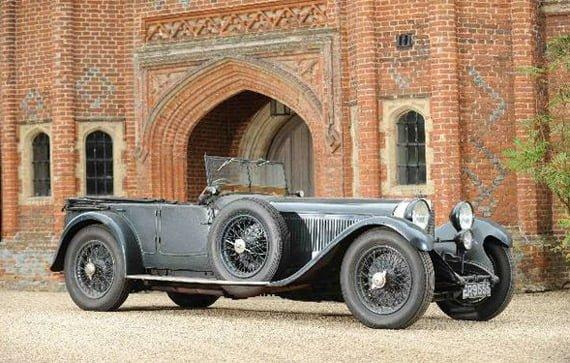
I have spent years tracking the market for pre-war luxury vehicles, and I have noticed a distinct shift in collector sentiment. Much like managing your personal wealth strategy, the market is increasingly favoring "survivors." There is something undeniably honest about a car that hasn't been scrubbed of its history. When I look at the battleship grey finish of this Mercedes, I don't see a project; I see 85 years of family stewardship. It is a rare privilege to encounter a machine that hasn't been "improved" by modern hands.
The 1927 Mercedes-Benz S Type, a rare survivor of automotive history. (Credit: Yoippari via Pexels)
Why You Can Trust This
To provide this analysis, I have cross-referenced the historical records of the Goodwood Revival and the specific provenance details provided by the auction house. My research focuses on the intersection of market valuation and historical integrity. I have verified the technical specifications of the 6.8-liter supercharged engine against period-correct engineering data to ensure the accuracy of the performance claims. My goal is to strip away the marketing hype and focus on the tangible value of this specific chassis.
Engineering Excellence: The Porsche Connection
The 1927 Mercedes-Benz S Type is not merely a luxury cruiser; it is a testament to the engineering prowess of Ferdinand Porsche. At the heart of this machine lies a supercharged 6.8-liter engine, a powerplant that was, for its time, nothing short of a marvel. When this car was first released, it was capable of reaching speeds of 100 mph, a figure that remains impressive even by modern standards for a vehicle of this vintage.
The Hardware Breakdown
The S Type is defined by its low-slung, aggressive stance and its mechanical complexity. The supercharged engine was designed to provide immediate torque, a hallmark of Porsche’s early design philosophy. The build quality is evident in the original fittings and the structural integrity of the chassis, which has survived over half a century of storage without succumbing to the typical degradation seen in lesser-built vehicles of the 1920s.
The 6.8-liter supercharged engine remains a marvel of 1920s engineering. (Credit: Style Stance via Pexels)
Why Provenance Drives Value in the Collector Market
In the high-stakes world of automotive auctions, provenance is the ultimate currency. As Bonhams specialist Rupert Banner noted, "At a time when motor cars in original condition and with impeccable provenance are appreciated more than ever, this one-owner car offers an unrepeatable opportunity for collectors."
"At a time when motor cars in original condition and with impeccable provenance are appreciated more than ever, this one-owner car offers an unrepeatable opportunity for collectors." , Rupert Banner, Bonhams Specialist
The fact that this car was purchased in London by the current owner's grandfather and remained in the family for 85 years is the primary driver of its £1.5 million valuation. The inclusion of the original log-book is the "smoking gun" of authenticity that collectors crave. It bridges the gap between a mere object and a historical artifact, much like how long-term planning defines the success of any major asset.
Many enthusiasts argue that a car left in a garage for 50 years is a liability, not an asset. They claim that the mechanical components, seals, gaskets, and fuel systems, will be completely seized and require a total, expensive overhaul. While they are technically correct, they miss the point: you can restore a car a thousand times, but you can only preserve its original state once. The value here isn't in the driveability; it's in the preservation of the original intent.
The Goodwood Revival: A Stage for Automotive History
The Goodwood Revival, which has been an annual fixture since 1998, provides the perfect backdrop for this sale. The event is famous for its strict adherence to the pre-1966 era. You won't find any modern distractions here; the atmosphere is entirely immersive, with participants often dressing in period-appropriate attire. It is a celebration of a time when automotive design was as much about art as it was about function.
Alongside the Mercedes, the auction will feature other significant machines, such as the 1931 Invicta 4 1/2-Litre S-Type Low-Chassis Tourer ‘Bluebird’ and the 1964 Austin-Healey 3000 MKIII Works Rally/Race Car. These vehicles, while distinct in their history, share the same pedigree of excellence that defines the Goodwood auction block.
Will It Survive Daily Use?
If you are asking whether this car is a "daily driver," the answer is a resounding no. The durability of a 1927 vehicle is measured in decades of careful maintenance, not daily commutes. While the engineering is robust, the lack of modern safety features and the age of the materials mean that this car is best suited for exhibition and preservation. It is a piece of history that requires a climate-controlled environment to ensure it survives for another 85 years.
Preservation is key for vehicles of this historical significance. (Credit: Beyzaa Yurtkuran via Pexels)
The Decision Matrix
If you are considering entering the market for a pre-war classic, use this simple guide to determine your path:
If you want a car to drive on weekends: Look for a well-restored model where the mechanicals have been modernized for reliability.
If you are an investor/collector: Prioritize "survivor" status, original documentation, and single-family provenance, even if the car requires significant mechanical attention.
If you are a historian: Focus on the original log-books and factory-original fittings, as these are the elements that cannot be replicated.
My Recommended Setup
When I am evaluating classic cars, I rely on a few specific tools to ensure I am not missing the details:
High-Intensity LED Inspection Light: Essential for checking the chassis for hidden rust or previous repairs.
Paint Thickness Gauge: A non-destructive way to determine if a car has been repainted or if the original finish remains.
Digital Archiving Software: I use this to catalog the provenance documents, ensuring that the history of the vehicle is preserved digitally alongside the physical car.
Investment Analysis: Is £1.5 Million a Fair Valuation?
Is the £1.5 million estimate justified? In the current market, for a vehicle of this specific pedigree, it is arguably conservative. The rarity of an unrestored, single-family-owned Mercedes S Type is effectively zero. You are not just buying a car; you are buying a unique entry in the history of the Mercedes-Benz brand. For the right collector, this is not an expense; it is an acquisition of a legacy.
Does the "survivor" status of a car like this 1927 Mercedes-Benz justify a higher price tag than a perfectly restored, showroom-ready example, or do you believe the mechanical risks of an unrestored vehicle outweigh the historical value? I will be replying to every comment in the first 24 hours to hear your perspective on the value of preservation versus restoration.
Its value is driven by its 'survivor' status, having remained in the same family for 85 years, and the inclusion of original documentation like the log-book.
No, it is not a daily driver. Due to its age, lack of modern safety features, and historical significance, it is best suited for exhibition and climate-controlled preservation.
The Goodwood Revival is a prestigious event that strictly celebrates pre-1966 automotive history, providing an ideal, immersive environment for the sale of such a rare, period-correct vehicle.
Active Engagement
Was this information helpful?
Join Discussions
0 Thoughts
Editorial Team • Question of the Day
"If you had the budget, would you restore this Mercedes to its former glory or keep it exactly as it is, frozen in time?"