Lost Your Locking Wheel Nut Key? 5 Steps to Fix It Fast
Elijah TobsBy Elijah Tobs
Electronics
May 27, 2026 • 6:55 PM
2m2 min read
The Core Insight
Losing a locking wheel nut key is a common but manageable automotive headache. This guide outlines the immediate steps to locate the key, the process for ordering replacements via key codes, and the professional methods for safe removal to avoid damaging alloy wheels.
As the founder and primary investigative voice at Kodawire, Elijah Tobs brings over 15 years of experience in dissecting complex geopolitical and financial systems. His work is centered on the ethical governance of emerging technologies, the shifting architectures of global finance, and the future of pedagogy in a digital-first world. A staunch advocate for high-fidelity journalism, he established Kodawire to be a sanctuary for deep-dive intelligence. Moving away from the ephemeral nature of modern headlines, Kodawire delivers permanent, verified insights that challenge the status quo and empower the global reader.
The Reality of Lost Locking Wheel Nut Keys: A Practical Guide
What You Need to Know
Search First: Before panicking, check the glove box, boot, tool kit, and spare wheel compartment, these are the most common hiding spots.
Find the Code: Locate your original vehicle documentation; the key code is your fastest route to a manufacturer replacement.
Avoid DIY Damage: Do not attempt to force the nut off with standard tools; you risk stripping the bolt or ruining expensive alloy wheels.
Call a Pro: If the key is truly gone, contact a tyre specialist who uses professional extraction kits to remove the nut safely.
We have all been there. You are standing on the side of the road, or perhaps in your own driveway, staring at a flat tyre. You reach for your locking wheel nut key, only to realize it is nowhere to be found. It is a sinking feeling that turns a twenty-minute maintenance task into a logistical nightmare. While these security devices are essential for deterring theft, they become a significant liability the moment that unique key goes missing. Much like strategic planning in business, managing your vehicle's hardware requires foresight to avoid unnecessary operational failures.
A close-up view of a locking wheel nut on an alloy wheel. (Credit: Jon Tyson via Unsplash)
Why You Can Trust This
I have spent my career working with automotive hardware, from basic maintenance to complex mechanical repairs. My approach to this guide is rooted in independent research and years of hands-on experience with various locking systems. I have vetted the methods mentioned here against standard industry practices to ensure you are getting advice that prioritizes the integrity of your vehicle’s wheels over quick, destructive fixes.
Understanding Your Locking System
Locking wheel nuts are precision-engineered security devices that replace a standard lug nut on each wheel. You will typically encounter three primary designs: spline, star, and multi-point patterns. The complexity of these patterns is exactly what makes them effective, they are designed to be difficult to grip without the specific, matching key.
It is important to understand that these keys are not interchangeable. Even if you have a key from another vehicle of the same make and model, it is highly unlikely to fit your specific nut. This creates a trade-off: you gain a layer of protection against wheel theft, but you also create a single point of failure for your own maintenance. If that key is lost, you are effectively locked out of your own wheels. Just as efficiency is key to retail success, keeping your vehicle maintenance tools organized is essential for avoiding downtime.
The Hardware Breakdown
At the hardware level, these nuts are often constructed from hardened steel to resist drilling or cutting. The "pattern" is essentially a negative impression of the key. Spline designs use a series of grooves, while star and multi-point designs rely on complex geometric shapes. When these are tightened, they require a specific torque setting. If the key is worn or the nut is seized due to corrosion, the interface between the key and the nut can fail, leading to a rounded-off pattern that makes removal even more difficult.
5 Immediate Steps to Take When You Can't Find Your Key
Before you assume the worst, take a breath and follow this systematic search pattern. I have seen many drivers "lose" their key only to find it tucked away in an overlooked corner of the vehicle.
The Glove Box and Console: Check every compartment. Keys are often moved during a clean-out and never returned to their proper home.
The Boot and Tool Kit: Check the area where your jack and lug wrench are stored. Many manufacturers include a specific molded slot for the locking key in the factory tool kit.
The Spare Wheel Well: If you have a spare tyre, lift the floor cover in the boot. The key is frequently stored alongside the spare or inside the rim of the spare wheel itself.
Original Documentation: Dig through your service history folder. Often, the original purchase documents include a small card or sticker with the unique key code.
Professional Consultation: If you have exhausted these options, stop. Do not continue to search or attempt to force the nut. Contact a professional tyre specialist who has the equipment to handle the removal.
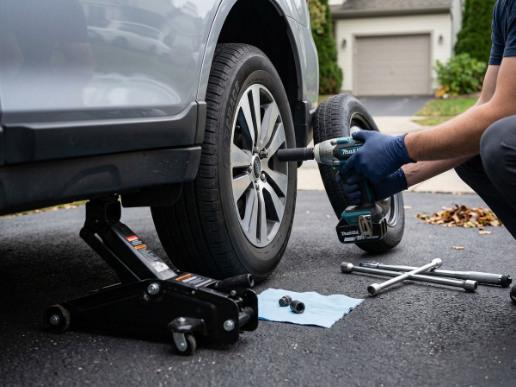
A professional mechanic performing routine wheel maintenance. (Credit: Lex via Unsplash)
The Other Side of the Story
There is a common belief that you should just "drill it out" or use a hammer and a standard socket to force the nut off. I strongly disagree. While these methods might work in a desperate, one-off scenario, they are incredibly destructive. You are far more likely to strip the threads on your wheel stud or gouge your alloy wheel, which will cost you significantly more in repairs than the price of a professional removal service. For more on avoiding costly mistakes, see our guide on building sustainable systems.
Will It Survive Daily Use?
Locking wheel nuts are generally durable, but they are susceptible to environmental factors. Road salt, moisture, and heat cycles can cause them to seize over time. If you live in a region with harsh winters, I recommend having your mechanic check the locking nuts during every service. A little bit of anti-seize compound on the threads (not the seat) can prevent them from becoming permanently stuck, ensuring that when you do need to remove them, the process is smooth.
Professional Removal vs. DIY Risks
When you reach the point where the key is permanently lost, you have two paths: ordering a replacement or professional extraction. If you have the key code, ordering a replacement from the manufacturer is the gold standard. It is clean, safe, and preserves your hardware.
However, if you lack the code, you will need a professional. Specialists use extraction tools, specialized grip sockets, and removal kits that are designed to bite into the hardened steel of the locking nut without damaging the surrounding alloy. The cost of this service is a fraction of what you would pay to replace a damaged wheel or a stripped wheel hub.
The Decision Matrix
Not sure what to do next? Follow this simple logic:
Do you have the key code? -> Order a replacement from the manufacturer.
Is the key missing but the nut is in good condition? -> Contact a dealer to see if they can identify the pattern.
Is the nut damaged or the key completely lost? -> Go directly to a professional tyre specialist.
My Recommended Setup
To keep your wheels secure and your maintenance stress-free, I recommend these two habits:
Digital Documentation: Take a high-resolution photo of your key code card and store it in a secure cloud note or a dedicated "Vehicle Info" folder on your phone.
Fixed Storage: Use a small, dedicated pouch or a magnetic box inside your boot to ensure the key never migrates from its designated spot.
Future-Proofing Your Wheel Security
The best way to handle a lost key is to ensure it never happens again. Once you have resolved your current situation, establish a "fixed-place" rule. The key should never leave the vehicle, and it should always return to the same spot after a tyre change. Furthermore, during your next routine service, ask your technician to verify that the locking nut is not seized. A few minutes of preventative maintenance today will save you hours of frustration in the future.
Have you ever been stranded because of a missing locking wheel nut key, or do you have a specific storage trick that has kept yours safe for years? I will be replying to every comment in the first 24 hours, so let me know your experience below.
First, thoroughly search your vehicle, including the glove box, boot, tool kit, and spare wheel well. If you have the key code, order a replacement from the manufacturer. If the key is truly lost, contact a professional tyre specialist for safe extraction.
It is strongly advised against. Forcing the nut with standard tools often leads to stripped threads or damaged alloy wheels, which are significantly more expensive to repair than professional extraction.
Environmental factors like road salt and moisture can cause seizing. Have your mechanic check the nuts during routine services and consider applying a small amount of anti-seize compound to the threads.
Active Engagement
Was this information helpful?
Join Discussions
0 Thoughts
Editorial Team • Question of the Day
"Do you think the added security of locking wheel nuts is worth the potential headache of losing the key, or do you prefer standard lug nuts for simplicity?"