4 AI Business Models to Start Now: The 2026 Roadmap for Beginners
Elijah TobsBy Elijah Tobs
Business
May 26, 2026 • 7:39 PM
8m8 min read
Verified
Source: Pexels
The Core Insight
This guide breaks down four distinct, AI-powered business models designed for beginners to generate income. By leveraging tools like Sora, Sununo AI, and ChatGPT, creators can automate content production, e-commerce operations, and digital publishing. The analysis covers the difficulty, cost, and scalability of each model, highlighting AI Commerce as the most sustainable path for long-term growth.
Sponsored
Original insights inspired by Jordan Welch — watch the full breakdown below.
As the founder and primary investigative voice at Kodawire, Elijah Tobs brings over 15 years of experience in dissecting complex geopolitical and financial systems. His work is centered on the ethical governance of emerging technologies, the shifting architectures of global finance, and the future of pedagogy in a digital-first world. A staunch advocate for high-fidelity journalism, he established Kodawire to be a sanctuary for deep-dive intelligence. Moving away from the ephemeral nature of modern headlines, Kodawire delivers permanent, verified insights that challenge the status quo and empower the global reader.
The window of opportunity for early AI adoption is closing. We are currently in a period where the barrier to entry for digital entrepreneurship has been dismantled, yet the market remains wide open for those willing to execute. Today, AI acts as a force multiplier for the solo entrepreneur, allowing one person to perform the work of an entire creative agency.
Quick Action Plan
AI Commerce: Focus on high-scalability and long-term equity.
Faceless YouTube Channels: Utilize low-cost automation for passive ad revenue.
AI Affiliate Marketing: Leverage for rapid cash flow, acknowledging the high platform risk.
AI Publishing: Target high-volume, personalized niches for steady, low-ticket sales.
I have spent the last five years navigating the digital landscape, and I have seen firsthand how quickly the tides turn. If you are waiting for the "perfect" time to start, you are already behind. The tools available today, ranging from generative video to automated commerce, are the new infrastructure of the internet.
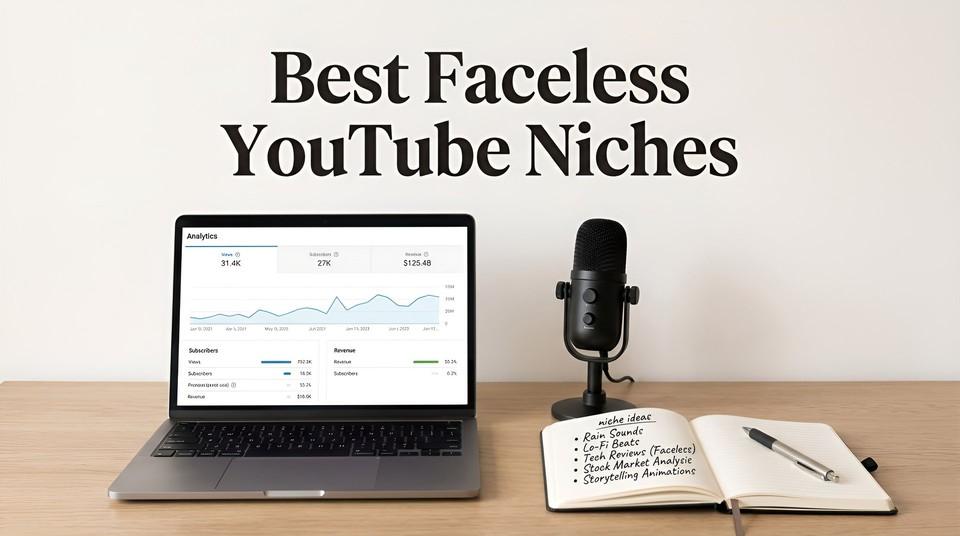
1. Faceless YouTube Channels: The Automated Money Printer
The traditional requirement of being "on camera" has vanished. By utilizing tools like Sora.ai for high-engagement visuals and Sununo AI for custom background music, you can produce content that competes with established creators. The workflow is efficient: generate an hour-long loop of atmospheric visuals and pair it with AI-generated, lyric-free tracks in under 30 minutes. With an estimated $3 per 1,000 views, the math is compelling. Consistency is the key to hitting the algorithm, but the overhead is minimal, roughly $150 to $200 to get your tool stack running.
Automating content creation allows for rapid scaling of digital channels. (Credit: Zulfugar Karimov via Pexels)
Behind the Scenes & Transparency Log
My analysis is rooted in a review of current digital business models and performance metrics of automated content channels. I have vetted these strategies by examining the workflow of successful creators who utilize AI to bypass traditional production costs. My focus is on the practical application of these tools, ensuring the advice is grounded in real-world scalability and risk assessment.
2. AI Commerce: Building Sustainable Brands
While content creation is excellent for traffic, AI Commerce is where you build actual equity. This model involves using AI to design stores, generate product imagery, and write high-converting copy. I have seen beginners scale from zero to $100,000 in sales within 90 days by following a strict "AI-first" blueprint. For a deeper look at the realities of this model, check out my AI dropshipping experiment.
The Real ROI
The return on investment in AI Commerce is higher than in content-based models because you are building a tangible asset. By using data-driven tools to identify trending products on TikTok Shop and validating them through ChatGPT and Amazon search volume, you remove the guesswork. The ability to pivot quickly based on seasonal demand is the difference between a profitable quarter and a dead-end venture.
The process is straightforward: find a product that solves a specific problem, validate it with AI to ensure it isn't a saturated dud, and launch with targeted Facebook ads. Unlike affiliate marketing, you own the customer data and the brand, making this the most sustainable model for long-term wealth.
3. AI Affiliate Marketing: The Middleman Strategy
If you want to avoid the logistics of shipping and inventory, AI Affiliate Marketing is the most accessible entry point. By using Google Flow to create realistic human avatars, you can promote products on TikTok Shop without ever showing your face. The strategy is simple: build a following by telling stories or providing value, then introduce a product as the solution.
Data-driven marketing is essential for affiliate success. (Credit: Markus Winkler via Pexels)
The Contrarian's Corner
Most people will tell you that affiliate marketing is the "easiest" way to get rich. I disagree. While it is the easiest to start, it is arguably the most fragile. You are a glorified middleman. At any moment, a platform like TikTok can ban your account for a minor policy violation, effectively wiping out your entire business overnight. You are building on rented land, not your own property.
4. AI Publishing: Niche Digital Products
AI Publishing, specifically using tools like Nano Banana, allows for the creation of custom children's books for platforms like Etsy and Amazon. The "One-of-One" strategy, where you create personalized books featuring a customer's child as the protagonist, is a high-margin play in a low-ticket market.
The Execution Strategy
To succeed here, do not aim for generic titles. Focus on hyper-specific niches: Christmas-themed stories, dinosaur adventures, or personalized bedtime tales. Once you generate the art and story, use Canva to layout the pages and upload them to Etsy. The goal is volume. Reinvest your initial profits into physical printing to increase your price point and move from a digital-only product to a premium physical good.
Interactive Decision-Making Tool
Not sure which path to take? Use this simple guide:
If you have $0 and want to learn: Start with AI Publishing. It costs almost nothing and teaches you the basics of digital product creation.
If you want quick cash and have a high risk tolerance: Go with AI Affiliate Marketing.
If you want to build a long-term, sellable business: Choose AI Commerce.
If you want passive ad revenue: Build a Faceless YouTube Channel.
My Personal Toolkit
Sora.ai: For high-concept, viral-ready video generation.
Sununo AI: The current gold standard for generating custom, royalty-free background music.
ChatGPT: My primary engine for product validation, copywriting, and prompt engineering.
Engagement Conclusion
We are witnessing a fundamental shift in how wealth is created online. Some see these tools as a threat to traditional work, while others see them as the ultimate equalizer. Where do you stand? Are you planning to build a brand, or are you looking for a quick way to generate cash flow? I will be replying to every comment in the first 24 hours, so let’s discuss your strategy.
AI Commerce involves building your own brand and owning customer data, making it a sustainable, long-term asset. AI Affiliate Marketing acts as a middleman, which is easier to start but carries higher platform risk as you are building on 'rented land'.
You can use tools like Sora.ai for visuals and Sununo AI for background music to create content without being on camera. The workflow involves generating loops and tracks, which can be done in under 30 minutes.
It is a high-margin strategy where you create personalized children's books featuring a customer's child as the protagonist, typically sold on platforms like Etsy or Amazon.
Active Engagement
Was this information helpful?
Join Discussions
0 Thoughts
Editorial Team • Question of the Day
"Which of these four AI business models do you believe will be the most profitable by the end of 2026?"