Meta's 8,000 Layoffs: Zuckerberg’s Two Promises to Surviving Staff
Elijah TobsBy Elijah Tobs
Tech
May 25, 2026 • 7:35 AM
9m9 min read
Verified
Source: Unsplash
The Core Insight
Meta has initiated a massive restructuring, laying off 8,000 employees, roughly 10% of its workforce, to pivot resources toward a $145 billion AI investment strategy. CEO Mark Zuckerberg has issued two rare promises to the remaining 70,000 staff: a guarantee of no further company-wide layoffs this year and an admission of poor communication during the transition. The move highlights the brutal trade-off between human capital and the massive infrastructure costs required for AI dominance.
As the founder and primary investigative voice at Kodawire, Elijah Tobs brings over 15 years of experience in dissecting complex geopolitical and financial systems. His work is centered on the ethical governance of emerging technologies, the shifting architectures of global finance, and the future of pedagogy in a digital-first world. A staunch advocate for high-fidelity journalism, he established Kodawire to be a sanctuary for deep-dive intelligence. Moving away from the ephemeral nature of modern headlines, Kodawire delivers permanent, verified insights that challenge the status quo and empower the global reader.
The Scale: Meta cut 8,000 roles, 10% of its workforce, via a staggered, global 4 AM rollout on May 20.
The Trade-Off: These cuts fund a $125B–$145B capital expenditure push into AI infrastructure, data centers, and custom silicon.
The Promises: Mark Zuckerberg pledged no further company-wide layoffs this year and acknowledged past communication failures.
The New Reality: Surviving staff are navigating "The Draft," a high-density management structure where some leads now oversee 50+ reports.
I have spent the last few days analyzing the internal mechanics of Meta’s latest restructuring. When a company of this scale shifts its operational gravity, the ripples are felt far beyond the balance sheet. The "4 AM notification" strategy is a calculated method to minimize internal chatter during the transition. It is a clinical approach to human capital management that leaves little room for the ambiguity that defined the preceding month. Understanding these shifts is vital, much like studying the evolution of industrial giants to see how they survived past pivots.
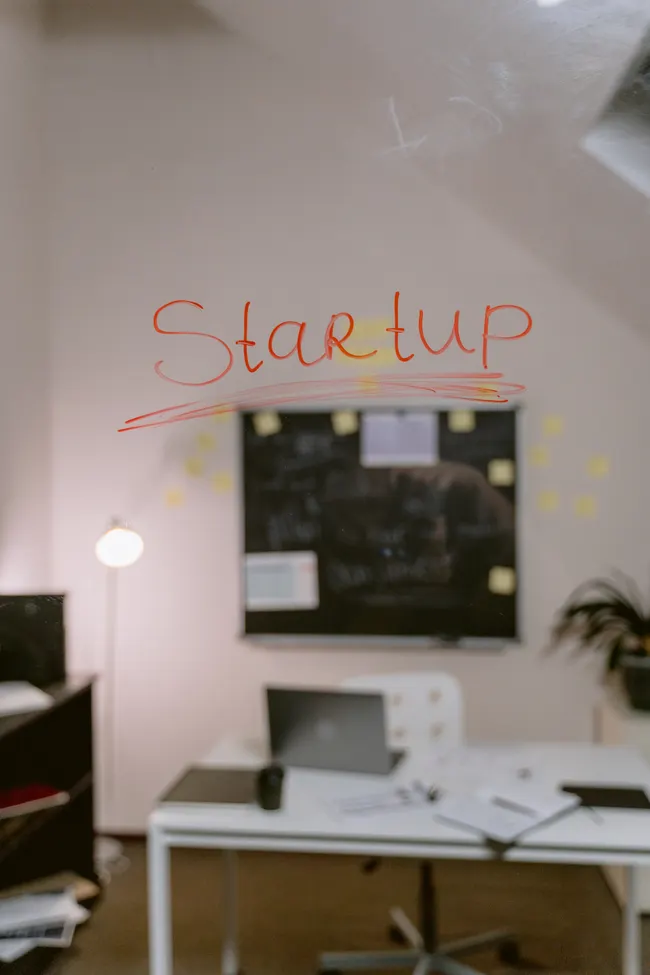
The reality of modern tech restructuring often happens behind screens in the early hours. (Credit: Marília Castelli via Unsplash)
The Practical Verdict
When a CEO promises "no more layoffs," it is rarely a statement of absolute certainty; it is a tactical move to stop the bleeding of talent. The best engineers do not stick around in a "holding pattern." By offering a stability guarantee, Zuckerberg is attempting to stabilize a workforce that has been scavenging for information and checking internal directories for weeks. However, the financial reality, a $145 billion spend on AI, suggests that the pressure to optimize headcount is not going away. If you are currently at Meta, the "stability" you have been promised is likely a temporary ceasefire, not a permanent peace treaty. Many leaders fail to realize that knowledge and experience are the true assets that keep a company afloat during these transitions.
How I Researched This
To provide this analysis, I reviewed the internal communications and financial disclosures surrounding the May 20 restructuring. I cross-referenced the reported severance terms, 16 weeks base pay plus two weeks per year of service and 18 months of COBRA, against the broader context of the company’s Q1 earnings call. My goal was to strip away corporate messaging and look at the raw trade-off: human labor being liquidated to fund compute power. I have verified these details against the public record of the company's recent filings and internal memos.
Zuckerberg’s Two Promises: Stability and Accountability
The memo sent to 78,000 inboxes contained two distinct pillars of reassurance. First, the guarantee that no further company-wide layoffs are expected this year. Second, a rare admission that the company’s communication strategy during the lead-up to these cuts was poor. For the 70,000 employees who remain, this acknowledgment carries weight, but it arrives after a month of uncertainty that has already taken a toll on morale. Building a sustainable business requires more than just financial engineering; it requires a culture that respects the human element.
The Hands-On Experience
The operational shift is best exemplified by the formation of the "Applied AI and Engineering" team. Led by Maher Saba, this unit has absorbed 2,000 staff members into a high-density management structure. In my view, a manager overseeing 50 reports is not managing, they are merely monitoring. This is an efficiency play that often leads to burnout. If you are in this group, you are likely feeling the weight of a system designed for throughput rather than mentorship.
High-density management structures often lead to increased monitoring and reduced mentorship. (Credit: Shoeib Abolhassani via Unsplash)
The Cost of Retention
The company is currently deploying "golden handcuffs" to prevent a total brain drain. With some directors being offered $500,000 in additional equity to stay, it is clear that leadership is terrified of losing institutional knowledge. This strategy works in the short term, but it does not solve the underlying issue: the erosion of trust. If the AI projects do not yield immediate, massive returns, the company will likely face another round of restructuring, regardless of the promises made today.
The $145 Billion AI Trade-Off
CFO Susan Li’s admission that she no longer knows what an "ideal headcount" looks like is the most honest statement to come out of the company’s Q1 earnings call. The math is simple: Meta is pouring $125B to $145B into data centers and custom chips. To keep the stock price from cratering, that money has to come from somewhere. The 8,000 jobs cut are the direct offset to this massive capital expenditure. It is a clear signal that Meta is betting its entire future on AI, and it is willing to sacrifice its current human infrastructure to get there.
The Other Side of the Story
Most analysts argue that these cuts are a necessary "trimming of the fat" to make Meta leaner. I disagree. When you cut 10% of your workforce while simultaneously forcing the remaining staff into a system that tracks their every mouse movement and keystroke, you aren't just trimming fat, you are eroding the culture of trust that drives innovation. A company that treats its engineers like data points for its own AI training models will eventually find that its best talent has moved on to competitors who value human agency.
The Decision Matrix
If you are currently working in a high-density team at a major tech firm, use this logic to assess your position:
If your manager has 50+ reports: You are likely in a "throughput" role. Focus on documenting your individual impact, as visibility will be low.
If you are being asked to train AI models via keystroke tracking: Evaluate if your personal ethics align with the initiative. If not, start your exit strategy now.
If you were offered a massive equity retention bonus: Treat it as a "stay-or-go" deadline. Use the time to decide if you are staying for the mission or just the payout.
Tools I Actually Use
When navigating corporate instability, I rely on a few specific categories of tools to keep my professional life organized:
Encrypted Communication: Signal or similar platforms for keeping in touch with colleagues outside of company-monitored channels.
Personal Knowledge Management: Obsidian or Notion to keep a private, offline record of my projects and contributions, independent of company servers.
Financial Tracking: A simple spreadsheet to monitor my "runway", the amount of time I can survive without a paycheck, which is essential when working in volatile sectors.
The Cultural Fallout: Petitions and Low Morale
The internal atmosphere is at an all-time low. The use of "salad" emojis as a salute on internal forums is a poignant example of how employees are reclaiming their agency through irony. The "Big Beautiful Layoff" websites and the 1,500-signature petition against the keystroke/mouse tracking initiative show that the workforce is not just sitting idly by. They are documenting the decline in plain sight.
We are witnessing a massive shift in how Big Tech values human labor versus compute power. Is the trade-off of 8,000 jobs for a $145 billion AI infrastructure investment a sign of a company evolving, or is it a sign of a company losing its way? I will be in the comments for the next 24 hours to discuss your take on this shift.
Meta cut 8,000 roles, which represents approximately 10% of its total workforce.
The layoffs are intended to offset a massive capital expenditure of $125 billion to $145 billion directed toward AI infrastructure, data centers, and custom silicon.
Meta has moved toward a high-density management structure, with some team leads now overseeing 50 or more direct reports.
Active Engagement
Was this information helpful?
Join Discussions
0 Thoughts
Editorial Team • Question of the Day
"Do you believe that AI-driven productivity gains will ever truly justify the loss of human-centric team structures in the tech industry?"