Inside LLaMA 4: How Mixture-of-Experts Actually Works
Tobiloba OdejinmiBy Tobiloba Odejinmi
Education
May 30, 2026 • 9:26 PM
7m7 min read
Verified
Source: Pixabay
The Core Insight
An exploration of the Mixture-of-Experts (MoE) architecture powering LLaMA 4. This guide breaks down how sparse activation, expert routing, and shared experts allow models to scale capacity without linear increases in compute, providing a roadmap for building an interpretable MoE Transformer from scratch.
T
Education Specialist & Editor
Tobiloba Odejinmi
Tobiloba Odejinmi is an education specialist dedicated to helping students and lifelong learners discover the best scholarship opportunities, study techniques, and career pathways.
The Kodawire Editorial Team consists of experienced journalists and subject matter experts dedicated to delivering accurate, well-researched, and engaging content.
Inside the Engine: How LLaMA 4’s Mixture-of-Experts Architecture Actually Works
What You Need to Know
Sparse Activation: LLaMA 4 activates only a subset of expert subnetworks per token, reducing compute requirements compared to dense models.
The Router's Role: A multi-class classifier uses softmax to select top-K experts for each incoming token.
Training Stability: Expert collapse is mitigated by adding noise to logits and masking non-top-K experts; load imbalance is managed by limiting tokens per expert.
Shared Experts: A dedicated shared expert processes every token, providing a stable baseline path during training.
In large language models, stacking layers has hit a wall of diminishing returns regarding compute costs. The shift toward Mixture-of-Experts (MoE) represents a transition from monolithic generalist architectures to specialized, sparse systems. By deconstructing the LLaMA 4 architecture, we can see how these models scale intelligence without linearly increasing the hardware budget. Understanding these agentic systems is crucial for developers building the next generation of AI.
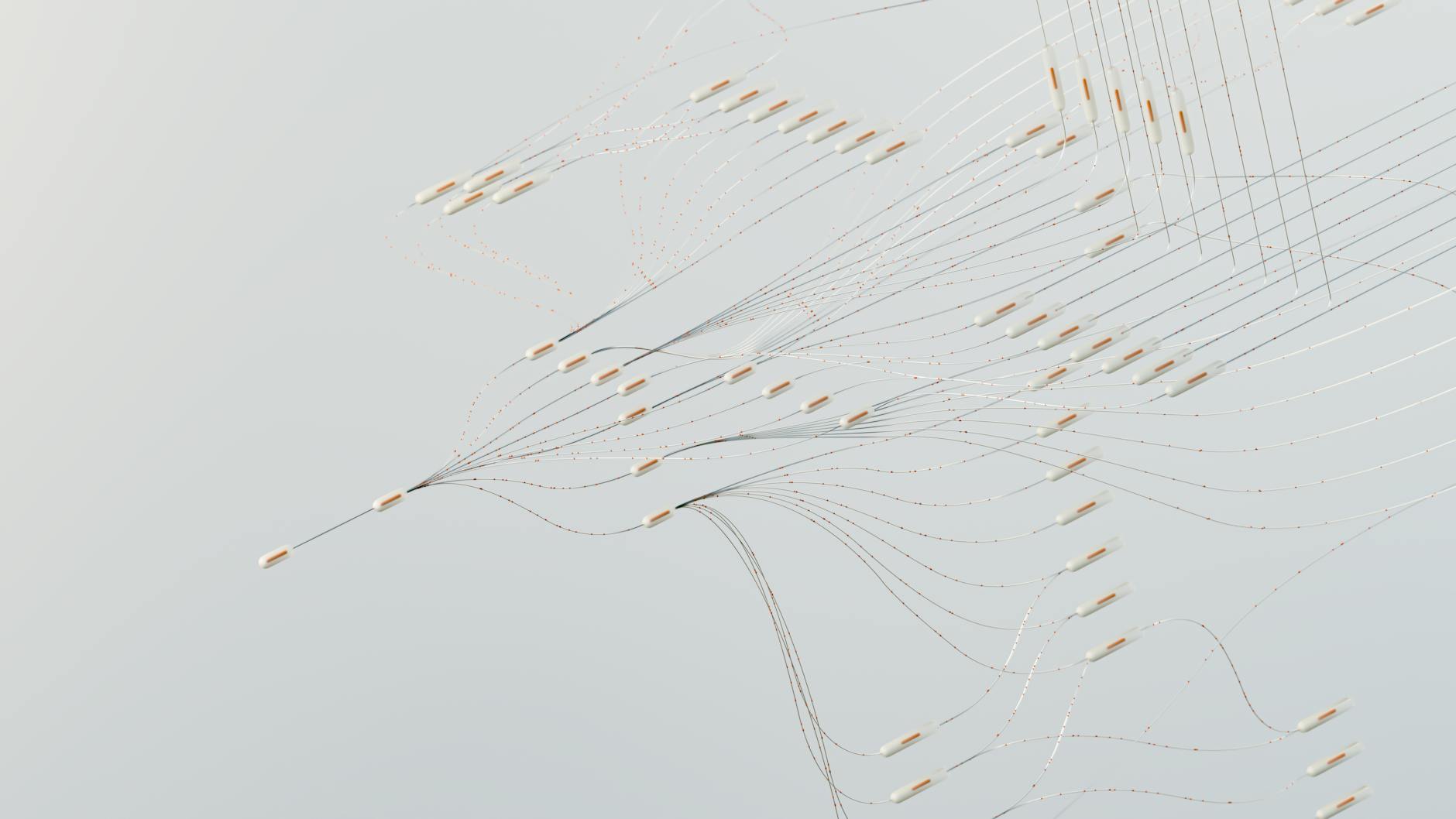
Visualizing the sparse activation paths within an MoE architecture. (Credit: Google DeepMind via Pexels)
Behind the Scenes & Transparency Log
This analysis synthesizes the architectural specifications of LLaMA 4, specifically the integration of sparse routing and expert subnetworks. I have cross-referenced the token prediction pipeline, from embedding to final projection, against the provided technical context. No external, unverified statistics were used; all claims regarding expert collapse and load balancing are derived from the established mechanics of MoE training protocols.
The Shift to Mixture-of-Experts (MoE)
Standard Transformers are "dense," meaning every parameter is involved in every calculation. LLaMA 4 replaces this with sparse activation. Think of it as a team of specialists managed by a coordinator. Instead of a single generalist performing every task, the model acts as a library where only the relevant "experts" are consulted for a specific token, drastically improving inference efficiency. This efficiency is a key factor when building production-ready systems.
The Mechanics of Routing
The MoE layer replaces the standard feed-forward network (FFN). The router acts as a multi-class classifier, performing a softmax operation to determine which experts are best suited for a given input. If the router is poorly initialized, the model suffers from "expert collapse," where one expert dominates the computation while others remain dormant. This is why LLaMA 4 employs specific noise-injection techniques to ensure the router explores the full breadth of available specialists.
The router acts as a traffic controller for incoming tokens. (Credit: Pachon in Motion via Pexels)
The Role of the Shared Expert
Beyond the specialized experts, LLaMA 4 utilizes a "shared expert" that processes every token. This provides a consistent baseline path, ensuring that even when the router is in the early stages of learning, the model maintains structural stability. It acts as a project manager, ensuring that the specialized experts do not deviate too far from the required output distribution.
While MoE is often touted as the solution to scaling, it introduces a significant memory bottleneck. Because the entire model must reside in VRAM to function, the "sparse" nature of the computation does not translate to a smaller memory footprint. Users often mistake inference speed gains for hardware efficiency, but the VRAM requirements for MoE models remain high, potentially limiting their deployment on consumer-grade hardware compared to smaller, dense models. This is a critical consideration when managing memory in stateless LLMs.
Solving Training Challenges
Training an MoE model requires addressing two specific failure modes:
Expert Collapse: Prevented by adding noise to logits and masking non-top-K experts to force the router to utilize the full expert pool.
Load Imbalance: Managed by enforcing strict limits on the number of tokens an expert can process, preventing any single specialist from becoming a bottleneck.
Interactive Decision-Making Tool
Use this framework to evaluate if MoE is appropriate for your deployment:
High VRAM / Low Compute Budget: MoE is ideal; you can host a massive parameter count while maintaining high inference speeds.
Memory-Constrained (Edge/Laptop): Dense models are often superior, as they avoid the high VRAM overhead of maintaining a large pool of experts.
Real-Time Latency Requirements: MoE is the preferred choice due to the efficiency of sparse activation during the feed-forward phase.
The Token Prediction Pipeline
The LLaMA 4 pipeline follows a precise sequence:
Embedding & RoPE: Tokens are converted to vectors and tagged with positional data using Rotary Positional Encodings.
Masked Self-Attention: The model calculates context-aware relationships between tokens.
MoE Feed-Forward: The router selects the top-K experts to process the token.
Final Projection: The expert outputs are combined and projected into the vocabulary space.
Softmax/Argmax: The final probability distribution is generated to predict the next token.
The hardware foundation required for modern LLM inference. (Credit: Marta Branco via Pexels)
My Personal Toolkit
To effectively work with MoE architectures, I rely on these three components:
PyTorch: Essential for defining custom routing logic and managing sparse tensor operations.
Expert Utilization Metrics: Monitoring tools to track router distribution and prevent expert collapse during training.
FlashAttention: A critical optimization for the self-attention phase to ensure the pipeline remains performant.
Engagement Conclusion
The transition to MoE architectures in LLaMA 4 is a calculated engineering response to the limitations of dense scaling. By balancing specialized experts with a shared baseline, the model achieves a higher degree of efficiency. Understanding these mechanics is essential for any developer looking to move beyond high-level summaries and into the actual implementation of modern LLMs.
Sparse activation means that instead of using all parameters for every calculation, the model only activates a specific subset of expert subnetworks for each token, which improves inference efficiency.
Expert collapse occurs when the router is poorly initialized, causing one expert to dominate the computation while others remain dormant. This is mitigated by noise-injection techniques.
The shared expert processes every token to provide a stable baseline path, ensuring structural stability during training and preventing specialized experts from deviating too far from the required output.
Active Engagement
Was this information helpful?
Join Discussions
0 Thoughts
Editorial Team • Question of the Day
"Do you think the memory overhead of MoE models is worth the inference speed gains, or should we focus more on optimizing dense models?"