Nigeria's Startup Funding Shift: The New Reality of 2026
Elijah TobsBy Elijah Tobs
Finance
May 25, 2026 • 3:45 PM
9m9 min read
Source: Pexels
The Core Insight
The Nigerian startup ecosystem is navigating a challenging 2026, marked by a 28% year-on-year decline in funding during Q1. As global venture capital markets tighten, investors are pivoting toward profitability and sector-specific resilience. Founders are increasingly turning to debt financing to sustain growth without excessive equity dilution, signaling a maturing, albeit more cautious, investment landscape.
As the founder and primary investigative voice at Kodawire, Elijah Tobs brings over 15 years of experience in dissecting complex geopolitical and financial systems. His work is centered on the ethical governance of emerging technologies, the shifting architectures of global finance, and the future of pedagogy in a digital-first world. A staunch advocate for high-fidelity journalism, he established Kodawire to be a sanctuary for deep-dive intelligence. Moving away from the ephemeral nature of modern headlines, Kodawire delivers permanent, verified insights that challenge the status quo and empower the global reader.
Funding Contraction: Q1 2026 saw a 28% year-on-year decline in funding, totaling $78.6 million across 15 deals.
Strategic Pivot: The era of "growth at all costs" is over; investors are now prioritizing startups with clear paths to profitability.
Debt Over Equity: Founders are increasingly turning to debt financing to scale operations without further diluting their ownership stakes.
Sector Focus: Capital is concentrating in essential industries, specifically fintech, deeptech, logistics, energy, healthcare, and education.
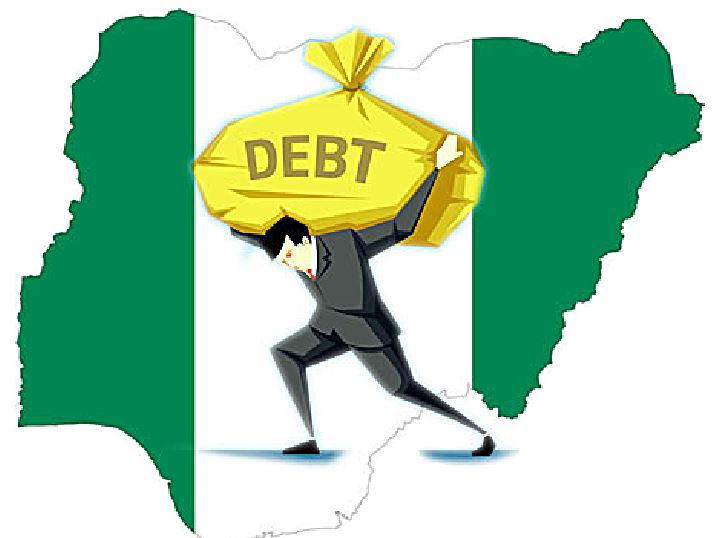
As we move through 2026, the narrative surrounding Nigeria’s startup ecosystem has shifted from the exuberant expansion of previous years to a more disciplined, cautious reality. I have spent the last few weeks digging into the latest investment data, and the numbers tell a story of a market in transition. While the headlines might focus on the decline in total capital, the real story is how founders and investors are adapting to a high-interest-rate environment that demands efficiency over raw scale. This shift mirrors broader economic concerns, such as those discussed in our analysis of Nigeria's national debt crisis, which continues to influence local capital availability.
The Nigerian startup landscape is shifting toward data-driven financial discipline. (Credit: Leeloo The First via Pexels)
My Fact-Checking Process
To provide this analysis, I have cross-referenced Q1 2026 performance data against historical benchmarks from 2025. My research focuses on disclosed deal flow and the structural changes in how capital is being deployed. I have stripped away the industry jargon to focus on the raw mechanics of the current funding winter, ensuring that the insights provided are grounded in verifiable market activity rather than speculative trends.
The Market Outlook
The first quarter of 2026 has been a sobering period for the Nigerian tech scene. With $78.6 million raised across 15 deals, we are looking at a 28% year-on-year decline compared to the same period in 2025. If you look at January 2026 specifically, the picture is even more stark: $45.9 million raised across eight deals, marking a 43.47% drop from January 2025. As someone who has watched this market for years, I see this not as a collapse, but as a necessary correction. The "growth at all costs" model that defined the early 2020s simply cannot survive in a world where capital is expensive and interest rates remain elevated.
The Risks You Need to Know
The primary risk facing startups today is the "liquidity trap." When venture capital deployment slows, startups that rely on constant follow-on funding rounds to survive are finding themselves in a precarious position. Furthermore, the shift toward debt financing, while helpful for avoiding dilution, introduces the risk of debt service obligations. If a startup’s revenue growth does not outpace the interest on its debt, the company risks insolvency, regardless of its long-term potential. This is a critical consideration for firms looking to integrate global logistics technology to optimize their supply chains.
Why Investors Are Changing Their Strategy
Investors are no longer writing checks based on user acquisition metrics alone. The current climate has forced a concentration of capital into sectors that provide tangible utility. We are seeing a flight to quality in fintech, deeptech, logistics, energy, healthcare, and education. These are sectors where the value proposition is clear and the demand is inelastic. If you are building in these spaces, you are still attracting interest, but the due diligence process has become significantly more rigorous.
Rigorous due diligence is now the standard for Nigerian venture capital. (Credit: RDNE Stock project via Pexels)
What the Numbers Really Mean
When we analyze the 43.47% decline in January 2026, it is important to look at the deal count. Despite the massive drop in total dollar volume, the number of deals remained relatively stable. This indicates that while investors are still active, the size of the checks has shrunk. This is a classic sign of a "risk-off" environment where investors prefer to spread smaller amounts of capital across more companies to hedge against failure, rather than placing massive bets on a few high-growth unicorns.
One of the most interesting developments this year is the move toward non-dilutive capital. Founders are increasingly wary of giving away equity at depressed valuations. By utilizing debt financing, they can fund specific infrastructure projects or operational expansions without sacrificing control. This is a mature, albeit more stressful, way to build a business. It forces founders to be hyper-aware of their cash flow and debt-to-equity ratios.
The Silent Wealth Killer
Many founders ignore the "cost of capital" trap. In a high-interest environment, taking on debt to fund operations that are not yet cash-flow positive is a dangerous game. The silent killer here is the compounding interest on debt that is used to cover operational burn rather than revenue-generating assets. If you are a founder, you must ensure that every dollar of debt is tied directly to an asset that produces a return higher than the cost of that debt.
Spotlight: Beacon Power Services and Infrastructure Tech
A prime example of this strategic shift is Beacon Power Services (BPS), which recently secured $2 million in debt financing. Rather than seeking a traditional equity round, BPS is using this capital to deploy smart meters and enhance grid visibility. This is a perfect illustration of the current trend: using debt to fund physical infrastructure that solves a critical, real-world problem, in this case, preventing power outages and improving grid efficiency.
The Other Side of the Story
While many analysts argue that the current funding winter is a disaster for the ecosystem, I would argue it is the best thing that could have happened. The previous era of easy money encouraged bloated teams and unsustainable burn rates. This "winter" is effectively weeding out companies that were built on hype rather than value. The startups that emerge from this period will be leaner, more resilient, and ultimately more profitable.
The Decision Matrix
If you are a founder currently evaluating your next funding move, use this simple framework:
Do you have positive unit economics? If yes, consider debt financing to scale.
Are you still in the R&D phase? If yes, focus on grants or strategic partnerships rather than debt.
Is your runway under 6 months? If yes, prioritize cost-cutting and revenue generation over fundraising.
Tools I Actually Use
To keep track of market shifts and financial health, I rely on a few specific categories of tools:
Financial Modeling Software: Tools like Causal or specialized Excel templates for tracking burn rates and debt service coverage ratios.
Market Intelligence Platforms: Services that aggregate disclosed deal data to monitor sector-specific trends in real-time.
CRM for Investor Relations: Keeping a clean, updated database of potential debt and equity partners is essential in a tight market.
What Do You Think?
The shift toward debt financing and profitability-first models is clearly reshaping the Nigerian startup landscape. But I want to hear from you: Do you believe this focus on profitability will stifle the innovation that made the ecosystem famous, or is it the foundation for a more sustainable future? I will be replying to every comment in the next 24 hours.
Q1 2026 saw a 28% year-on-year decline in funding, with $78.6 million raised across 15 deals.
Founders are turning to debt to scale operations and fund infrastructure without further diluting their equity stakes, especially in a high-interest-rate environment.
Investors are concentrating capital in essential sectors with clear utility, including fintech, deeptech, logistics, energy, healthcare, and education.
Active Engagement
Was this information helpful?
Join Discussions
0 Thoughts
Editorial Team • Question of the Day
"Is the current focus on profitability a sign of a maturing market, or are we losing the "startup spirit" that drives high-growth innovation?"