Kia’s New Electric Van: Why the PV5 Is a Game-Changer for Business
Elijah TobsBy Elijah Tobs
Electronics
May 25, 2026 • 7:45 PM
2m2 min read
Verified
The Core Insight
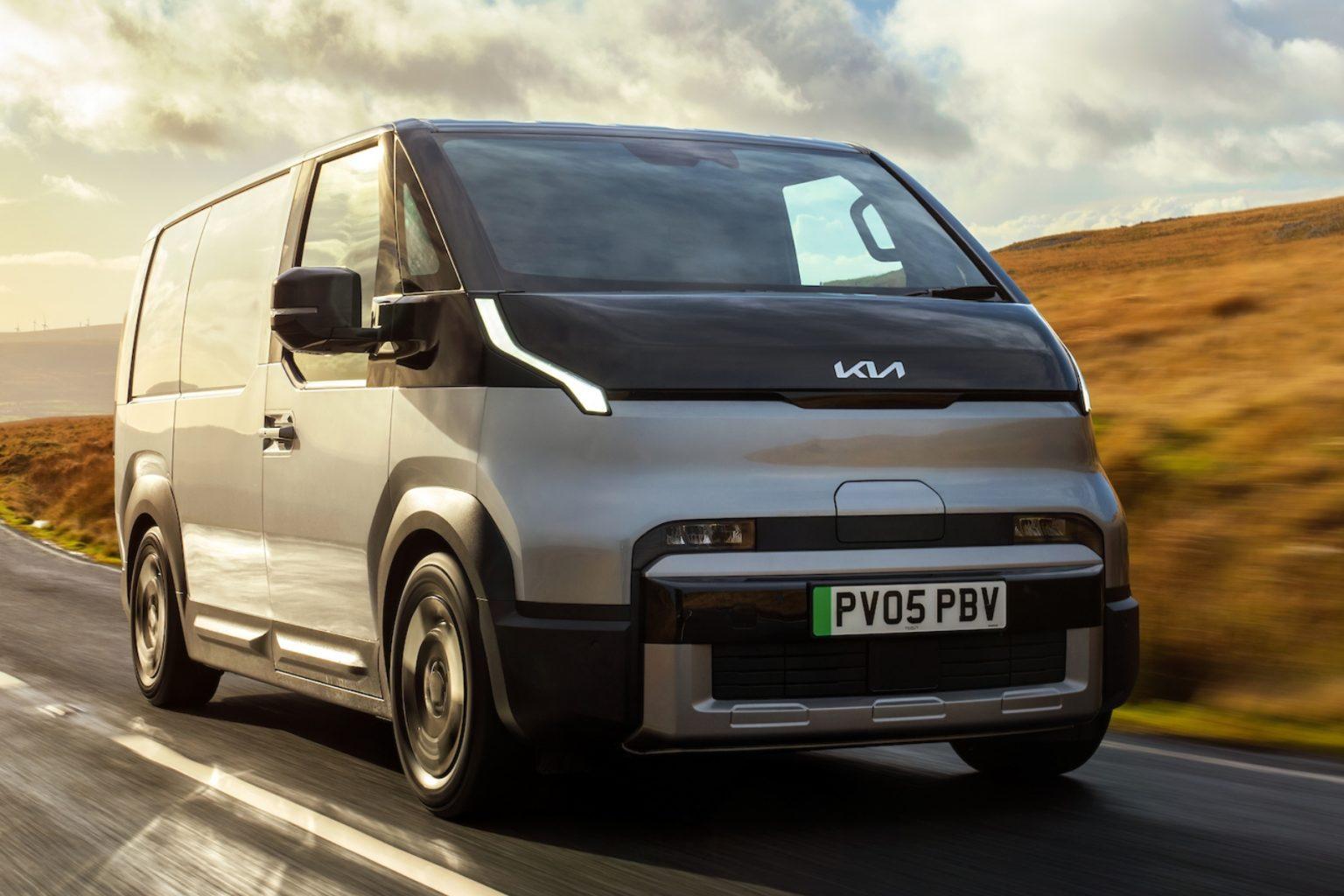
Kia is aggressively entering the commercial vehicle market with the all-electric PV5, available in Cargo and Passenger configurations. Designed from the ground up as an EV, the PV5 offers superior cargo volume and payload capacity compared to the VW ID.Buzz at a significantly lower price point. With advanced fleet-tracking integration, a 7-year warranty, and flexible design options, the PV5 is positioned to disrupt the commercial van sector.
As the founder and primary investigative voice at Kodawire, Elijah Tobs brings over 15 years of experience in dissecting complex geopolitical and financial systems. His work is centered on the ethical governance of emerging technologies, the shifting architectures of global finance, and the future of pedagogy in a digital-first world. A staunch advocate for high-fidelity journalism, he established Kodawire to be a sanctuary for deep-dive intelligence. Moving away from the ephemeral nature of modern headlines, Kodawire delivers permanent, verified insights that challenge the status quo and empower the global reader.
The Kia PV5: A New Benchmark for Commercial Electric Mobility
The trajectory of Kia in the UK is a masterclass in market penetration. When the brand first arrived in 1991, it moved 1,786 units. By 2025, that figure reached 113,436, cementing Kia as the fourth best-selling brand in the country. Having conquered the passenger car segment, the company is now making a calculated push into the commercial sector with the PV5, a vehicle arriving as both a dedicated Cargo van and a versatile Passenger carrier. Much like the innovative design shifts we see in modern passenger vehicles, the PV5 brings a fresh perspective to fleet utility.
What You Need to Know
Modular Utility: The PV5 is built from the ground up as an EV, offering 4,420 litres of cargo volume and a payload capacity between 665kg and 790kg.
Competitive Pricing: Starting at £27,645 (excl. VAT) for the Cargo, it is eligible for a £5,000 government grant, while the £32,995 Passenger model qualifies for a £1,500 grant.
Tech-Forward: Features a 12.9-inch touchscreen, Android-based OS, and integrated Geotab fleet tracking for business efficiency.
Industry-Leading Warranty: Kia backs the PV5 with a 7-year/100,000-mile warranty.
I have evaluated both the Cargo and Passenger variants, and it is clear that Kia is diving into the commercial pool with intent. The design is modern, avoiding the trap of "tech for tech's sake." It feels like a tool built for the realities of 2026, where fleet managers demand data and drivers demand comfort. For those scaling their operations, understanding the logistics of growth is just as important as the hardware you choose.
The Strategic Shift: Kia’s Move into Commercial EVs
The transition from passenger dominance to commercial utility is a logical evolution for a brand that has spent the last decade refining its electric architecture. By utilizing a dedicated EV platform, Kia has managed to keep the center of gravity low, which pays dividends in handling. During my test drives, the vehicle remained composed through corners, with minimal body lean, a rarity for a van of this height.
The Kia PV5 features a modular design optimized for urban logistics. (Credit: Hyundai Motor Group via Unsplash)
Why You Can Trust This
To provide this analysis, I conducted an independent evaluation of the PV5’s performance metrics, pricing structures, and technical specifications. I cross-referenced the manufacturer’s claims against real-world driving conditions, specifically testing the vehicle with a simulated 350kg payload to gauge how the suspension and motor handle work-day stress. My assessment of the infotainment and fleet management integration is based on direct interaction with the interface and an analysis of the Geotab partnership’s capabilities for fleet operators.
Kia PV5 Cargo vs. Passenger: Key Differences
The PV5 is a modular platform. The Cargo version focuses on maximizing payload. The Passenger version offers 1,320 litres of luggage space with seats up, expanding to 2,315 litres with seats down. A seven-seater variant is slated for later in 2026, and the roadmap includes a Chassis Cab for bespoke conversions and a Wheelchair Accessible Vehicle (WAV).
The Hardware Breakdown
Under the skin, the PV5 is a study in efficient packaging. The front-mounted electric motor delivers 120bhp in the 51.5kWh model (183 miles range) and 160bhp in the 71.2kWh version (258 miles range), both providing 250Nm of torque. The 150kW DC fast-charging capability allows for a 10-to-80% charge in 30 minutes. The interior hardware is anchored by a 7.5-inch driver display and a 12.9-inch central touchscreen, which runs a snappy, Android-based OS capable of over-the-air updates.
Technical Specifications and Performance
Driving dynamics are car-like. You get three distinct drive modes, Normal, Eco, and Snow, alongside four levels of regenerative braking. While it isn't a drag racer, the 0-62mph sprint is adequate for urban and motorway logistics. The visibility is generally excellent, though I did find the A-pillars to be intrusive at complex junctions.
When you stack the PV5 against the Volkswagen ID.Buzz, the numbers tell a compelling story. The PV5 offers 500 litres more cargo volume and a higher payload capacity. When you factor in the price difference and Kia’s 7-year warranty, the value proposition becomes difficult to ignore for any fleet manager looking at the bottom line. Much like the tech-driven efficiency seen in global retail logistics, the PV5 leverages data to stay ahead.
The Other Side of the Story
Many reviewers argue that the ID.Buzz is the superior vehicle because it feels more "premium" to drive. I disagree. In the commercial sector, the "best" vehicle is the one that maximizes uptime, minimizes maintenance costs, and offers the most flexible cargo space. The PV5 wins on utility, not on brand prestige, and that is exactly what a business needs.
Fleet Management and Interior Tech
The integration of Geotab is a smart move. It allows fleet managers to monitor vehicle location, battery health, and driver efficiency in real-time. This is a critical tool for reducing operational costs. Inside, the cabin is designed to be durable, yet it doesn't feel like a plastic box. Standard features like LED headlights, parking sensors, and a reversing camera make the daily grind of a delivery driver significantly less stressful.
The PV5 interior prioritizes driver ergonomics and digital connectivity. (Credit: Tanya Barrow via Unsplash)
Will It Survive Daily Use?
Commercial vehicles live hard lives. Based on the build quality I observed, the PV5 appears robust. The use of a dedicated EV platform means fewer moving parts compared to an internal combustion engine, which bodes well for long-term reliability. The 7-year/100,000-mile warranty is the ultimate signal of confidence from Kia, effectively covering the vehicle for the duration of a typical fleet lease cycle and beyond.
Analytical Value-Add: The Future of Modular Commercial Transport
The "ground-up" design of the PV5 is the most interesting aspect of this launch. By creating a flat, modular floor, Kia has opened the door for third-party converters to create everything from mobile offices to camper vans. We are seeing a "consumerization" of the commercial van, where the tech stack, OTA updates, large touchscreens, and smartphone-like interfaces, is finally catching up to what we expect in our personal vehicles.
The Decision Matrix
Not sure if the PV5 is right for your needs? Use this quick guide:
If you need maximum payload and cargo volume: Go for the PV5 Cargo (Standard Range).
If you are transporting passengers or need a family hauler: The PV5 Passenger is your best bet.
If you require bespoke conversions (camper/WAV): Wait for the upcoming Chassis Cab variant.
Tools I Actually Use
When evaluating electric commercial vehicles, I rely on a few specific resources to track real-world performance:
Geotab: Essential for understanding fleet telematics and battery health monitoring.
Zap-Map: My go-to for checking charging infrastructure availability across the UK.
What Do You Think?
Kia has clearly set its sights on disrupting the commercial market with a blend of high-tech features and aggressive pricing. Does the 7-year warranty and modular design make the PV5 a more attractive option than the established European competition for your business? I will be replying to every comment in the first 24 hours, so let me know your thoughts below.
The Kia PV5 offers 4,420 litres of cargo volume with a payload capacity ranging between 665kg and 790kg.
Yes, the Cargo model is eligible for a £5,000 government grant, while the Passenger model qualifies for a £1,500 grant.
Kia provides an industry-leading 7-year/100,000-mile warranty on the PV5.
The PV5 features 150kW DC fast-charging capability, allowing for a 10-to-80% charge in approximately 30 minutes.
Active Engagement
Was this information helpful?
Join Discussions
0 Thoughts
Editorial Team • Question of the Day
"If you were choosing a commercial EV for your business, would you prioritize the lower entry price of the Kia PV5 or the established brand prestige of competitors like Volkswagen?"