The Secret Reason SpaceX Won't Crash Like Other IPOs
Marcus ThorneBy Marcus Thorne
Finance
Jun 4, 2026 • 9:48 AM
9m9 min read
Verified
Source: Pexels
The Core Insight
This analysis deconstructs the upcoming SpaceX IPO by moving beyond the $1.75 trillion valuation headline to examine the structural mechanics that could prevent a post-IPO crash. By analyzing SEC filings, the report highlights a $28.5 trillion total addressable market, the impact of NASDAQ's recent rule changes on forced index buying, and the tax-efficient strategies (securities-backed lines of credit) that discourage insiders from selling. It further explores the 'AI-in-space' thesis, where SpaceX leverages free cooling and solar energy to dominate the future of data centers.
Sponsored
M
Financial Analyst
Marcus Thorne
Marcus Thorne is a former Wall Street analyst and certified financial planner. He simplifies complex market trends and economic data for everyday readers.
The Kodawire Editorial Team consists of experienced journalists and subject matter experts dedicated to delivering accurate, well-researched, and engaging content.
The $28.5 Trillion Reality: Why SpaceX Isn't Just a Rocket Company
The Bottom Line
Structural Moat: High capital gains taxes and securities-backed lines of credit (SBLOC) mean early insiders are incentivized to hold, not dump, their shares.
Forced Demand: New NASDAQ rules allow for rapid index inclusion and a 3x weighting boost for low-float stocks, forcing institutional index funds to buy within 15 days of the IPO.
The AI Pivot: SpaceX is positioning itself as a global infrastructure provider, leveraging space-based data centers to solve Earth’s energy and cooling crises.
Strategic Plays: Beyond the IPO, focus on the space supply chain (RDW, Voyager, Firefly) and chip infrastructure (TSMC, Intel, Amcore) rather than just the headline ticker.
While the financial media fixates on the headline-grabbing $1.75 trillion valuation for the upcoming SpaceX IPO, the real story is buried on page 11 of the company’s SEC filings. SpaceX has identified a total addressable market (TAM) of $28.5 trillion, a figure that eclipses the entire annual economy of the United States. This isn't just a rocket company; it is a structural play on the future of global connectivity and AI infrastructure.
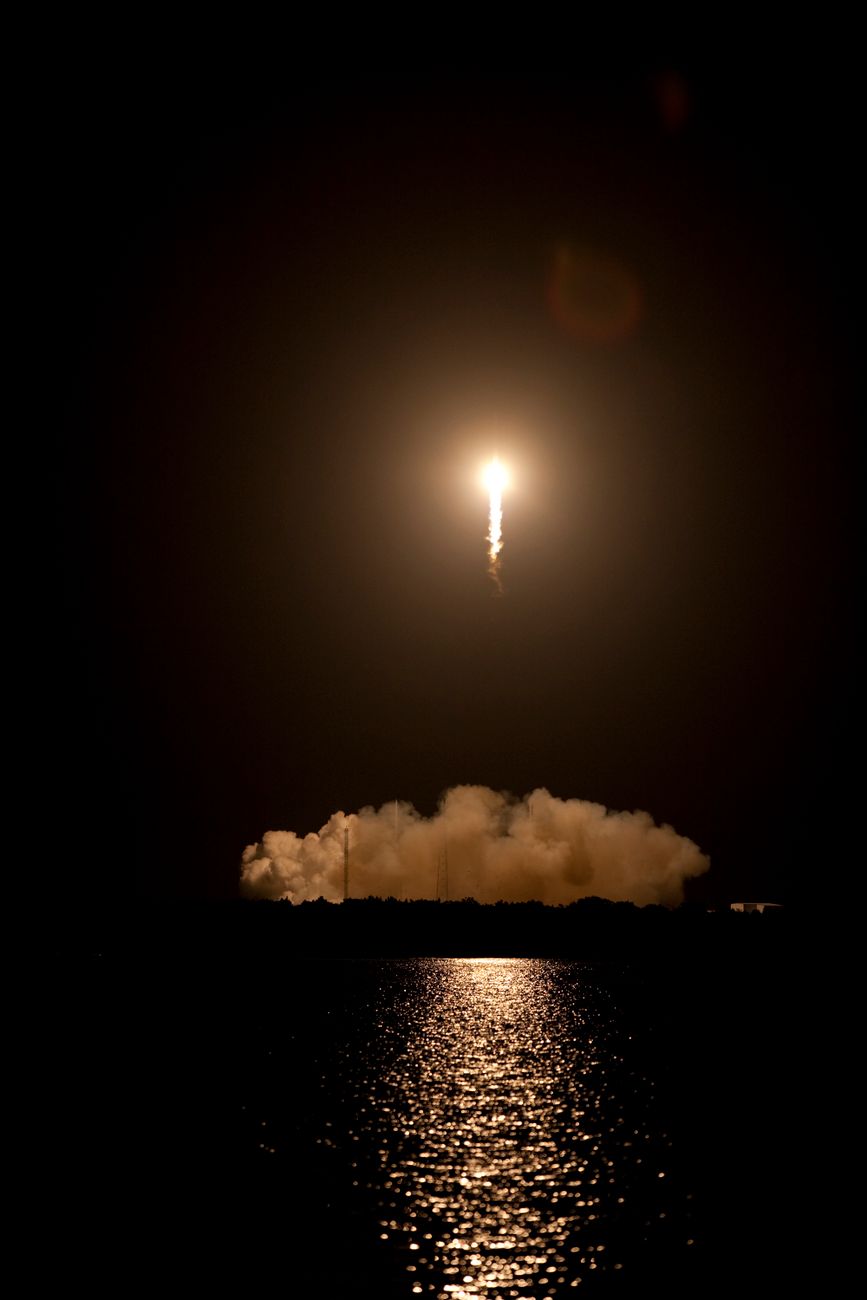
SpaceX is shifting the paradigm from aerospace to global infrastructure. (Credit: SpaceX via Pexels)
Why You Can Trust This Analysis
My approach to this market event is rooted in independent journalistic research and institutional-grade financial analysis. I have cross-referenced the company’s official filings with current NASDAQ regulatory frameworks and historical IPO performance data. My goal is to strip away the retail hype and examine the mechanical realities of how capital flows into, and stays within, a company of this magnitude. I do not rely on speculation; I rely on the structural incentives that govern how billionaires and institutional funds actually move money.
The Market Outlook
In my professional view, the market is currently mispricing SpaceX by treating it as a traditional aerospace firm. Having tracked market cycles from the dot-com era to the current AI-driven surge, I’ve learned that the most significant wealth is created when a company solves a fundamental bottleneck. SpaceX is doing exactly that. By utilizing the vacuum of space for free cooling (-270°C) and constant solar exposure for power, they are solving the two greatest constraints facing the AI industry: energy consumption and thermal management. This is not science fiction; it is a logistical advantage that makes terrestrial data centers look obsolete.
The Risks You Need to Know
No investment is without peril. The primary risk here is the "Elon Factor." SpaceX’s operational success is inextricably linked to the vision and execution of Elon Musk. Should his leadership be compromised, the company’s ambitious milestones, including the Mars colony and the $7.5 trillion market cap target, would face significant headwinds. Furthermore, while I have outlined why a "dump" is unlikely, insider hedging strategies could create downward pressure on the stock price during the initial lockup period. Always remember that institutional "forced buying" can lead to extreme volatility if the underlying fundamentals shift.
The Structural Squeeze: Why This IPO Won't Follow the Uber/Rivian Path
Many retail investors fear a repeat of the Uber or Rivian IPOs, where insider lockup expirations led to massive sell-offs. However, SpaceX faces a different set of incentives. First, the "Tax Trap": early investors holding shares for two decades face a combined federal and state capital gains tax burden that could exceed 30%. Selling is a wealth-destroying event.
Instead, these insiders will likely utilize Securities-Backed Lines of Credit (SBLOC). By borrowing against their equity at low interest rates, they gain liquidity without triggering a taxable event. This keeps the supply of shares tight. When you combine this with the new NASDAQ rule, which forces index funds to buy into the NASDAQ 100 within 15 days of an IPO with a 3x weighting boost for low-float stocks, you create a classic structural squeeze. The demand is not optional; it is programmed into the index funds that manage trillions in retirement capital.
Understanding institutional flow is key to navigating the SpaceX IPO. (Credit: Alex Luna via Pexels)
What the Numbers Really Mean
To understand the $28.5 trillion TAM, we must look at the breakdown: $370 billion in launch services, $1.6 trillion in connectivity (Starlink), and a staggering $26 trillion in AI and corporate applications. Even if SpaceX captures only 10% of this market, we are looking at $3 trillion in annual revenue. When you apply standard valuation multiples to that scale, the path to a $10 trillion market cap becomes a mathematical probability rather than a speculative dream.
The Contrarian's Corner
Most analysts argue that Starlink is a competitor to traditional telecom providers like AT&T or Verizon. I disagree. Starlink is not a competitor; it is a replacement. By moving toward direct-to-phone satellite connectivity, SpaceX is rendering the need for terrestrial fiber-optic infrastructure and mobile towers redundant. The "smart" money isn't betting on the telecom companies to adapt; they are betting on them to be bypassed entirely.
The Silent Wealth Killer
The biggest trap for retail investors is the "IPO Day" market order. By the time a ticker appears on your brokerage app, the institutional players have already positioned themselves in the supply chain months in advance. Placing a market order on day one often makes you the "exit liquidity" for those who bought in at the pre-IPO stage. The silent killer of wealth is the lack of understanding regarding the sequencing of institutional buying, if you don't know the timeline, you are playing a game you cannot win. For more on avoiding these traps, see my analysis on navigating market disconnects.
Retail investors must look beyond the headline hype to succeed. (Credit: Yan Krukau via Pexels)
Interactive Decision-Making Tool
If you are...
Your Strategy
A Conservative Investor
Focus on QQQ (NASDAQ ETF) to capture the forced index-buying squeeze.
A Growth-Oriented Investor
Look at the chip supply chain (TSMC, Intel, Amcore) for infrastructure exposure.
A High-Risk Speculator
Monitor space supply chain stocks (RDW, Voyager, Firefly) on pullbacks.
My Personal Toolkit
To track these developments, I rely on a few specific categories of tools:
SEC Filing Aggregators: Essential for reading the raw data rather than relying on news summaries.
Institutional Flow Trackers: Tools that monitor index fund rebalancing schedules to anticipate forced buying waves.
Supply Chain Mapping Software: Used to identify the secondary and tertiary beneficiaries of large-scale infrastructure projects.
Engagement Conclusion
Given the structural incentives for insiders to hold their shares and the forced buying from index funds, do you believe the market is prepared for the potential supply-demand imbalance that will occur 15 days post-IPO? I will be in the comments for the next 24 hours to discuss your take on this.
Unlike previous IPOs, SpaceX insiders face high capital gains taxes, incentivizing them to hold shares and use Securities-Backed Lines of Credit (SBLOC) for liquidity instead of selling. Additionally, new NASDAQ rules force index funds to buy into the stock shortly after the IPO.
SpaceX leverages the vacuum of space for natural thermal management (-270°C) and constant solar exposure for power, addressing the energy and cooling bottlenecks currently facing terrestrial AI data centers.
The 'Tax Trap' refers to the significant federal and state capital gains tax burden (potentially exceeding 30%) that early SpaceX insiders would face if they sold their shares after holding them for two decades.
Active Engagement
Was this information helpful?
Join Discussions
0 Thoughts
Editorial Team • Question of the Day
"Do you think the AI-in-space thesis is a realistic infrastructure play or just a marketing narrative to justify a higher valuation?"