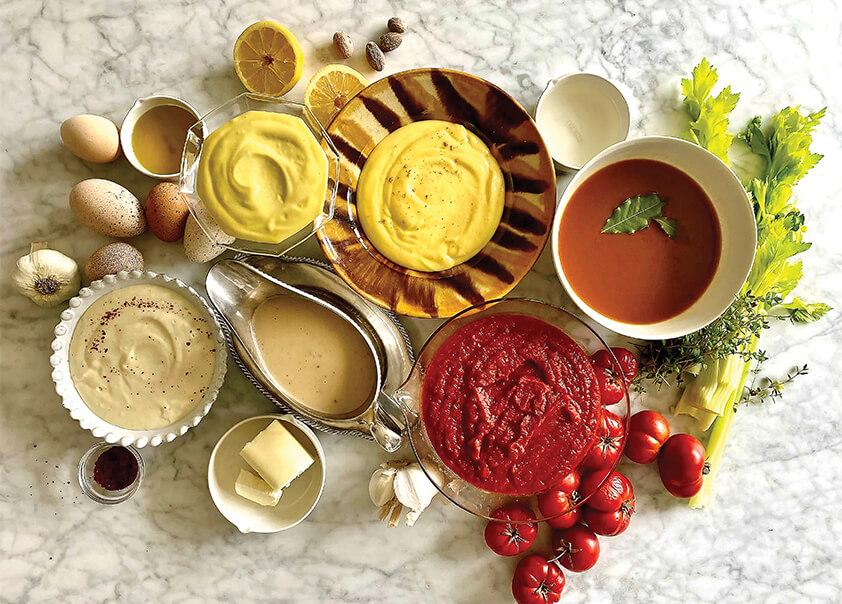
The 7 Modern 'Mother Sauces' Every Home Cook Must Master
Tobiloba OdejinmiBy Tobiloba Odejinmi
Education
May 26, 2026 • 7:01 PM
2m2 min read
Verified
The Core Insight
Moving beyond the traditional French mother sauces, this guide outlines seven essential, modern sauce-making techniques designed for the busy home cook. By mastering the science of emulsification and basic flavor balancing, you can unlock a lifetime of culinary creativity without needing to memorize complex recipes.
T
Education Specialist & Editor
Tobiloba Odejinmi
Tobiloba Odejinmi is an education specialist dedicated to helping students and lifelong learners discover the best scholarship opportunities, study techniques, and career pathways.
The Kodawire Editorial Team consists of experienced journalists and subject matter experts dedicated to delivering accurate, well-researched, and engaging content.
The Modern Culinary Toolkit: 7 Sauces Every Home Cook Needs
The Short Version
Master Emulsions: Whether it’s mayo or pan sauce, cold butter and steady whisking are your best friends.
Think in Formulas: Don't memorize recipes; learn the ratios for vinaigrettes and pan sauces to create infinite variations.
The Nappé Test: If it coats the back of a spoon and holds a line when you swipe your finger, your sauce is ready.
Respect the Fond: Never wash a pan after searing meat without deglazing those browned bits into a pan sauce.
When I was a young line cook, the "mother sauces" were the gospel. While they remain the bedrock of classical cuisine, our modern lives demand something faster, more versatile, and aligned with how we actually eat today. You don't need to spend hours over a stockpot to achieve professional results. By mastering these seven core sauces, you stop following recipes and start building culinary intuition.
Why You Can Trust This
I have spent years in professional kitchens, and my approach to this list is rooted in the same techniques I use daily. I’ve vetted these methods, from the immersion blender shortcut for mayonnaise to the precise science of the pan sauce, to ensure they work in a home kitchen environment. My goal is to strip away the intimidation factor of sauce-making and focus on the mechanics of flavor and texture.
1. Mayonnaise: The King of Emulsions
Mayonnaise is the ultimate test of your emulsification skills. Whether you use an immersion blender for a quick, forced emulsion or hand-whisk for the traditional workout, the principle remains: egg yolks are your non-negotiable stabilizer. Once you master this, you’ve unlocked the base for everything from remoulade to burger sauces, and even a secret weapon for adding moisture to baked goods.
Mastering the emulsion is the first step to professional-grade sauces. (Credit: yousef samuil via Unsplash)
The Unpopular Opinion
Most people think a sauce needs to be complex to be "gourmet." I disagree. The most powerful sauces in your repertoire are often the simplest. A raw tomato sauce, blitzed in seconds, often beats a six-hour simmered version for pizza and flatbreads because it retains the bright, vibrant acidity of the fruit.
2. The Vinaigrette Almanac
Stop buying bottled dressing. A vinaigrette is simply a three-part formula: oil, acid, and an emulsifier like Dijon mustard. By keeping the ratio flexible, you can pivot from a sharp, vinegar-forward dressing for bitter greens to a rich, oil-heavy emulsion for roasted vegetables. The key is full emulsification, if it’s glossy and thick, it will cling to your food rather than pooling at the bottom of the bowl.
3. Tomato Sauce: Raw vs. Cooked
For pizza, keep it raw: San Marzano tomatoes, garlic, salt, and a touch of sugar to balance the acidity. For pasta, look to the Marcella Hazan method: simmer whole tomatoes with butter and onion. It’s low-effort, high-reward, and arguably the most revered tomato sauce globally.
Béchamel is the classic combination of butter, flour, and milk. It is the essential starting point for any creamy pasta bake or gratin. The secret is cooking the flour and butter (the roux) long enough to remove the raw starch taste before slowly whisking in the milk to ensure a lump-free, velvety texture.
5. Hollandaise: The Blender Shortcut
Traditionally made over a bain-marie, Hollandaise is notorious for breaking. The modern blender method, slowly drizzling melted butter into warm egg yolks and lemon juice, is nearly foolproof. It provides that rich, buttery coating perfect for eggs or steamed asparagus without the constant fear of curdling your yolks.
The blender method makes Hollandaise accessible for any home cook. (Credit: Augustinus Martinus Noppé via Pexels)
6. Fresh Herb Sauces: Chimichurri and Pesto
These are the "no-cook" heroes of the kitchen. By combining fresh herbs, oil, and an acid (like vinegar or lemon juice), you create a vibrant, punchy sauce that cuts through the richness of grilled meats or heavy pastas. The texture should be rustic, not a puree, to maintain the integrity of the herbs. For more on balancing these flavors, check out the 3-Stage Flavor Framework.
7. Pan Sauce: The Deglazing Masterclass
This is the most important skill for any home cook. After searing meat, the brown bits left in the pan (the fond) are pure flavor. Deglaze with wine or stock, scrape the pan, reduce, and finish by mounting with cold butter. This technique turns a simple weeknight protein into a restaurant-quality meal in under five minutes. If you want to learn more about the gear needed for this, see our guide on essential kitchen gadgets.
Secrets From the Kitchen
To elevate your Béchamel into a Mornay, fold in grated Gruyère or Parmigiano-Reggiano and a pinch of nutmeg. If you’re making a pan sauce, always mount with cold butter at the very end, this is the secret to that glossy, restaurant-quality finish that won't break.
The Panic Substitution Guide
Missing an ingredient? Don't sweat it. If you don't have shallots for your pan sauce, use finely minced red onion. Out of pine nuts for pesto? Toasted walnuts or sunflower seeds provide a similar earthy crunch. No fresh herbs? Dried herbs can work, but use half the amount and bloom them in the oil first to release their essential oils. Learn more about blooming spices to maximize your pantry.
Tools I Actually Use
Immersion Blender: Essential for instant emulsions like mayo and hollandaise.
Microplane: Perfect for grating garlic and citrus zest into sauces without large chunks.
Heavy-Bottomed Stainless Steel Pan: Non-negotiable for creating the perfect fond for pan sauces.
The Decision Matrix
Not sure which sauce to make? Follow this simple logic:
Serving steak or roasted veggies? Make Chimichurri.
Making pasta or lasagna? Make Béchamel.
What Do You Think?
Which of these seven sauces do you find yourself reaching for most often, and what is your favorite "secret" ingredient to customize it? I’ll be in the comments for the next 24 hours to answer your questions and hear about your kitchen experiments.
The secret is to deglaze the pan after searing meat to capture the 'fond' (browned bits) and finish the sauce by mounting it with cold butter for a glossy, restaurant-quality texture.
Use the blender method: slowly drizzle melted butter into warm egg yolks and lemon juice. This is much more foolproof than the traditional bain-marie technique.
A vinaigrette is a simple three-part formula consisting of oil, acid, and an emulsifier like Dijon mustard.
Active Engagement
Was this information helpful?
Join Discussions
0 Thoughts
Editorial Team • Question of the Day
"If you had to choose only one sauce to keep in your fridge for the rest of your life, which one would it be and why?"