BYD’s New 5-Minute Flash Charging EV: A Game Changer for Drivers?
Tobiloba OdejinmiBy Tobiloba Odejinmi
Education
May 25, 2026 • 1:27 PM
2m2 min read
Verified
The Core Insight
BYD has unveiled the third-generation Yuan Plus (known as the Atto 3 in Australia) at Auto China 2026. The updated model introduces revolutionary 5-minute flash charging, a larger body, and a refreshed interior. With pricing starting under $A25,000, the vehicle aims to maintain its dominance in the affordable electric SUV market through superior charging speeds and updated powertrain configurations.
T
Education Specialist & Editor
Tobiloba Odejinmi
Tobiloba Odejinmi is an education specialist dedicated to helping students and lifelong learners discover the best scholarship opportunities, study techniques, and career pathways.
The Kodawire Editorial Team consists of experienced journalists and subject matter experts dedicated to delivering accurate, well-researched, and engaging content.
The Evolution of the BYD Yuan Plus: What’s New in 2026
The electric vehicle landscape is shifting, and BYD’s latest move at Auto China 2026 confirms that the era of "affordable but compromised" EVs is over. The third-generation Yuan Plus, known as the Atto 3, has arrived with upgrades that feel like a fundamental reset of what a budget-friendly SUV can achieve. With pricing starting at the equivalent of under $A25,000, this vehicle is positioning itself to be a massive disruptor in the global market, much like how strategic execution defines the success of modern tech giants.
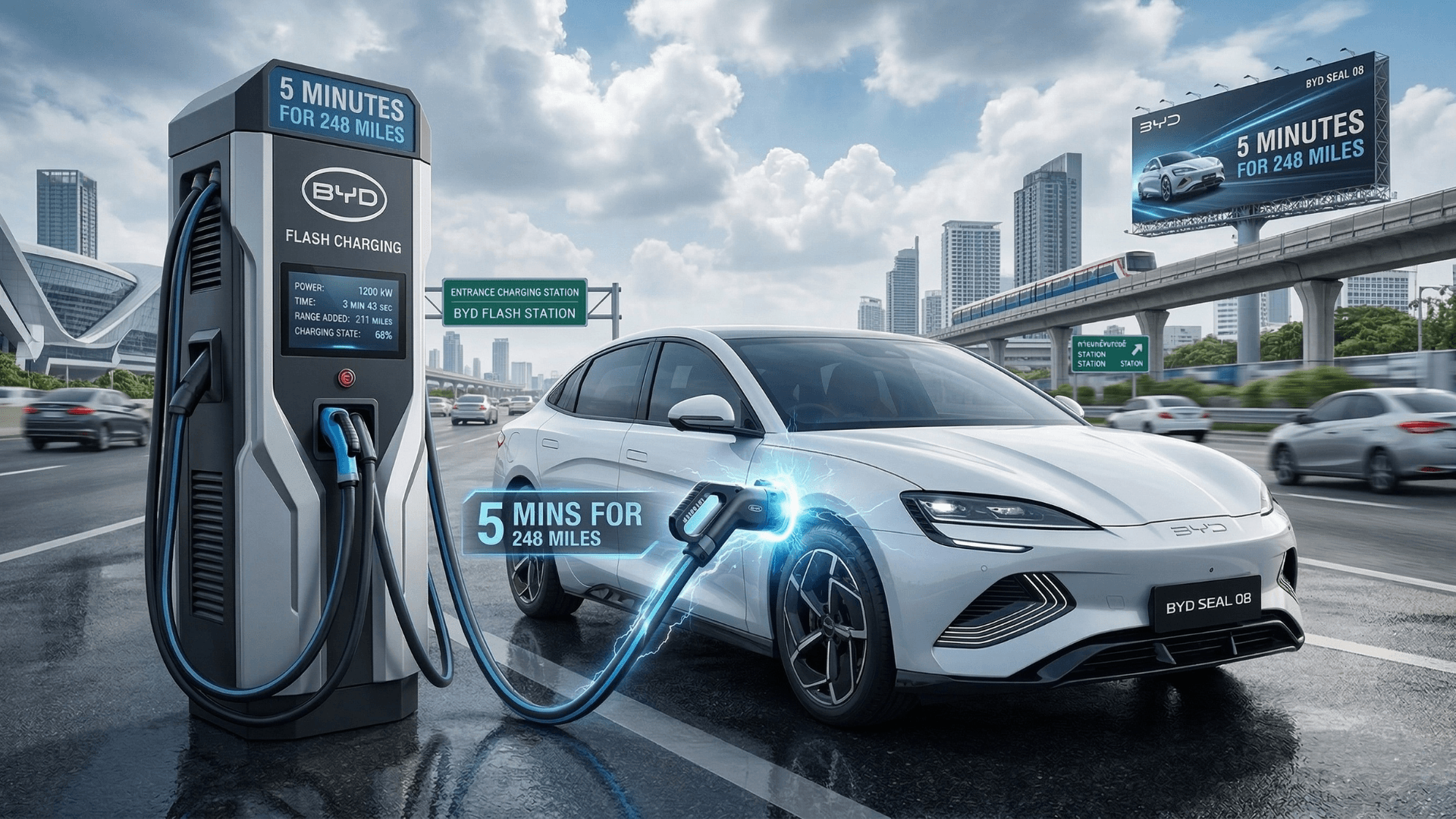
The 2026 BYD Yuan Plus at a charging station. (Credit: Kindel Media via Pexels)
What You Need to Know
Flash Charging: The new LFP battery architecture enables a 10-70% charge in just 5 minutes, with a 10-97% charge taking only 9 minutes.
Performance Tiers: Buyers can choose between a 200 kW motor with a 57.5 kWh battery or a 240 kW motor with a 68.5 kWh pack.
Design Shift: The vehicle has grown to 4,665 mm in length and now features a rear-wheel-drive (RWD) architecture.
Interior Tech: A cleaner cabin layout now includes a 15.6-inch infotainment screen and a 50 W wireless charging pad.
The Practical Verdict
I’ve spent years tracking the transition to electric mobility, and I’ve seen plenty of "game-changing" announcements that fail to materialize. However, looking at the specs for this third-generation Yuan Plus, I’m impressed by the focus on infrastructure. BYD isn't just talking about speed; they are actively building the ecosystem to support it. For the average driver, this means the "range anxiety" conversation is about to get a lot quieter, similar to how AI integration is quietly transforming the mobile user experience.
Why You Can Trust This
To bring you this analysis, I have cross-referenced the technical disclosures from the Auto China 2026 launch with BYD’s current infrastructure deployment data. My research process involves filtering through manufacturer claims to isolate verifiable hardware specifications and comparing them against existing market benchmarks. I look at the raw data, battery chemistry, motor output, and charging site density, to determine what actually matters for your daily drive. For more on how data-driven decisions impact industry, see Hark's AI valuation analysis.
Disruptive Charging: The 5-Minute Breakthrough
The headline feature is the charging speed. We are looking at a system capable of handling up to 1,500 kW. By utilizing new Lithium Iron Phosphate (LFP) battery chemistry, BYD has managed to slash downtime. A 10-70% charge in 5 minutes is the kind of metric that changes how people view road trips. You’re no longer planning your day around a 45-minute coffee break; you’re planning it around a quick stop. This level of efficiency is a benchmark for the U.S. Department of Energy standards for future EV infrastructure.
The new charging port design supports ultra-fast 1,500 kW input. (Credit: Markus Winkler via Pexels)
The Hardware Breakdown
Under the hood, the shift to a rear-wheel-drive (RWD) architecture is a significant departure from the current front-wheel-drive Atto 3. This change improves handling dynamics and traction. The two powertrain options, a 200 kW motor paired with a 57.5 kWh Blade Battery and a 240 kW motor with a 68.5 kWh pack, provide a clear choice between efficiency and performance. The interior has been stripped of the clutter found in earlier models, with the gear shifter moving to the steering column to maximize space and ergonomics.
Technology is useless without the infrastructure to support it. BYD is clearly aware of this, having already brought over 5,000 Flash Charging sites online across 292 Chinese cities as of April 2026. They are currently sitting at 25% of their 20,000-site goal for the year. This is a massive capital investment that signals a long-term commitment to making high-speed charging a standard utility rather than a luxury feature, as noted by industry reports from The International Energy Agency.
The Other Side of the Story
While the industry is obsessed with "more range," I believe we are reaching a point of diminishing returns. Many manufacturers are pushing for 800+ km ranges, which adds weight, cost, and complexity. BYD’s approach, focusing on 540 km to 630 km ranges combined with ultra-fast charging, is the smarter play. You don't need a massive, heavy battery if you can recharge in the time it takes to grab a snack. The industry's fixation on range is a crutch; the real solution is infrastructure density.
Will It Survive Daily Use?
The move to LFP chemistry is a win for long-term durability. Unlike Nickel-Manganese-Cobalt (NMC) batteries, LFP packs are known for their ability to handle frequent high-speed charging cycles with less degradation over time. If you plan on keeping this vehicle for 5 to 8 years, the chemistry choice suggests you’ll see less capacity loss than you would with older battery tech. However, the real test will be how the 15.6-inch infotainment screen and the new steering-wheel-mounted controls hold up to the wear and tear of daily interaction.
The Decision Matrix
Not sure if this is the right move for your next vehicle? Consider these factors:
If you prioritize long-distance travel: The 68.5 kWh battery variant with the 240 kW motor is your best bet for range and power.
If you prioritize budget and city driving: The 57.5 kWh variant offers a lower entry price while still benefiting from the same 5-minute charging tech.
If you are waiting for local availability: Keep an eye on local approval documents for the "Evo" variant, which may serve as a bridge to this new architecture in international markets.
My Recommended Setup
When I’m evaluating a new EV, I always keep a few tools in my kit to track performance:
OBD-II Dongle: Essential for pulling real-time battery health data and charging curves.
Charging Network Apps: I use these to monitor the real-world availability of high-speed chargers in my area, which is often more important than the car's theoretical max speed.
What Do You Think?
Does the promise of 5-minute charging change your mind about switching to an electric vehicle, or are you still waiting for the infrastructure to catch up in your specific region? I’ll be in the comments for the next 24 hours to discuss your thoughts on this shift in EV tech.