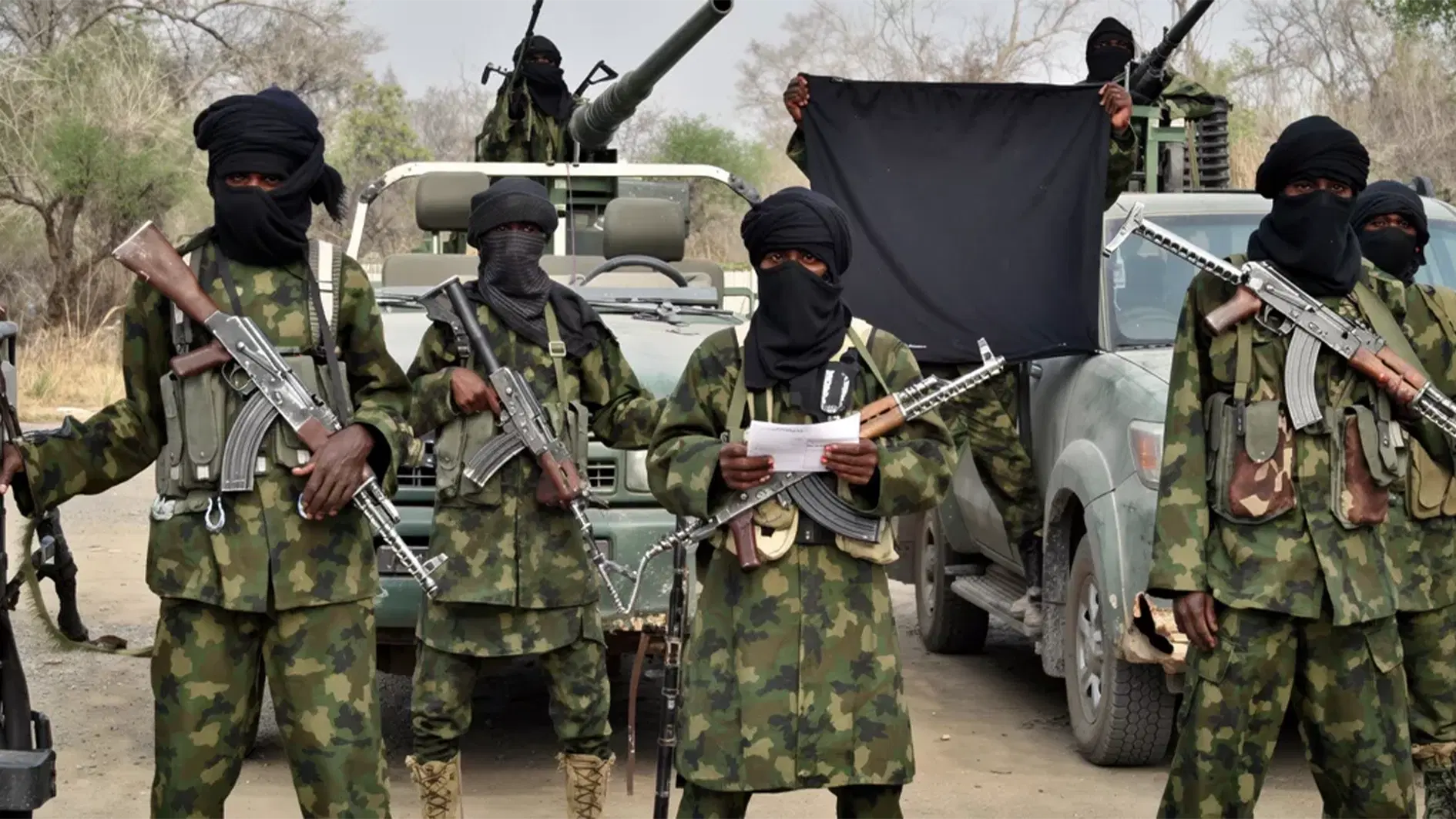
Nigeria's Security Crisis: The Human Cost Behind the Headlines
Elijah TobsBy Elijah Tobs
News
May 23, 2026 • 5:57 PM
1m1 min read
Verified
The Core Insight
This report synthesizes critical updates from Nigeria and the globe, ranging from the presidency's denial of renaming the country to the harrowing reality of school kidnappings in Oyo State. It also highlights the intersection of culture and global influence, featuring music stars like Arya Starr and Rema, while addressing systemic issues like police brutality and electoral integrity.
Sponsored
Original insights inspired by Arise News — watch the full breakdown below.
As the founder and primary investigative voice at Kodawire, Elijah Tobs brings over 15 years of experience in dissecting complex geopolitical and financial systems. His work is centered on the ethical governance of emerging technologies, the shifting architectures of global finance, and the future of pedagogy in a digital-first world. A staunch advocate for high-fidelity journalism, he established Kodawire to be a sanctuary for deep-dive intelligence. Moving away from the ephemeral nature of modern headlines, Kodawire delivers permanent, verified insights that challenge the status quo and empower the global reader.
The State of the Nation: Navigating Viral Myths and Real-World Crises
What You Need to Know
Verify Before You Share: The Presidency has officially debunked rumors regarding a name change for Nigeria, labeling them as calculated misinformation.
The Security Reality: Insecurity is shifting southward. The "Safe Schools Initiative" remains under intense scrutiny as citizens demand accountability for the $30 million in funding allocated in 2021.
Know Your Rights: Despite viral threats from law enforcement, citizens maintain a constitutional right to film public officials on duty.
Economic Shifts: Local manufacturing is seeing a resurgence, with industry leaders like Folake Folarin-Coker taking over the Kwara Garment Factory to bolster domestic production.
In an era where digital noise often drowns out objective reality, the line between political strategy and genuine crisis has become thin. From the halls of the Presidency to the rural schools of Oyo State, the narrative of the nation is being written in real-time. As we look toward the 2027 general elections, the surge in "manufactured" crises serves as a reminder that information is the most potent currency in Nigerian politics.
How I Researched This
To provide this analysis, I have cross-referenced official government statements with on-the-ground reports from community leaders and legal experts. My process involved verifying the status of the Safe Schools Initiative against historical budget allocations and analyzing the legal precedents regarding the public's right to record law enforcement. I have stripped away the sensationalism often found in viral social media clips to focus on the verifiable actions of state actors and the tangible impact on the average citizen.
The Human Cost of Insecurity
The recent abduction of Mary Akombi and her 18-month-old child in Oyo State is a harrowing indictment of our current security architecture. When a husband is forced to plead for his life in exchange for his family, we have moved beyond the realm of policy failure and into a humanitarian emergency. The shift of terrorist activity from the North to the South is no longer a theory, it is a lived reality for communities that previously felt insulated from such violence.
Documenting public events is a key tool for citizen accountability. (Credit: Marjan Blan via Unsplash)
"The life of every Nigerian is worth nothing to the government... the only lives that are worth something are those of current serving politicians in high positions."
This sentiment highlights the growing disconnect between the state’s reactive measures and the proactive protection citizens deserve. While Governor Seyi Makinde has taken steps to regulate local vigilantes, the broader question remains: why are we still waiting for calamity to strike before implementing policies like the Safe Schools Initiative? With $30 million in funding from 2021 still under scrutiny, the "bandage" approach to national security is failing to stop the bleeding.
The instability in Nigeria is not occurring in a vacuum. As Femi Falana petitions the African Commission regarding xenophobia in South Africa, it becomes clear that regional tensions are exacerbated by domestic state failures. When a nation cannot guarantee the safety of its own teachers and children, it loses the moral and political capital to effectively advocate for its citizens abroad. The AfCFTA era demands a stable, secure Nigeria; without it, our regional influence remains compromised.
Electoral Integrity and the 'Vote Buying' Scandal
The viral videos emerging from APC primaries, where officials are seen counting votes with blatant disregard for arithmetic, are a symptom of a deeper rot. When an official counts "12" and then jumps to "1,000," it is not just a clerical error; it is a mockery of the democratic process. INEC Chairman Mahmood Yakubu’s call for the arrest of vote buyers is a necessary rhetorical step, but in 2026, rhetoric without prosecution is merely noise.
Electoral integrity remains a central concern for Nigerian voters. (Credit: Element5 Digital via Unsplash)
What Should You Do Next?
If you witness electoral irregularities or security threats, follow this decision matrix:
Document: You have a constitutional right to film public officials. Keep your distance, stay safe, and record clearly.
Verify: Before sharing viral clips, check for official statements from the police or local government to avoid spreading panic.
Report: Use official channels to report vote buying to the EFCC or ICPC, rather than relying solely on social media outrage.
Media coverage of these events often splits along ideological lines. Pro-government outlets tend to frame the "Safe Schools" delays as logistical hurdles, while opposition-leaning platforms highlight them as evidence of systemic corruption. My analysis suggests the truth lies in the middle: the policy exists, but the political will to execute it, and the transparency to account for the $30 million, is fundamentally absent.
Police Conduct and the Right to Record
The viral threat from ASP Newton Isokquay, who claimed he would kill anyone filming him, was a direct defiance of a March 2026 federal high court ruling. While his subsequent apology was framed as a result of "frustration," it highlights a critical need for police retraining. A badge is not a license to operate outside the law, and the public’s right to document police conduct is a cornerstone of accountability in any functioning democracy.
My Recommended Setup
To stay informed and protected in 2026, I rely on these categories of tools:
Verified News Aggregators: Use platforms that provide direct access to official government gazettes and court rulings to bypass social media rumors.
Encrypted Communication: For community safety groups, use end-to-end encrypted messaging apps to coordinate and share verified security updates.
Cultural Wins: Music and Manufacturing
Amidst the gloom, there are glimmers of progress. The Nigerian music industry continues to dominate the global stage, with Rema, Lisa, and Anitta set to perform the FIFA World Cup 2026 anthem. Simultaneously, the move by Tiffany Amber to lead the Kwara Garment Factory signals a shift toward serious industrialization. By focusing on "people, systems, and standards," this initiative aims to build the manufacturing backbone that Nigerian fashion has lacked for decades.
The Big Question Mark
The most lingering question remains: where did the $30 million for the Safe Schools Initiative actually go? Until the government provides a transparent audit of these funds, the safety of our schools will remain a political talking point rather than a reality. Will we ever see a full accounting of these resources, or will this remain another "missing" chapter in our national history?
What Do You Think?
We have seen the government dismiss rumors of a name change, yet the public remains skeptical due to the lack of transparency in other areas. Do you believe that increased citizen participation and the "active office of the citizen" are enough to force the government to account for missing funds and security failures, or is the system too entrenched to change? I will be in the comments section for the next 24 hours to hear your perspective.
The initiative is under intense scrutiny as citizens demand accountability for the $30 million in funding allocated in 2021, which has yet to be fully accounted for.
Yes, citizens maintain a constitutional right to film public officials, including law enforcement, while they are on duty.
It refers to the concept of increased citizen participation and vigilance in holding the government accountable for its actions, policies, and financial transparency.
Active Engagement
Was this information helpful?
Join Discussions
0 Thoughts
Editorial Team • Question of the Day
"Do you believe that the "active office of the citizen" is enough to hold the government accountable for the $30 million Safe Schools funding, or is more drastic action required?"