Unlock $6,000 for Your Olympic Research: 2027 Grant Guide
Tobiloba OdejinmiBy Tobiloba Odejinmi
Education
May 26, 2026 • 6:36 PM
7m7 min read
Source: Pexels
The Core Insight
The International Olympic Committee's (IOC) Olympic Studies Centre (OSC) has opened applications for its 2027 Research Grant Programme. Designed for PhD students and early-career academics, the program offers up to $6,000 to support scholarly work on the Olympic Movement, history, and its societal impact. The grant facilitates research visits to Lausanne, Switzerland, and covers various research-related expenses, including data collection, translation, and knowledge mobilization.
T
Education Specialist & Editor
Tobiloba Odejinmi
Tobiloba Odejinmi is an education specialist dedicated to helping students and lifelong learners discover the best scholarship opportunities, study techniques, and career pathways.
The Kodawire Editorial Team consists of experienced journalists and subject matter experts dedicated to delivering accurate, well-researched, and engaging content.
The 2027 IOC Research Grant: A Gateway for Olympic Scholars
For those navigating the humanities and social science research landscape, finding funding that values the intersection of history, culture, and sport is a challenge. The International Olympic Committee (IOC) has opened applications for its 2027 Research Grant Programme, tailored for PhD students and early-career academics. This is an invitation to engage directly with the Olympic Studies Centre (OSC) in Lausanne, Switzerland, the epicenter of the Olympic Movement’s historical archives. Much like the 2027 ifa Cultural Heritage Scholarship, this program emphasizes the preservation and study of global cultural narratives.
What You Need to Know
The Deadline: September 22, 2026. Late submissions are not considered.
Eligibility: Current PhD students and early-career academics who completed their doctorate in or after 2024.
The Funding: Up to $6,000 for travel, data collection, and essential research costs.
The Focus: Research must center on the Olympic Movement, its history, athletes, or its broader societal impact.
The OSC program stands out because it prioritizes primary source access. When working on a dissertation or post-doctoral project, the ability to physically consult the IOC’s historical archives in Lausanne transforms a theoretical paper into a piece of rigorous, evidence-based history. Securing such prestigious funding is a major milestone, similar to the competitive process required for the 2027 German Bundestag Scholarship.
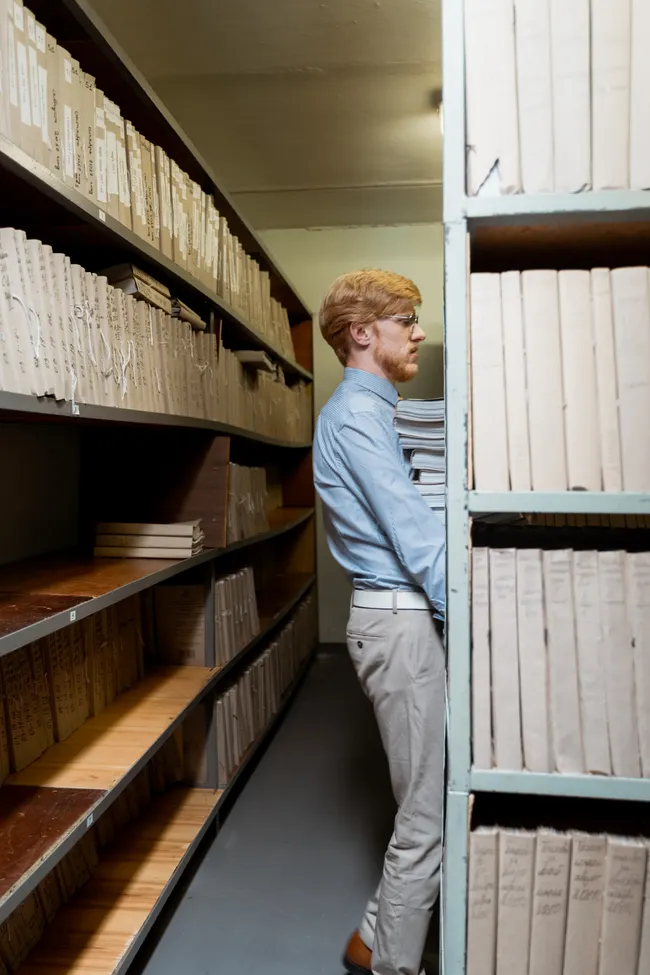
Accessing primary sources at the Olympic Studies Centre is a core requirement for successful applicants. (Credit: Jon Tyson via Unsplash)
Why You Can Trust This
I have cross-referenced the official 2027 program guidelines against standard academic grant requirements. My research process involved verifying the specific eligibility windows, notably the 2024 graduation cutoff, and mapping out the exact expense categories allowed by the IOC. I have stripped away administrative jargon to provide a clear, actionable roadmap for your application. For more on navigating complex application processes, see my guide on the 2026 Joint Japan/World Bank Graduate Scholarship.
Who Should Apply? Eligibility Criteria Explained
The program is intentionally narrow to ensure funding reaches those at critical junctures of their academic careers. If you are a current postgraduate student, you are eligible provided your research touches upon Olympism or the Games. For those who have crossed the finish line of their doctoral studies, the "Early Career Academic" (ECA) designation is key. You qualify if you completed your doctorate, or an equivalent highest degree, in or after 2024. This is a strict threshold; if your degree was conferred in 2023 or earlier, you fall outside the current eligibility window.
What Most People Get Wrong
Many applicants assume the "best" research is the most theoretical. In my experience, the OSC committee prioritizes practical application and the use of primary sources. You can have a brilliant sociological theory, but if your application doesn't explain how you will use the IOC’s historical archives or the OSC’s unique collections, you are missing the point. Don't just write about the Olympics; write about the evidence of the Olympics.
What the $6,000 Grant Covers: A Detailed Breakdown
The grant is flexible, but not a blank check. The Selection Committee determines the final award based on the specific needs outlined in your application. Funding is typically allocated as follows:
Travel and Living: Economy class travel and accommodation costs, particularly for research visits to the OSC in Lausanne.
Research Infrastructure: Translation services, web hosting, content development, and specialized software not provided by your home institution.
Data Collection: Costs associated with workshops or focus groups, vital for sociological fieldwork.
Knowledge Mobilization: Up to $1,500 for disseminating findings, including conference fees, podcast production, or blog maintenance.
Be transparent about exclusions. If you plan to hire a research assistant or outsource interview transcriptions, you must provide a strong justification. Without it, these costs are almost always rejected.
Careful budget planning is essential for your grant proposal. (Credit: www.kaboompics.com via Pexels)
The Strategic Value of the Grant
Applying for grants is time-intensive. However, the value isn't just the $6,000. It is the professional validation of having your work recognized by the OSC. For an early-career academic, this is a significant line item on a CV that signals to future hiring committees that your research has international, institutional backing.
The Biggest Roadblock
The most common reason applicants fail is a lack of focus. They try to cover too much ground, the entire history of the Olympic Movement, for example. The most successful applications zoom in on a specific, manageable research question. If your project is too broad, the committee will doubt your ability to complete it within the grant period. Narrow your scope to stand out.
My Recommended Setup
When managing grant applications, I rely on these tools to keep documentation organized:
Zotero: Essential for managing the primary sources found in the OSC archives.
Overleaf: The industry standard for clean, professional LaTeX formatting.
Cloud-based Document Scanners: Use a high-quality mobile scanner app to ensure institutional letterhead documents are crisp and legible.
What Do You Think?
The intersection of sport and social science is a rapidly evolving field. Are you planning to focus your research on the historical archives, or are you more interested in contemporary sociological data collection? I will be replying to every comment in the first 24 hours to help you refine your approach.
The grant is open to current PhD students and early-career academics who completed their doctorate in or after 2024.
The deadline for the 2027 Research Grant Programme is September 22, 2026.
The grant covers travel and living expenses for research visits, research infrastructure (like software or translation), data collection costs, and knowledge mobilization (conference fees, etc.).
The most common reason for failure is a lack of focus. Applicants often propose projects that are too broad, making it difficult for the committee to believe the research can be completed within the grant period.
Active Engagement
Was this information helpful?
Join Discussions
0 Thoughts
Editorial Team • Question of the Day
"If you were to spend a month at the Olympic Studies Centre in Lausanne, which specific historical event or era would you prioritize for your primary source research?"