Nigeria's Debt Trap: Revenue Eaten by Loans?
核心的な洞察
Nigeria's Public Debt Surpasses N159 Trillion: The Fiscal Squeeze Explained

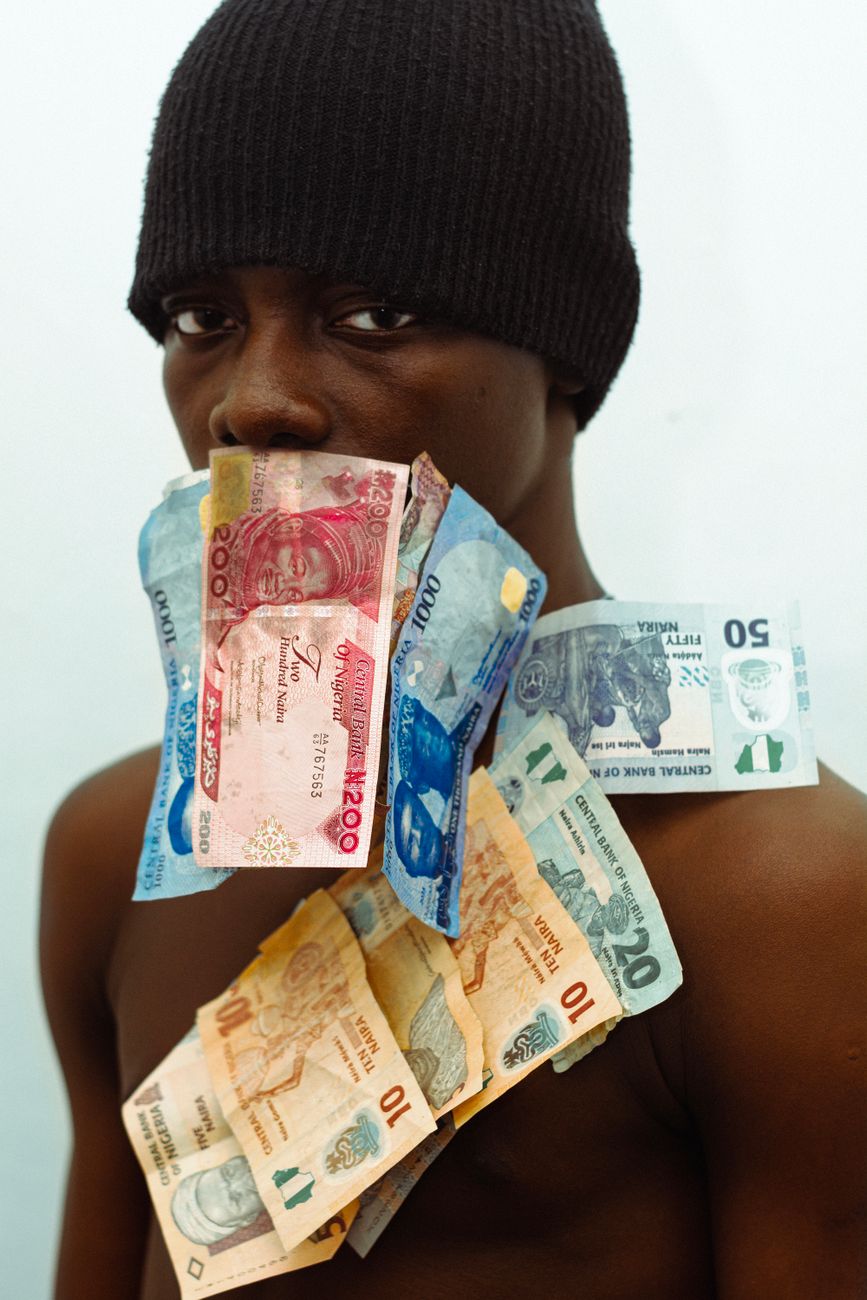
(Credit: ismail seghosime via Pexels)
Nigeria’s public debt has exceeded N159.3 trillion ($111 billion), driven by naira depreciation, the formalisation of central bank Ways and Means overdrafts, and new borrowing including the $516 million (N707 billion) loan approved by the House of Representatives on April 28, 2026, for the Lagos-Sokoto Superhighway. Federal revenue remains constrained at N10 trillion to N15 trillion annually, while debt servicing has consumed over 100% of revenue in some periods, limiting space for development spending. For insights into economic pressures, see Nigeria's $500M Research Fund.
In 2024, debt servicing exceeded federally retained revenue, with estimates from the Nigerian Economic Summit Group placing the ratio above 110%. This left no revenue for capital or social services, forcing all such spending to come from borrowing.
Nigeria’s Debt Size

(Credit: Towfiqu barbhuiya via Pexels)
According to the Debt Management Office (DMO), total public debt reached N159.28 trillion ($111 billion) by December 31, 2025, up roughly N70 trillion nominally from mid-2023. In dollar terms, external debt has remained stable between $105 billion and $113 billion. The naira increase largely reflects depreciation: a $10 billion external debt was N4.6 trillion at N460/$ in early 2023 but over N15 trillion at N1,500/$ in 2025.
Nigeria’s total public debt stock stood at N159.28 trillion as at 31st December, 2025. Debt Management Office (DMO)
Per capita debt is approximately N724,000 based on a 220 million population.
Revenue vs Debt Service
Federally retained revenue was N10-11 trillion in 2023 (debt service N8-9 trillion, ratio 80-90%) and N12-13 trillion in 2024 (debt service N13-14 trillion, ratio ~100-110%). In January-July 2025, revenue was N13.67 trillion (42.7% below pro-rata target), while debt service (N9.81 trillion) and personnel costs (N4.51 trillion) totaled N14.32 trillion,105% of revenue. Nigeria’s revenue-to-GDP and tax-to-GDP ratios remain below 10%, versus 15-25% in peer economies. Related fiscal enforcement issues are covered in Court Warns FCCPC Boss.
The Ways and Means
Ways and Means advances grew from N790 billion in 2015 to N26.95 trillion by 2023, exceeding the 5% of prior-year revenue cap under CBN Act Section 38. In 2023, N22.7 trillion was securitised into 40-year 9% bonds (with 3-year principal moratorium), followed by N7.3 trillion, totaling nearly N30 trillion. This reduced costs from MPR+3% (~20-21%) and now comprises about one-fifth of total debt, maturing to 2063.
Borrowing Pace and Structure

(Credit: RDNE Stock project via Pexels)
Since May 2023, external financing totals $18-20 billion: $3 billion Afreximbank crude-backed (2023), $2.2 billion Eurobonds (December 2024), $2.35 billion Eurobonds (November 2025, $13 billion order book), $9 billion World Bank (including $2.25 billion stabilisation credit, June 2024), $1 billion AfDB, and $516.3 million Deutsche Bank for Sokoto-Badagry highway (April 2026). External service costs hit $3.58 billion in first nine months of 2024 (+40% YoY). Domestic debt exceeds N70 trillion at 18-24% rates. Infrastructure challenges persist, as in Tegbe Confirmed: 100-Day Pledge.
Borrowings serve project-tied needs (e.g., highways, ports), budget support for deficits (N23.85 trillion projected 2026), and refinancing. Non-discretionary spending (debt service, recurrent) is 60-70% of budgets; 2026 halts new capital projects, rolling over 70% of 2025 allocations.
Debt Servicing in 2026 Budget
The 2026 budget totals N68.32 trillion, with debt service at N15.8 trillion,more than combined defence/security (N5.4 trillion), infrastructure (N3.6 trillion), education (N3.5 trillion), and health (N2.5 trillion) at ~N15 trillion. Debt service is 23-27% of expenditure and 50-60% of revenue, up from under N4 trillion in 2022. Health sectors face cuts, echoing concerns in Dean’s Alarm: 0.5% Oral Health Budget.
| Sector | Allocation |
|---|---|
| Debt Service | 15.8 |
| Defence/Security | 5.4 |
| Infrastructure | 3.6 |
| Education | 3.5 |
| Health | 2.5 |
Interest vs Principal
Debt service is interest-heavy: Eurobonds 83% interest ($2.43 billion of $2.93 billion, Q3 2023-Q2 2025); domestic 95.7% interest (N8.24 trillion vs N0.37 trillion principal in 2025). New borrowing often refinances maturing debt.
Creditor Breakdown

(Credit: Tiger Lily via Pexels)
Multilaterals hold 49.4% of external debt: World Bank/IDA $18-20.2 billion, AfDB $3.3 billion, IMF $2 billion. Eurobonds $18.5 billion; China $4.91-5.6 billion; others (France, Japan, India, Germany).
Government’s Argument vs Critics
The administration attributes debt growth to naira valuation effects, Ways and Means formalisation, and reforms (subsidy removal, FX unification) enabling 3.87% GDP growth and market access (oversubscribed Eurobonds). Critics highlight debt service >100% of revenue as the key risk (vs debt-to-GDP ~52.7%), borrowing for recurrent needs over productive investments, and weak National Assembly oversight.
Peer Comparisons
| Country | Ratio (%) |
|---|---|
| Nigeria | 8.2-9.3 |
| Kenya | 15.8 |
| South Africa | 13.9-27 |
| Africa Average | 16.1 |
The fiscal strain crowds out capital spending. Reforms aim for 18% tax-to-GDP via mobilisation; success depends on revenue outpacing debt costs.
著者による厳選記事
Nigeria Private Credit Hits N94.6tn Record as Gov Borrowing Soars
Central Bank of Nigeria data shows private sector credit surging to a record N94.61 trillion in February 2026 from N93.74 trillion in January, while n...

Ovia Exits Zenith: Bello New Chair, N10 Dividend Soars
At Zenith Bank's 35th AGM, founder Jim Ovia retired after 12 years as Chairman per CBN rules, paving way for Engr. Mustafa Bello, longest-serving Non-...
Abuja's 2026 Plan for Healthier, Greener Capital
Abuja's Health Services and Environment Secretariat, led by Dr. Adedolapo Fasawe, advances the Renewed Hope Agenda with 2026 strategies for emergency ...

Senate Slams Hospitals Over Snakebite Deaths
Following singer Ifunanya Nwangene's death from snakebite complications at FMC Jabi, Abuja, the Senate urged mandatory anti-venom stocking for hospita...

Dean’s Alarm: 0.5% Oral Health Budget Too Low
Prof. Linda Okoye, Dean of Dentistry at University of Nigeria Enugu, delivers inaugural lecture urging federal government to elevate oral health in na...
こちらもおすすめ




Elijah Tobs
A seasoned content architect and digital strategist specializing in deep-dive technical journalism and high-fidelity insights. With over a decade of experience across global finance, technology, and pedagogy, Elijah Tobs focuses on distilling complex narratives into verified, actionable intelligence.
Learn More About Elijah Tobs